
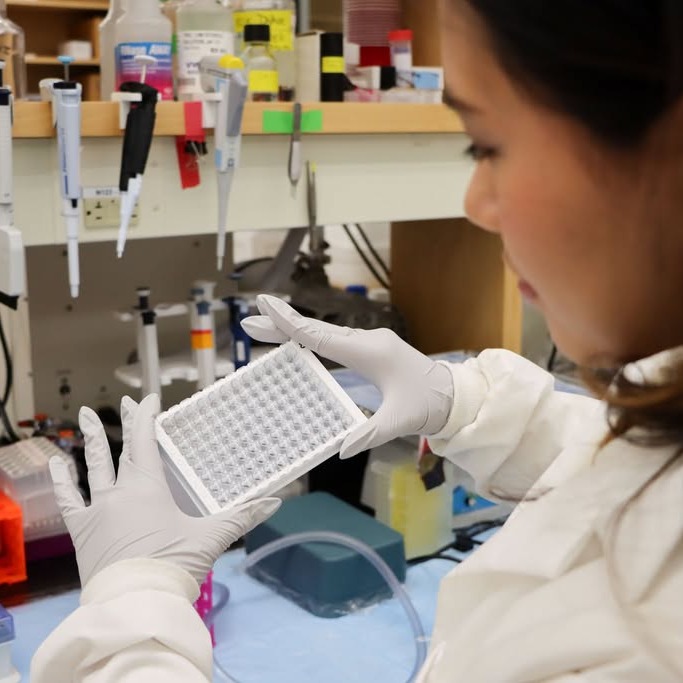
New research by Linh Tran — a Dalhousie master’s student in biomedical engineering — could lead to a new approach to bloodwork that would require less blood to be drawn from patients.
“My main focus is on how to reduce the sample volume but still be able to produce high, accurate and sensitive results,” says Tran.
Doctors often need to draw multiple vials of blood from a patient, which can be difficult for babies and older adults. Some healthy adults have a lower blood volume, and standard-volume samples could become dangerous or cause anemia.
Tran has been working on this solution in the Dalhousie Frampton Lab with John Frampton, its principal researcher. He says the breakthrough from Tran is a result of many years of studying how polymers — natural or synthetic substances composed of large molecules — tend to separate like oil and water.
Frampton says Tran’s research methods are similar to the separation of oil and water, but instead both layers are water. This is done by mixing polymers. Tran has figured out how to apply this to an ELISA (enzyme-linked immunosorbent assay) test.
ELISA is the gold-standard method for analysis of a wide range of biomarkers — the traits that doctors measure in blood, body fluids and tissues for clinics and research laboratories.
“These are assays conducted by biologists and doctors to measure the amount of certain substances in a sample,” says Frampton. “That sample could be your blood.”
If a doctor unfortunately has to do another round of testing after the initial assay, or the initial sample did not provide enough material, they may need more blood.
By reducing the amount of blood needed for a test, doctors could take a reserve sample from patients, eliminating the need for multiple trips to the hospital.
However, Frampton is unsure this research would take pressure off the healthcare system because of increased testing capacity and accuracy.
“You might also uncover things that you wouldn’t have discovered in the first place,” says Frampton.
He says patients would be getting healthcare for issues that might have gone unnoticed previously because Tran’s methods could reveal more about the individual’s health.
Linh Tran’s recent win
Tran was one of fourteen competitors in the Atlantic Canada Falling Walls Lab on Sept. 14. She emerged the overall winner with her research under the title: Breaking the Wall of Sample Volume: Big Diagnostics from Tiny Volume.
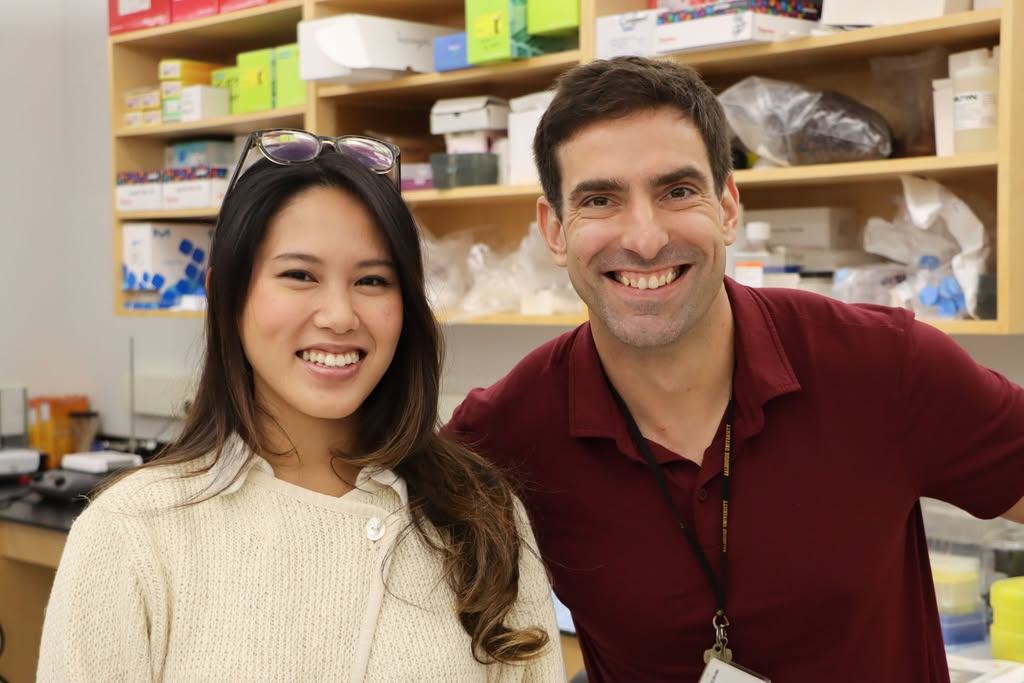
“It shows that my research can actually make an impact and how big this can become if we can make it commercialized,” says Tran.
In November, Tran and Frampton will take the research to a global stage at the Falling Walls Science Summit in Berlin, where Tran will compete against 99 other researchers from across the world. Over 2,000 people will attend the global summit.
“Being able to represent Atlantic Canada, represent Halifax, represent Dalhousie and represent the Frampton Lab means a lot,” says Tran.
The future of Tran’s research
Tran says she’s been very excited to see people’s reactions to her research. Her next step is to work with real patients, rather than lab animals.
Tran’s research grew out of microbiology and immunology classes she took during her undergraduate degree at Dalhousie. Tran says her classes touched briefly on ELISA, but she never got to do any hands-on research with the test.
Now in her master’s, Tran says she found Frampton’s work when looking for a placement during her undergrad. She then applied to be a student researcher.
This research is also Tran’s master’s thesis, which she will defend when she returns from Berlin in November.
“Dalhousie does a great job of making a very good environment for student researchers [to have] this kind of opportunity to showcase their research,” says Tran.
Tran hopes to have her research paper published by March.
What would this research mean for pathology?
Lori Beach, head of chemistry at the IWK Health Centre in Halifax, says Tran’s technology could benefit the healthcare system if it improves the sensitivity of testing or makes it easier to test individuals in a smaller lab.
“We’re always trying to find ways to draw less blood,” says Beach. “Especially here at IWK, where we have some of our tiniest patients.”
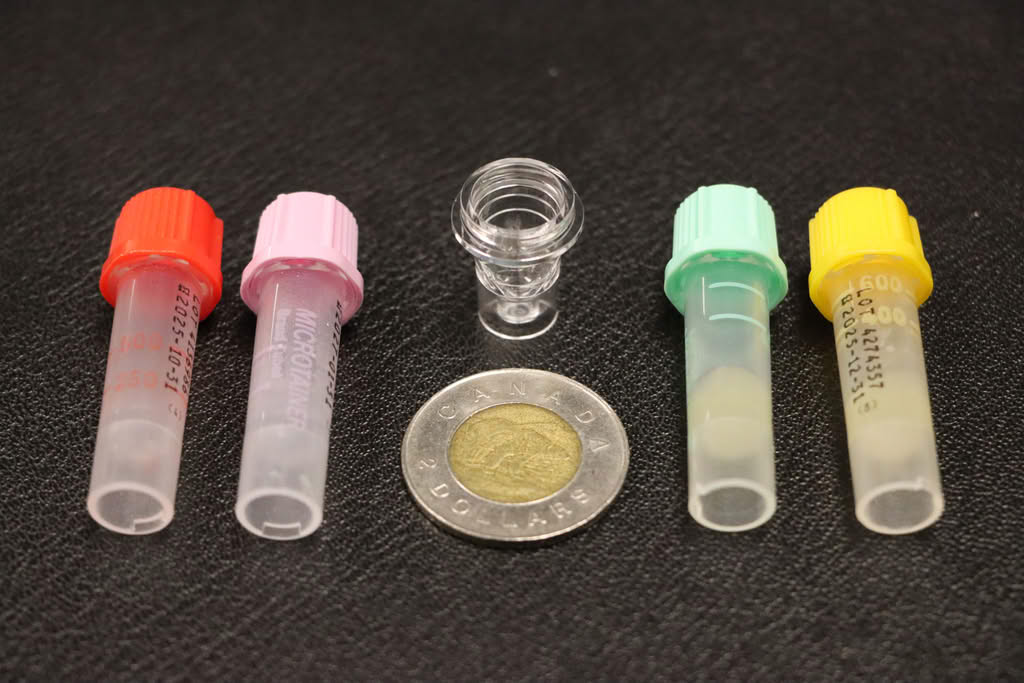
Tran’s research could lead to doctors storing backup samples of blood for later testing, and Beach says a backup may allow patients to spare a second trip to the hospital.
However, she says each biomarker’s chemistry has a different stability window, which could make the sample nonviable after a certain amount of time.
This means patients might have to get more blood drawn at a later date anyway, depending on the biomarker the doctors are examining.
Some biomarkers require specialized equipment for testing, which can block treatment in smaller facilities, and sending samples away to a larger facility is expensive and slow.
“Either because it’s super expensive or because sometimes the technology just can’t go as low as we’d like to be able to measure it,” says Beach.
Beach says Tran’s research might allow those smaller clinics and labs to afford testing at a higher intensity while also cutting costs by reducing material waste from blood testing.
According to Beach, the IWK runs through a lot of blood vials, also known as vacutainers. During COVID-19, hospitals were running out of these containers, preventing patients from getting their blood tested. Needing less blood would also decrease the amount of vacutainers that get used.
“Instead of something needing 100 microliters of blood, if we could get it down to 50 microliters, 20 microliters — very small volumes of blood — then [that is a] really good direction to go,” says Beach.

Read more from the gazette
Ombudsperson’s report outlines areas Dalhousie can improve

One year in, Dal’s Centre for Jewish Studies looks to the future
Nova Scotians weigh in on provincial budget at government consultations
Nova Scotia Liberal leadership candidates face off in first debate

Dal aims to establish program for foreign-trained lawyers to practice in Canada