Nova Scotians weigh in on provincial budget at government consultations
Attendees developed their own budgets with strong restrictions at Oct. 5 Halifax session
October 22, 2026 / Noemi Ryan
The Nova Scotia government let Haligonians weigh in on what they want to see in the provincial budget on Oct. 5.
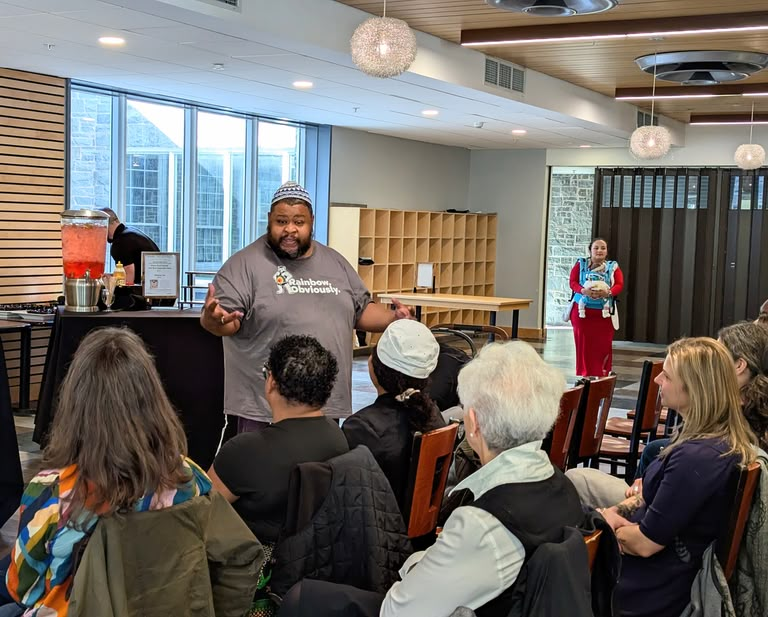
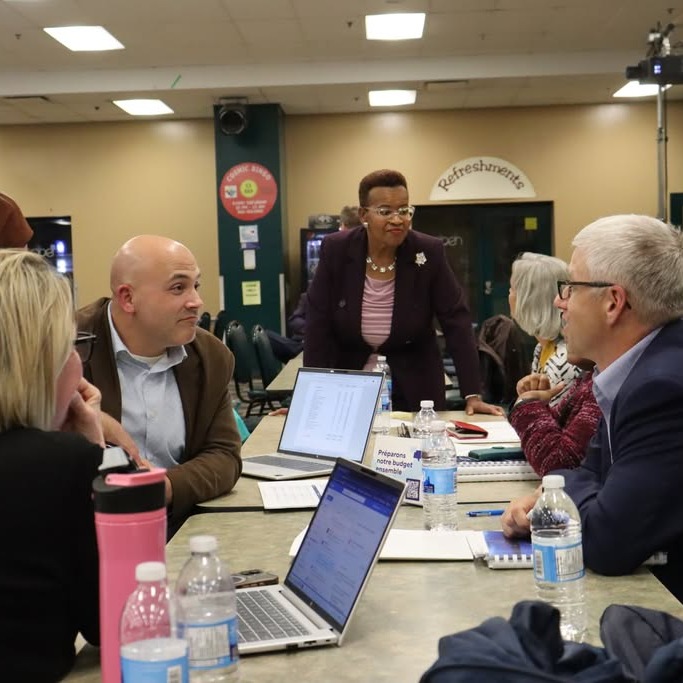
Held at the Halifax Forum, the consultation taught people how the budget process works and let them share their opinions and work in groups to create their own.
The consultation was one of six the government held from Sept. 21 to Oct. 8 as it prepares to develop its new annual budget. They face a $1.44 billion deficit — the biggest in the province’s history. The government also created an online program to build your own budget, which closed on Oct. 16.
Attendees were not allowed to raise the deficit, cut healthcare spending or raise taxes when developing their budget. They also could not adjust departmental budgets by more than five per cent.
“It was a great discussion,” says Twila Grosse, public service commission minister, who oversaw the consultations. “More importantly, folks got an opportunity to see what the finance minister sees and to have their say on their priorities.”
The event was organized into tables of four to six people with a facilitator. Groups went through various budgeting activities while debating among themselves what would take priority in their budgets.
Some attendees felt the budgeting restrictions were too strict.
“I wish the framing rules could have been changed,” says Ben Rose-Davis, who attended the consultation. “Not changing tax rates and not changing fees doesn’t necessarily make things more affordable. It just means the government isn’t yelled at.”
Grosse says the restrictions were fair to Nova Scotia’s current situation, which has one of the nation’s highest tax rates.
“We did this because we wanted to hear from Nova Scotians, but we also recognize that there are certainly parameters that we have to work within,” she says.
Grosse chairs the budget advisory committee, which will write a report based on the feedback from the consultations for Finance Minister John Lohr, who is not required to implement the feedback when developing the budget.
Last year’s provincial budget received backlash over $300 million in cuts, including to arts and culture funding, some of which was later reversed after protests.
Related: Halifax protesters rally against provincial budget cuts
Some participants were not hopeful about the consultation’s outcome.
“I don’t know that I have great expectations that any of this is going to be put into practice,” says Chris Penn, who attended the consultation.
Grosse says the feedback will be considered. “We didn’t take all the time, do all the work and all the prep not to consider what folks are saying.”
One of the largest concerns at the consultation was healthcare, with many advocating for an increased focus and additional funding. Healthcare spending currently accounts for about a third of the provincial budget.
The deficit has grown by $200 million to $1.44 billion since the current budget’s release. The government additionally had $250 million of unbudgeted spending in the first quarter of 2026-27, according to a September financial update.
The table facilitators gathered all the information provided by their table, which the government says will be used alongside online submissions to gauge the public’s priorities.
Addie Burkam, one of the table facilitators hired by the province, says people there were very open to the discussion.”
“Because it’s in such a small group at the tables, you’re able to share different perspectives, and it feels like people are open to hearing different perspectives,” says Burkam.
The province’s 2026-27 budget is set to be presented to Province House early next year.
With files from Dylan Follett, news editor

Read more from the gazette
“The quality is already suffering:” Dal makes all faculties and units cut 6.3% of spending
Could there be affordable housing hidden in Halifax? This group thinks so

Phoebe Bridgers wants you to be in the moment

Top recruit ready to make his mark for the Tigers
Ombudsperson’s report outlines areas Dalhousie can improve