

The Dal review: La bola negra and All About My Mother
Two “películas” from Spain to check out
November 19, 2026 / Hugh Davies Hall
La bola negra review – 7/10
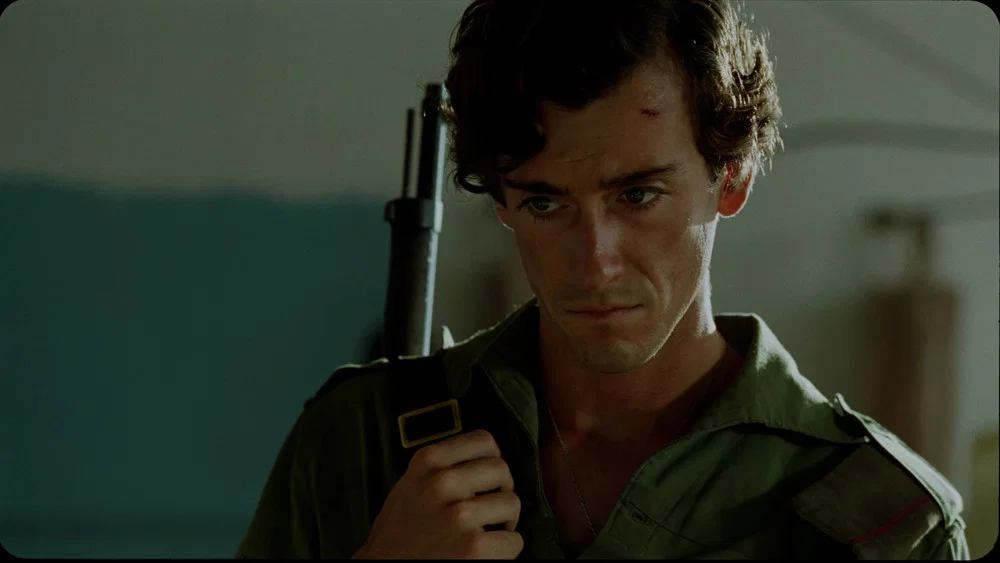
Nobody owns a crystal ball, but it seems fated that La bola negra, the new film from Javier Ambrossi and Javier Calvo is going to take the Oscars season by storm.
Since its premiere at the prestigious Cannes Film Festival in May, La bola negra has been racking up awards. This particular vein of critical success isn’t an indicator of quality — lest we forget that festivals gave awards to last year’s Frankenstein.
What a relief then that La bola negra is actually pretty good. Overrated, sure, but not Oscar bait.

The film takes place in three eras of Spanish history and centres three queer men — Sebastián (Álvaro Lafuente Calvo, known professionally as Guitarricadelafuente), Alberto (Carlos González) and Carlos (Milo Quifes) — who live in the years 1937, 2017 and 1932, respectively.
Sebastián and Carlos’s perspectives play like grand epics. They live in a time when being openly gay leads to persecution, in a country where political division has led to violence. Alberto’s life as a historian in modern Spain is more introspective. He soon realizes that his own family’s history is a worthy subject of study.
La bola negra faces a delicate balancing act. To quickly jump between timelines increases the potential for whiplash, but Ambrossi and Calvo mostly succeed in making each era feel engaging on its own merits.
The trade-off is a long runtime. The film runs two hours and 40 minutes long, which eventually feels punishing.
Ambrossi and Calvo’s camerawork is accomplished, although showy. One could accuse the duo of being too intent on impressing rather than expressing, but every so often they successfully pair their formalism with the story’s emotional weight.
An early scene of Carlos dancing in a bar stands out as an example of Ambrossi and Calvo’s talent. In one take, the camera follows and mirrors him as he darts around the room, gyrating wildly and jumping on tables. The effect is jaw-dropping. In that single moment, the directors’ self-confidence is backed up by genuine cinematic brilliance.
La bola negra should be viewed as more of an announcement of two talented filmmakers than as an unequivocal masterpiece. Ambrossi and Calvo possess a boldness that leads to some rough edges, but all in all, it is a promising start.
La bola negra is currently available in select theatres.
All About My Mother review – 5/10

Pedro Almodóvar makes movies about women in distress. The acclaimed Spanish filmmaker has made a career out of exploring female malaise, from Parallel Mothers to the aptly named Women on the Verge of a Nervous Breakdown.
At face value, his interests as a director invite accusations of misogyny. But as much as he’s concerned with having bad things happen to his female protagonists, Almodóvar is equally concerned with giving them dignity, agency and a sense of humour.
All About My Mother, Almodóvar’s 1999 film, might be his best-known work. It follows Manuela (Cecilia Roth), a single mother who loses her only son to a car accident. Distraught, she moves to Barcelona, Spain, where she befriends Hermana Rosa (Penélope Cruz), a nun who’s secretly pregnant.
All About My Mother is a film whose plot is incidental; in other words, a movie where stuff just happens. Manuela’s new life in Barcelona is one of chance. One day she’s accompanying Rosa to a clinic, the next day she’s a last-minute understudy in a play.
By increasingly obscuring the narrative’s central thrust with endless sideplots, Almodóvar tries to capture a sense of reality. An admirable experiment, but undercooked. By being in 10 places at once, Manuela is in no place. Her arc becomes muddled, and her motivations become nonsensical.
The cast’s performance style, or rather their lack of one style, is similarly disconcerting.
Manuela and Rosa deliver their lines stoically. The supporting actors, on the other hand — Antonia San Juan, who plays Agrado, and Marisa Paredes, who plays Huma Rojo — perform as if they’re stuck in a soap opera, overacting at every opportunity.
All About My Mother looks and sounds gorgeous at least. Shot by cinematographer Affonso Beato, each hypersaturated frame is complemented by garish production design and a smart soundtrack. The use of “Tajabone” by Ismaël Lô in an establishing montage of Barcelona is the film’s highlight.
It’s unclear, perhaps even troubling, why Almodóvar continues to make movies about overwhelmed women. Then again, All About My Mother is an utterly unclear and unconventional film. It’s worth one’s time but maybe not their patience.
All About My Mother is available to rent or buy from Amazon Video and Apple TV.

Read more from the gazette

Friendship is dead

My complicated relationship with the idea of motherhood
From other countries to Dalhousie athletics

Men’s soccer graduates reflect on their time as Tigers

Dalhousie football completes a three-peat