
Building sandcastles without sand
How Nova Scotian artists are coping with February's sweeping provincial budget cuts
November 5, 2026 / Mia Phillips, Jacqueline Graif
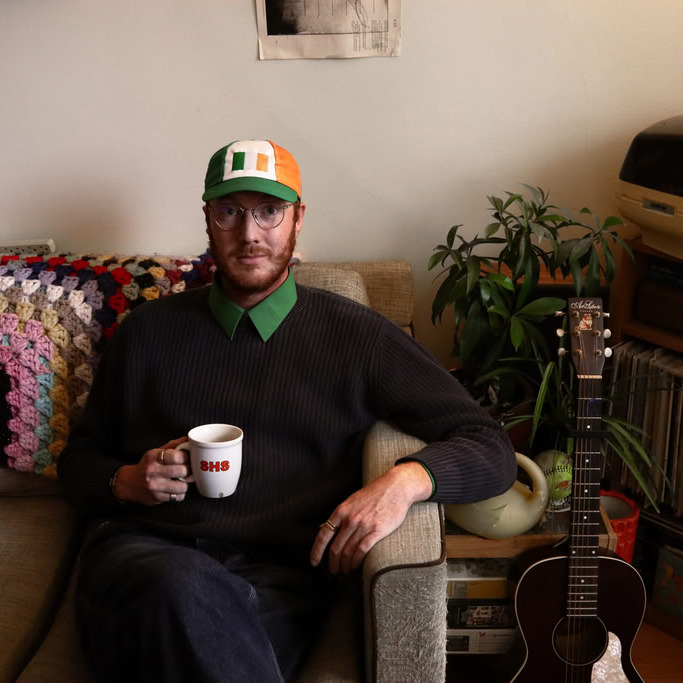
In a modest walk-up in Halifax’s south end, Nick Chapman lives surrounded by paintings, books and instruments. Seated on a green velvet couch in his quaint living room, he talks about last February’s budget cuts to the provincial government’s communities and culture sector as his girlfriend paints in the next room over.
Chapman — a member of Halifax-based musical group The Nikky Band and the founder and director of AC World, an arts book publication — was introduced to the Halifax art scene in 2015 when he began classes at NSCAD University. He hadn’t been enrolled for more than a semester before the school announced a 37 per cent tuition increase over his next 3 years of study. Since then, he’s come to expect roadblocks as he pursues a career in the arts in Nova Scotia.
“I do basically anything and everything to support myself and my practice,” says Chapman.
On Feb. 23, Nova Scotia Premier Tim Houston announced significant cuts to the 2026-27 budget to prioritize housing, health and economic growth. The budget originally projected an alarming $1.2 billion deficit, the largest in the province’s history. The government’s shortfall was re-evaluated to 1.44 billion in September.
Over 70 grant programs were cut and around $14 million of funding was axed across the Department of Communities, Culture, Heritage and Tourism.
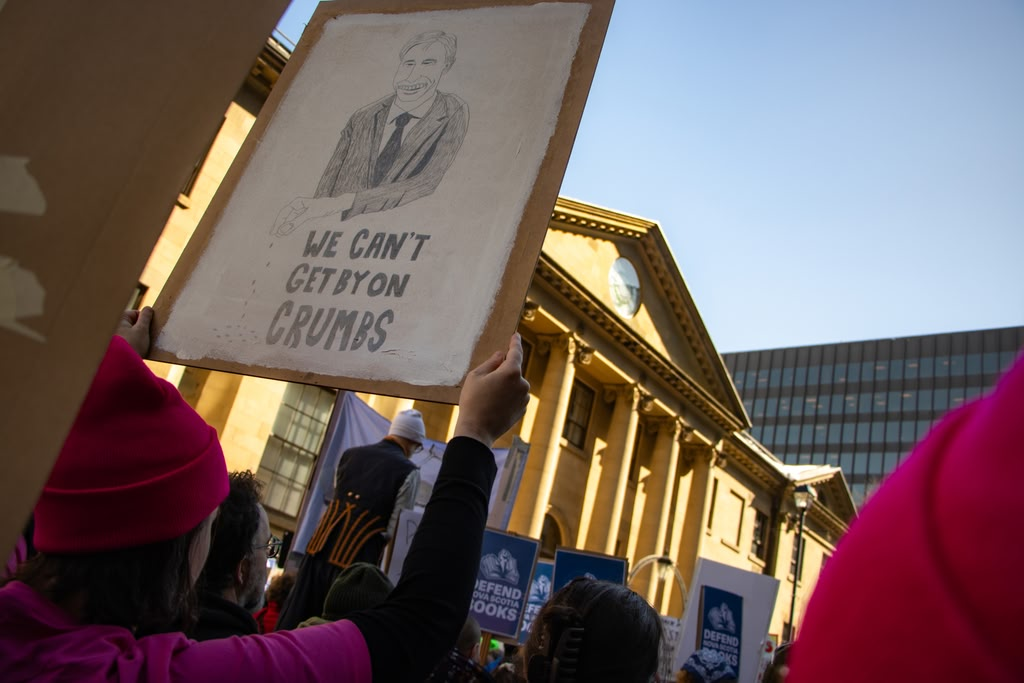
Arts Nova Scotia is a provincial agency that funds artists and artist programs. With these cuts, its budget was reduced by 30 per cent, additionally losing $1.66 million in grant funding for Nova Scotian artists.
Susan Leblanc, elected NDP MLA and the official opposition critic for the department, says the amount cut from the arts and culture sector “didn’t put a dent” in the deficit.
Arts are an important economic investment
Leblanc says funding the arts sector leads to an economic and social return on investment for the province. She says a strong arts and culture scene results in increased social well-being, better mental health and stronger community inclusion.
Because of this, she says Nova Scotia needs to properly fund the arts sector.
“The rug got ripped out from underneath everyone with these cuts in February,” says Leblanc. “The uncertainty of an underfunded arts sector is difficult.”
As of 2026, the arts sector in Nova Scotia employs 17,000 people. According to the Canadian Chamber of Commerce, the national arts and culture sector generates $29 in economic activity for every dollar in federal investment.
Nova Scotia’s Department of Communities, Culture, Heritage and Tourism said in an email to the Dalhousie Gazette, that the province invested over $66 million in arts and culture. The government is not investing any additional funds beyond what is already budgeted for.
Arts advocate and visual artist Charlotte Wilson-Hammond read about February’s budget cuts and thought “here we go again.” After sixty years of working on the eastern shore of Nova Scotia, she considers arts funding “cyclical.”
“It’s almost unbelievable that this is still going on after all these years,” says Wilson-Hammond.
Wilson-Hammond started the annual Nova Scotia Clam Harbour Sandcastle Competition in the ’70s with a $200 grant from the province. At the time, she had around 20 participants and 75 audience members. She says the contest now attracts 17,000 people. Those attendees increase the Eastern Shore’s financial intake during the festivities.
The sandcastle event started with a small investment and has since flourished into an economic feat.
The cuts are not explicitly an issue in Halifax, as they affect many communities across Nova Scotia.
“Nova Scotia has some of the highest percentage of rural artists in the country,” says Chris O’Neill, co-leader of Nova Scotia Arts Coalition, an ad hoc advocacy group made up of individual artists, organizations and culture workers across the province.
According to a 2022 statistic from the Canadian Chamber of Commerce, Nova Scotia’s rural share of arts and culture non-profits is 53 per cent; fourth in the country.
Elise Campbell, a textile artist from Stillwater Lake — a municipality just outside Halifax — says that art communities in rural areas in the province, such as Lunenburg and Mahone Bay, foster an environment for artistic expression.
“These are places that artists will flock to and pay to go and paint and set up galleries,” she says.
Melany Nugent-Noble, the executive director of Nocturne, says this year’s night-time festival had to shrink geographically and cut its noise-makers programs that introduced newcomers and refugee artists to the local arts scene. Their marketing budget also took a hit this year, which Nugent-Noble says lowered the festival’s awareness within the community.
“We expect that there might be more cuts next year as well,” says Nugent-Noble. “We’re hoping for the best but preparing for the worst.”
Nugent-Noble doesn’t just see the cuts as a hurdle for the organization, but as a stifling of critical voices in general. To her, art is also a form of cultural commentary.
”Artists are always the first to respond, whether it’s social autocracies or environmental challenges,” says Nugent-Noble.
After ten years of working as an artist, Chapman has applied for provincial funding just once. As an intern for Visual Arts Nova Scotia in 2021, he learned how to file applications for provincial funding and instantly knew he would never need the skill again.
“It’s just not reliable,” says Chapman. “It’s not a reliable way to make an income.”
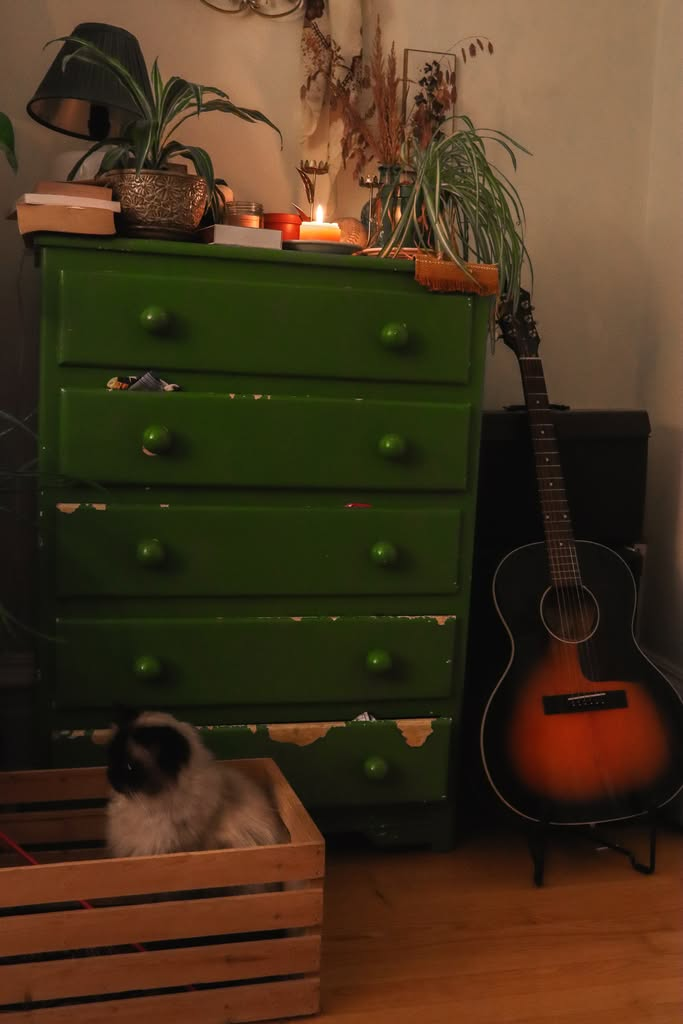
Chapman can point to three mass exoduses he’s witnessed since beginning at NSCAD. First, a fraction of his peers could no longer afford to study after the tuition increases; second, during COVID-19, when there simply weren’t audiences for in-person performances; and third, this year after February’s budget cuts.
“People are going to get discouraged and leave to try and make a go of it somewhere else.”
The optimist in him sees a different outcome — a chance for artistic inspiration.
“Take this as an opportunity to see things differently and not necessarily rely on the government for support,” says Chapman. “There will be some who double down and become extra dedicated to building subversive backup systems. I think DIY will make a big comeback.”
Despite what the Department of Communities, Culture, Heritage and Tourism said in their statement — “we remain committed to a vibrant arts and culture sector and to building strong communities” — Chapman doesn’t think the budget reallocation will benefit Nova Scotians.
“What these conservative people don’t seem to realize is that the economy is money changing hands,” says Chapman. “[When] people have less money, they can’t spend it on anything.”
“I liken the Maritimes for art as a sandbox with no sand in it,” says Chapman. “You can do whatever you want; it’s just there’s not the same amount of resources.”
Despite the dim reality for those pursuing arts in Atlantic Canada, Chapman remains optimistic about the power of community.
“That doesn’t mean you can’t work together with the people here to make sand. We can mash the rocks together in a primitive way and make sand to build.”
Nugent-Noble remains hopeful that the community will meet the moment. Without the provincial government to rely on, other organizations have had to band together to keep arts organizations in Nova Scotia afloat in trying times.
“That’s what we’re looking at doing now is working in solidarity with other organizations,” says Nugent-Noble.
“We’re all being impacted, let’s all support each other.”

Read more from the gazette

The cost of having a vice
How a psychology and history student affords to live in Halifax
Want to travel affordably as a student? Consider volunteering

I might fail my classes, but at least I have a paycheque
How the DSU president lives on $40,000 a year
