Africville tribute on display at Nocturne
Anakwe on her plans to present project “Red Earth/Black Sea” at Nocturne
October 8, 2026 / Alyssia Halvorsen
Nigerian artist Rena Anakwe returns to Halifax with “Red Earth/Black Sea,” a sound installation and performance piece that explores gentrification and systemic destruction of racialized communities, including Africville.
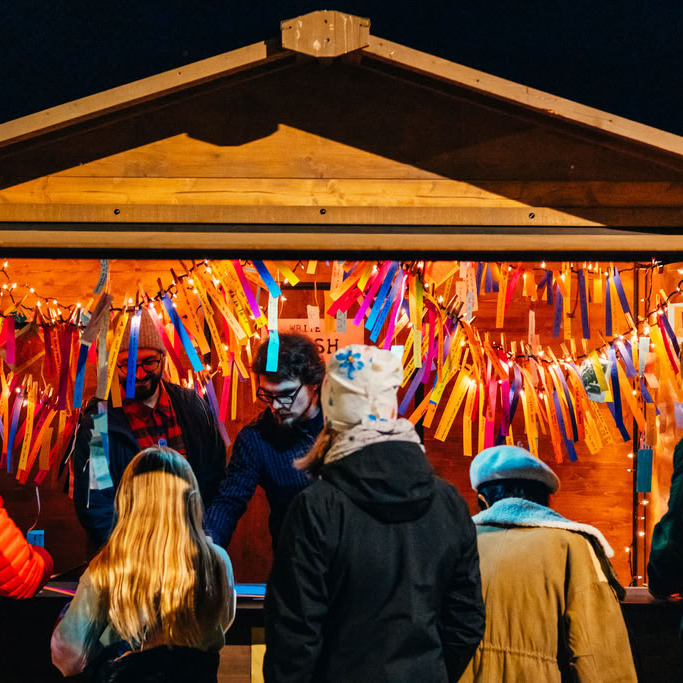
The showcase begins on Oct. 15 as part of Nocturne Art at Night, a three-day festival that transforms the city into a gallery and features a variety of multi-media creatives.
“My goal is to create a space that can hold a moment of reflection, of honouring and paying tribute to Africville,” said Anakwe.
Africville was a Black community located in Halifax’s Bedford Basin. The town was founded in the 19th century and was home to formerly enslaved people and Black refugees, among others.
This idea of racialized groups being “trampled” is what inspired the title “Red Earth/Black Sea.” Anakwe says, red earth symbolizes Indigenous people and their territory, while Black people were brought to the Americas through water, creating the black sea.
“The people that are of the lands, of the seas, repeatedly continue to be marginalized and disenfranchised,” says Anakwe.
Anakwe was born in Halifax, but her family moved to the United States when she was an infant, where she still lives. This year’s festival will be her first time returning to Halifax since she was born.
Her project was first inspired by the documentary True North by Michèle Stephenson. A portion of the film focused on Africville and one of its older residents.
“[The older resident] was crying and he was reflecting on how his neighbourhood and his community were demolished in the middle of the night, and how it was a beautiful place where everybody was connected, and the community knew each other,” says Anakwe.
In 1964, the city of Halifax voted to demolish Africville, decimating the community centre and destroying homes. By 1970, all residents had been relocated, under the guise of new infrastructure.
Throughout the town’s history, the municipal government continually denied them basic services, including clean water and paved roads.
Before True North, Anakwe had never heard of Africville. Her research led her to realize the demolishing of Africville has happened in many places around the world.
“There’s a deep sadness, but there’s also just anger,” she says. “How are you treating people like this? It’s the same people getting trampled on over and over again.”
Struggles amidst budget cuts
Melany Nugent-Noble, the executive director of Nocturne, is working to keep the festival accessible despite funding cuts..
In March 2026, Nova Scotia’s provincial progressive-conservative government, led by Premier Tim Houston, reduced funding for the arts by 30 per cent. The reduction has eliminated and decreased grants that fund a variety of artistic pursuits.
“One of our core mandates is to keep projects free and accessible,” says Nugent-Noble.
Nocturne has reduced its budget by reverting to a “gritty” approach that Nugent-Noble says is how Nocturne first began. Even with less funding, they continue to maintain support and payment for artists.
“We’re just going to make it happen,” says Nugent-Noble.
Anakwe recounts how similar grittiness in the face of gentrification forced her to move out of her home. A request for more outlets installed in her New York unit turned into an indefinite order to vacate the premises at a time when Anakwe estimated rental prices had increased 3-4x what she was paying.
“When you experience it, you’re like ‘Dang, this sucks. This is awful,’” says Anakwe. “This pursuit for industry and capitalism, and deep, accelerated expansion at the behest of profit, is not working.”
Anakwe’s own outlook on life is largely rooted in Indigenous knowledge.
“These are not new concepts — working with the land, working with the people — This is Indigenous knowledge. God forbid we should rely on the things of the past that worked,” says Anakwe.
While Anakwe did not necessarily create the exhibition to create policy changes surrounding gentrification and Africville, she hopes it could help someone.
“I’m not really doing this for myself. I’m doing it to honour those that came before me and those that are there now,” says Anakwe.

Read more from the gazette
Chartwells manages half of SUB food vendors after Abstract takeover

Tigers defeat Moncton 3-2 in a dramatic overtime finish

The Gleeboot could save lives
Dal’s MacEachen Institute restarts talk series with talk on energy future
KSU finance VP steps in as interim president, won’t run in fall by-election