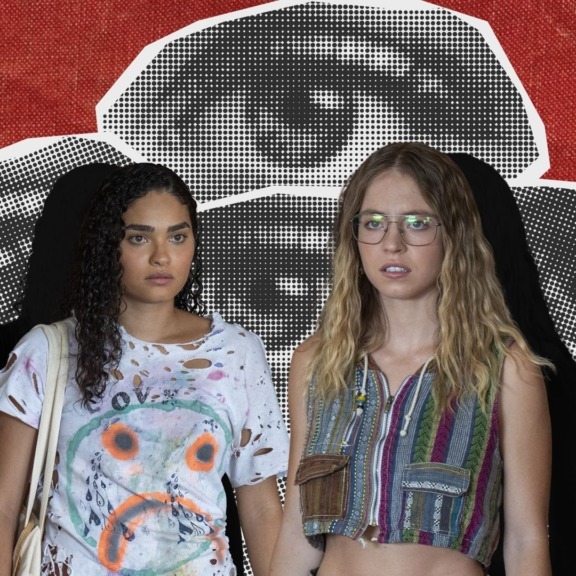
Gen Z is taking an extra second to think through social interactions, according to experts and Dalhousie University students — a pause that’s giving rise to a generation-defining feature — the Gen Z stare.
Anne Wilson, a psychology professor at Wilfred Laurier University, says the Gen Z stare is a “blank stare that happens in customer service settings where you expect a natural reaction to whatever was said, and that doesn’t happen.”
Wilson says differences in generational values, increased social media use and the COVID-19 pandemic may be responsible for the new phenomenon.
“Gen Z places a pretty high-level of importance on personal authenticity and doing meaningful things,” says Wilson. “It could be that older generations are putting too much value on stuff like artificial face-to-face [conversations], pretending to be nice or liking the interaction.”
Practicing the Gen Z stare
Aurora Beith, a first-year science student at Dal, works as a cashier and at a restaurant.
“I’ve definitely done it,” she says. “I’ve seen a lot on TikTok about it. People go to the grocery store, and they’ll say something and get the Gen Z stare. But usually it’s from them saying something really moronic.”
Emily Campbello, a first-year science student at Dal, says technology gives her generation an extra moment to think in social situations.
“Now you don’t have to instantly answer people, you can wait a second,” she says. “I think maybe that’s a part of it. Your brain just doesn’t know what to say next.
“Someone says something that’s so appalling to you that you just have to take a second and look at them like, ‘Did you actually just say that?’”
Wilson agrees.
“This generation got used to taking a little more time before they decided what they were going to say. An immediate response isn’t expected over social media or a messaging app. They are unused to being put on the spot, so they take more time to process.”
Jelena Ristic is a psychology professor at McGill University who specializes in social attention and eye tracking. She says the Gen Z stare is nothing more than a non-verbal communication cue.
“It’s like an emoji.”
Ristic says the Gen Z stare is like any other expression; it’s meant to convey a message easier and faster than verbalizing.
“This is much more instantaneous. You don’t have to say anything.”
Is COVID-19 responsible?
Wilson says COVID-19 had a lasting impact on Gen Z’s social skills because they “Spent several years — especially key developmental years — interacting with people mostly online, often with their screens turned off, listening in a one-sided way.”
Dalhousie student Evelyn Swanson-Snook agrees with Wilson. She says the drawn-out isolation made social interaction “more uncomfortable.”
“I find social skills to be difficult,” Swanson-Snook says. “Having grown up digitally, I feel so much more comfortable messaging someone rather than talking face-to-face.

Read more from the gazette

Over 100 people protest against AI data centre at legislature

Halifax’s thedottedline is here to finish what Kendrick Lamar started
The AUS to ACAA pipeline
Chartwells manages half of SUB food vendors after Abstract takeover

Africville tribute on display at Nocturne