
Using theatre as a tool to rewrite history
Women of the Fur Trade takes to the Scotiabank Studio Stage
October 8, 2026 / Sophie Bolan-Campbell
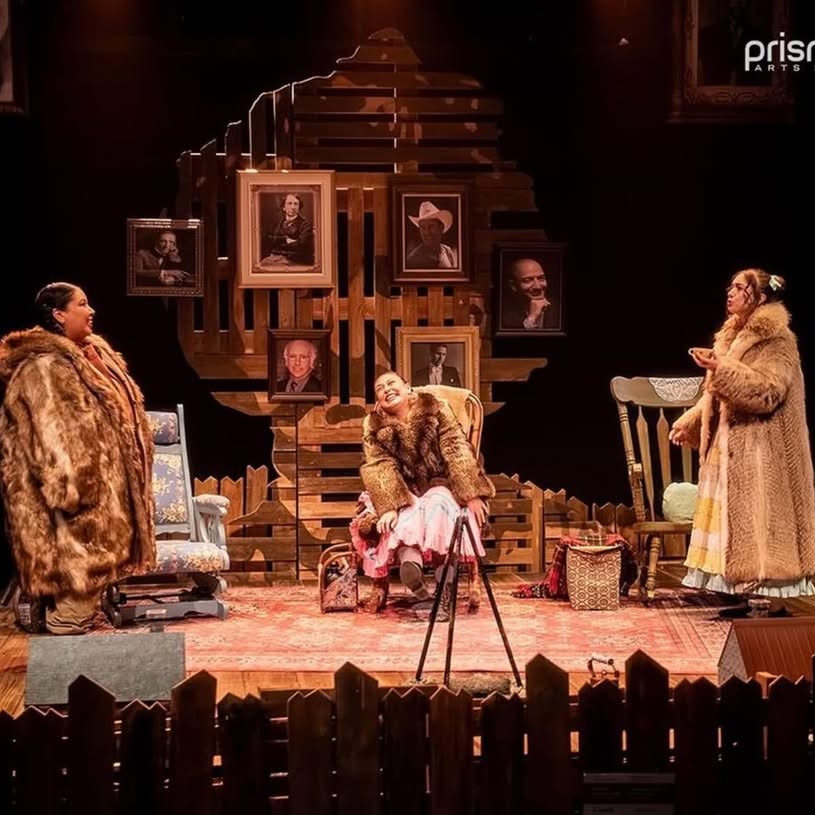
Women of the Fur Trade, a play written by Frances Koncan and directed by Keith Barker at Neptune Theatre, is a satirical reimagining of Canadian history. The show spotlights three witty women in a chapter of history that is often ignored.
The show is set to run from Sept. 22 until Oct. 11.
Set in “eighteen hundred and something-something,” an Ojibwe woman, a Métis woman and a white settler unite over their femininity despite their differences during the Red River Rebellion.
“[What] I love about this play is that the women are at the centre … we’re talking about history which predominantly does not centre women,” says Barker.
Koncan intertwines history and comedy in the play — a commentary on patriarchal society.
“[Koncan] is speaking of the now and she’s speaking from the new generation of Indigenous writers,” says Barker.
Joelle Peters plays Eugenia, a sarcastic Ojibwe fur trader. She says the play is about looking at history differently by giving a voice to those who have been silenced, while also representing history as a lived experience.
“Theatre goes hand-in-hand with oral storytelling, as [they are both] something that folks in the Indigenous communities continue to try to keep alive. It’s part of our culture.”
Peters says heartbeats in the audience can actually be synchronized during live theatre, referencing a study conducted by University College London.
“That connection is just so special, and you can’t always get that in other storytelling forms,” she says.
Alison Beckwith plays Cecilia, a white settler who develops a friendship with the two Indigenous women.
Beckwith says that humour can be a powerful tool in challenging historical narratives.
“We learn a lot about history in a very removed way,” says Beckwith. “[Laughter] extends a hand in a very human way to these points of history.”
Comedy is an integral component of Koncan’s storytelling in Women of the Fur Trade, because it makes difficult topics more approachable.
“When we feel safe with others, then we open up our hearts, we open up our minds and then humour becomes a gateway to unity,” he says. “You can feel that moment when the audience kind of opens up as a group together.”
Eli Ham, who plays Thomas Scott, an Irish settler, says the satirical nature of Koncan and Barker’s piece allows for historical narratives to be challenged.
“[Koncan]’s play attempts to put stories into history that have not been a part of history before,” says Ham. “It can work to restore an imbalance that is created through this inaccurate telling of history that we have come to know here in North America.”
The play’s cast has helped expand pre-existing notions among the audience, but also among the cast, says Beckwith.
“This play interrogates ignorance in a really interesting way,” she says. “The layers that we get here as actors is that it does put white and Indigenous actors in a room having to work together and contend with these ideas together.
“We all come at it from very different perspectives.”

Read more from the gazette
Grabbing the bull by the horns at the Hants County Exhibition

Magnetic World swallows the hill whole
Awaken this fall with Elevator Theatre Company’s Halifax debut

Why is texting hard?

Arts and social sciences classrooms go screen-free