
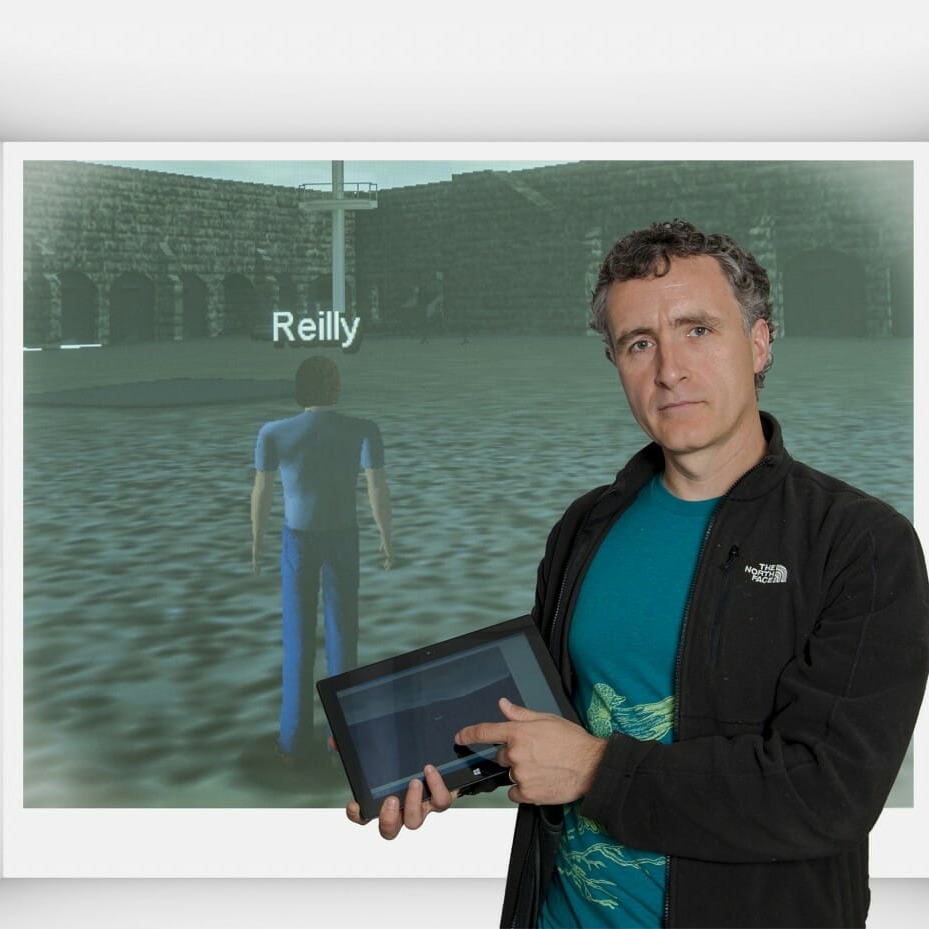
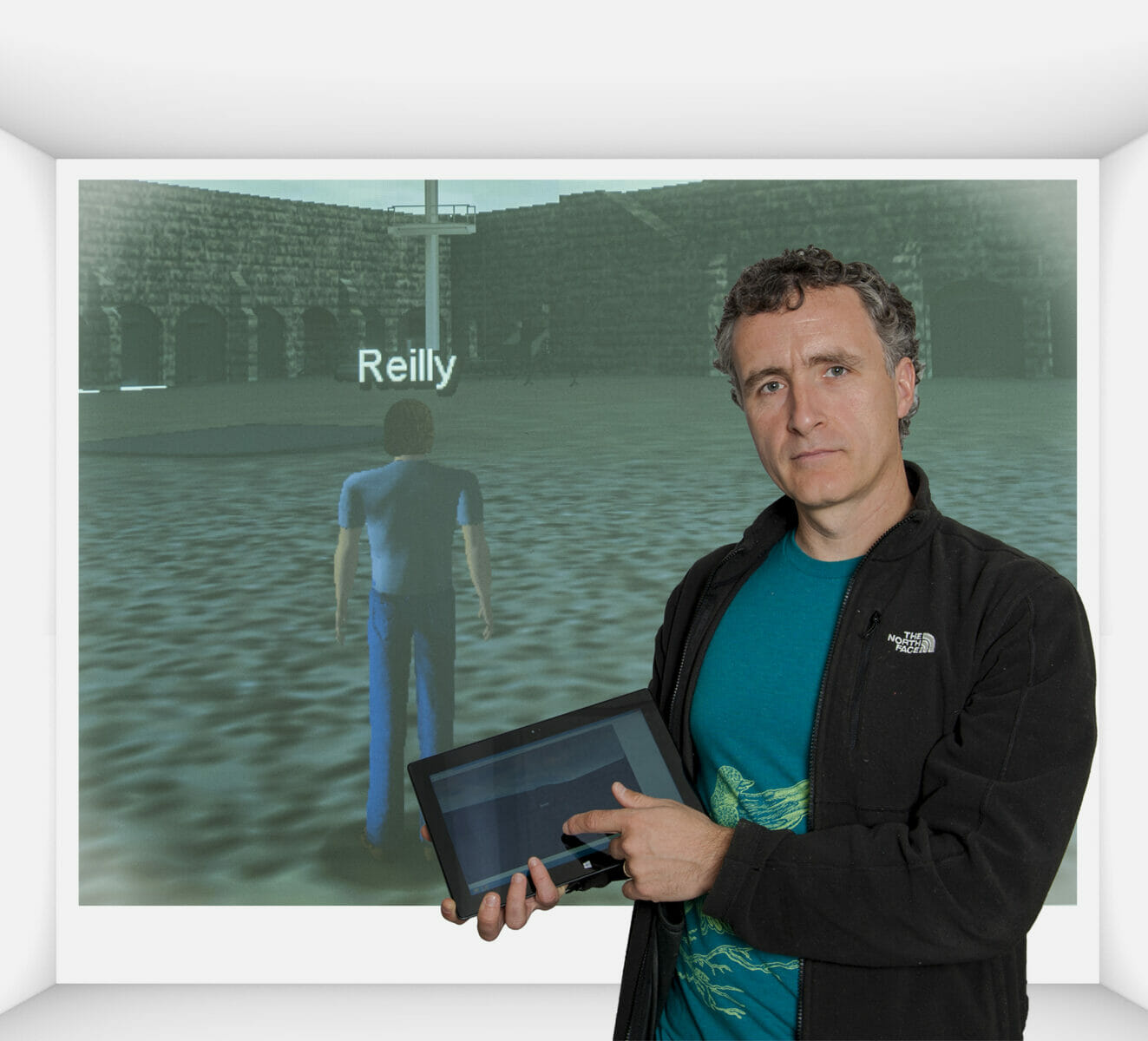
Derek Reilly and his Nocturne Time Machine (Photo by Chris Parent)
Throughout the night of Oct.19, faculties around Dalhousie will be involved with various Nocturne events. Assistant professor Derek Reilly, of Dalhousie’s faculty of computer science, will be running an interactive computing event called Operation: Citadel.
Operation: Citadel is an alternative reality of the battles facing the Citadel, simulated physically and virtually. The event will be run throughout Nocturne, from 6 p.m. until midnight, at the Halifax Citadel and the Wave, on the boardwalk downtown.
During Operation: Citadel, players interact with a virtual system in what is called a “mixed reality” multiplayer game by carrying a tablet computer around the Halifax Citadel. A projector attached to the tablet allows a virtual model to be projected onto the hill of the Citadel, in which the alternative historical scenario will proceed. This virtual model corresponds to the geographic area of the Citadel onto which it’s projected: by moving around the Citadel, the projection updates accordingly. In this way, the tablet and projector work as a portal by breaking through the walls of the Citadel and breaking the barrier of time.
At the Halifax waterfront, a series of other plays will begin at a kiosk and move through a virtual model of the Citadel using a whole-body interface, a process in which Reilly specializes.
Players at the waterfront will be connected to those at the Citadel using a network link. Players can speak and aid those at the Citadel by moving virtually close to where players are physically at the Citadel.
Operation: Citadel’s mission objective centres on the idea of an enemy attack on the Citadel, but rather than attacking overtly, it assumes the enemy has penetrated the fortifications of the harbour, threatening to bring in more troops by detonating this fortress.
The event was inspired by the history of the citadel. In a promotional item for Operation: Citadel, Reilly detailed the history of Duke Edward Kent. Kent was obsessed with creating a defensive network that no adversary could overcome, and built the Citadel to withstand any attack, of which there were many.
Reilly designed Operation: Citadel to be similar to York’s fort in the War of 1812, wherein the Citadel would be “destroyed from within, its own weapons turned against it.”
The players at the Citadel are time travellers. Their purpose is to prevent this alternative reality in which the enemy who has penetrated the Citadel succeeded in bringing more troops into the city. Players will have to piece together clues and recruit a soldier (one of the people playing at the waterfront) in order to find the explosives the enemy threatens to use to blow the entrances to the city before they are detonated and leave Halifax defenceless

Read more from the gazette

The AUS to ACAA pipeline

Chartwells manages half of SUB food vendors after Abstract takeover

Africville tribute on display at Nocturne
Tigers defeat Moncton 3-2 in a dramatic overtime finish

The Gleeboot could save lives