
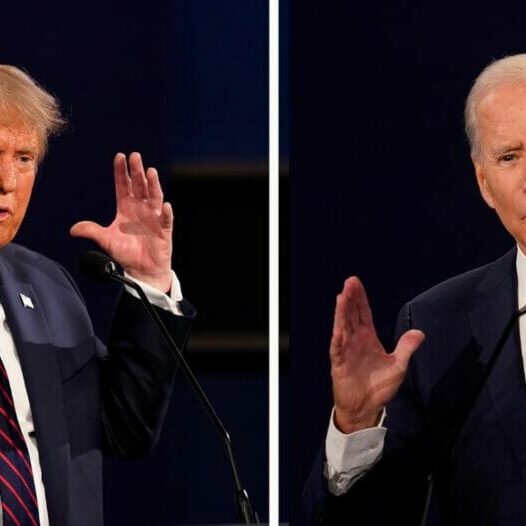
An election like no other
International students share their experience voting in the 2020 U.S. presidential election
October 30, 2020 / Morgane Evans
Voting has always been important to me. Some of my earliest memories are of watching my parents vote in elections and receiving an I Voted sticker.
I always knew I would vote when I became of legal age. But until this year, as an international student from the United States at Dalhousie University, I had no idea how exhausting it would be voting in an American election overseas, especially during a pandemic. I always thought I would just have to fill out a form or two and then be done. But I was wrong.
Getting an early start
Last summer, my friends began posting on social media explaining how everyone had to vote through an absentee ballot because of the COVID-19 pandemic and to register early enough to make their vote count. It was a big election, and so I decided to start the process in July by registering online and sending my registration forms to my county’s board of election office in Bethesda, my hometown in Maryland.
The process took two months to complete. In mid-September, after finally receiving my ballot via email, I realized I had to print the ballot and ballot envelope because Maryland doesn’t take electronic votes. So, after printing and filling out the documents, I went to the American Consulate in Halifax to postmark my ballot for free.
American consulates have intense security protocol. The one in Halifax has an X-ray machine and metal detector to stop people from bringing in prohibited items: water, food, weapons and any electronics. This meant I couldn’t bring my phone.

Before I left, I printed out directions and told my roommates and friends where I was going in case of an emergency. I wasn’t going far — the consulate is downtown on Upper Water Street — but I didn’t know how long it would take. I had never been to a consulate before.
I was doing pretty well until I got lost at the harbourfront. There were no signs pointing to the consulate and I walked all over the place, ballot in hand until I arrived at Purdy’s Wharf, where the consulate is supposed to be. The buildings looked similar to the ones on my map, but the consulate wasn’t listed on the outside directory. So, I took a deep breath and walked into the nearest tower, which luckily turned out to be the right one. From there, I was guided to the ninth floor and walked to the consulate, relieved. I rang the doorbell and a security guard greeted me. She quickly took my ballot, and then I was on the way back to campus.
Other students’ experiences
The experience was overwhelming and tiring, but I wasn’t the only student who had to go through a stressful process to vote absentee in Canada this year.
Sebastian Garcia-Lavin, a second-year political science student at Dalhousie who is from Boston, Mass., voted electronically. To vote he was sent an email and had to scan his government ID before filling out his ballot, which he found annoying.
“It would’ve been easier if the process didn’t involve sending over a scanned document,” Garcia-Lavin says.
Carson Straub, a third-year ocean sciences student at Dalhousie, also from Boston, found the absentee voting process easier than expected and registered in less than 10 minutes. However, he found himself double-checking the rules for voting absentee and how long the process would take.
“If there was more advertising regarding how much in advance you should mail in your ballot request, I believe the process could be a lot less stressful and a bit more seamless,” he says. He also has noticed how stressful the process can be, which can be daunting to some. “If voters viewed the process as less of an inconvenience and more of an easy opportunity to have representation in government, then they would be much more inclined to participate.”
Though the U.S. presidential elections are a major spectacle every four years, only around half of eligible voters came out to vote in the 2016 election, according to Penn State University. The process can be exhaustive and long, especially voting from overseas or absentee, but it is an important way to take part in democracy, bring change to your community and voice your opinion. Everyone’s opinions matter, so to Americans in Canada: don’t be afraid to vote.

Read more from the gazette
PWHL Takeover Tour returns to Halifax for three games, sets league record
Dalhousie women’s soccer team goes coast-to-coast to compete in nationals
Former Houston minister Becky Druhan elected Nova Scotia Liberal leader
A new director, upgraded space and provincial grant cut for Dal’s transition year program

Your vote matters