Carney kept his elbows up in Davos, says prof, students
Students see the Prime Minister’s viral speech as a “really big moment” for Canada
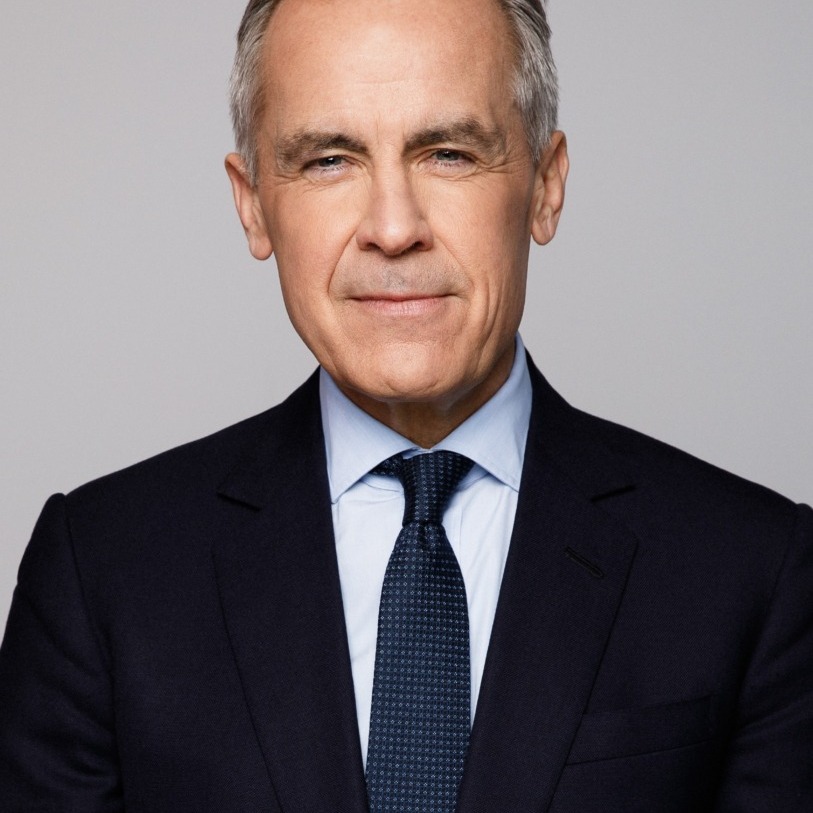
Prime Minister Mark Carney caught the attention of Canadians when he stepped onto the podium in Switzerland to deliver a public address on Jan. 20, and Dalhousie University students and faculty have taken notice.
Carney’s speech at the World Economic Forum’s annual meeting in Davos, Switzerland, made headlines around the world. The speech encouraged the world’s middle powers to come together amid threats against Canada and Greenland’s sovereignty made by United States President Donald Trump.
“Let me be direct: we are in the midst of a rupture, not a transition … You cannot live within the lie of mutual benefit through integration when integration becomes the source of your subordination,” Carney said in his speech.
David Black, Dalhousie’s Lester B. Pearson professor of international development studies, said Carney’s “well-crafted” speech was a welcome change of pace compared to his previous engagements with the United States.
“After the ‘elbows up’ campaign, he really has been soft-pedalling his efforts to speak loudly to the United States,” Black said.
“There’s been a shift, and the speech reflected that … [Carney] has poked the eagle.”
What happens next?
Sophia Tallboy, vice-president of the Dalhousie Women in Politics Society and a third-year political science student, said the speech made her feel more assured in Carney’s ability to hold his own against external pressures.
“It was definitely a good thing that he stood up [to Trump],” she said. “This will go down for Carney as one of the more well-known speeches he’ll give during his time as Prime Minister.”
Black said it would be difficult to predict how Trump would react to the speech.
Following the address, Trump rescinded his invitation for Carney to join his Board of Peace — an organization charged with overseeing post-genocide reconstruction in the Gaza Strip — and threatened to impose 100 per cent tariffs on all Canadian goods if Canada “makes a deal with China.”
“The obvious risk is that it will greatly compromise the prospects of a successful renegotiation of the CUSMA agreement,” said Black.
Ava Harper, a fourth-year political science student and secretary for the Dalhousie Undergraduate Political Science Society, said Carney’s speech was “a really big moment” for Canada.
She said the speech paved the way for a new path forward for Canada, shifting from relying on the United States to opening the door for collaboration with other nations.
“The United States is able to push around other countries, like Canada, because it has so much power over us,” Harper said. “Carney’s idea of uniting the middle powers is important to make sure there’s no more talk of invading Canada.”
In his speech, Carney emphasized that inaction is not an option for Canada and other countries in a similar position.
“The question for middle powers, like Canada, is not whether to adapt to this new reality,” Carney said. “We must. The question is whether we adapt by simply building higher walls, or whether we can do something more ambitious.”
Isabella Stefek, president of the Dalhousie Undergraduate Political Science Society and fifth-year political science student, said she felt “very proud to have him as our prime minister” following the address.
Near the end of his speech, Carney said Canada would be “taking the sign out of the window,” referencing an earlier metaphor about signalling compliance to avoid trouble.
“It was a good message for people that we don’t need to be bossed around by higher powers, we do have a say,” said Stefek. “He’s encouraging other people, big and small, that they can also take the sign out of the window and not have to go along with anything that bigger powers have to say.”
Black said the speech called on other countries to collaborate in response to Trump’s threats toward several nations.
“On one hand, he was saying the rules-based international order has passed, but on the other hand, he was effectively inviting other partners to reconstitute a new rules-based international order that won’t be reliant on hegemonic power,” he said.
Carney’s words reach broader audience
After Carney’s speech went viral, Black asked his first-year class if they’d heard it.
“Most people in the room were aware of it, that’s not normally the case,” he said. “[Speeches like these] persuade younger Canadians to be more mindful and more engaged with politics both at home and abroad.”
Harper said the speech has garnered attention because Carney’s message is personal for Canadians amidst U.S. threats to the country’s sovereignty.
“People have been tuning into these speeches way more. I feel like it hits home for a lot of people,” she said.
“Carney did a really good job representing us.”