
How Christopher Nolan has retraced the steps of Homer’s The Odyssey
Criticism has arisen around Nolan’s Odyssey adaptation due to thematic changes
September 10, 2026 / Jacqueline Graif
Nolan’s 250-million-dollar blockbuster, The Odyssey, hit movie theatres on July 17. Since then, academics and critics have criticized the film for its departure from the original Homeric tale.
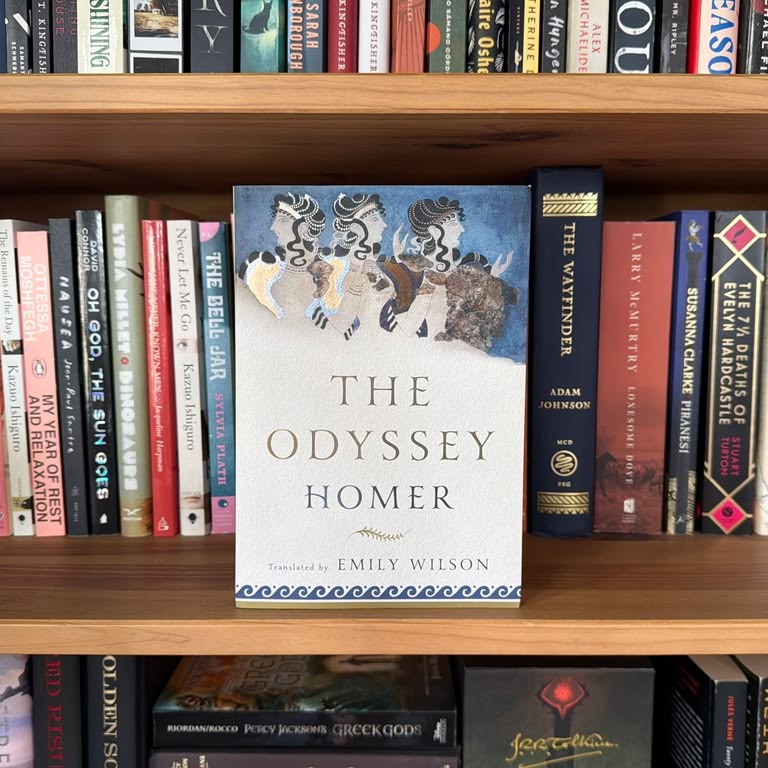
Emily Wilson, acclaimed translator and Ivy League classics professor, was the first woman to translate The Odyssey into English. Following the release of Nolan’s film, she wrote a review critiquing how the movie disregards its source material. Wilson calls the film a “combination of grandiosity and superficiality,” explaining how far Nolan has strayed from the Homeric tale.
Jack Mitchell, a classics professor at Dalhousie University, taught a class last term about the epic poem in translation.
“In terms of its degree of faithfulness to the original, it takes some pretty major liberties with the themes as much as anything else,” Mitchell says. “[Nolan’s Odyssey] is dealing with issues which the director wants to talk about for the modern world … It’s an ancient story through a modern lens.”
Odysseus is the most changed character in Nolan’s adaptation, according to Mitchell. The protagonist, portrayed by Matt Damon, becomes a modern version of his Homeric self. He loses his sense of deception, trickery and unfaithfulness, all crucial traits to the character in Homer’s original tale.
“In the poem, Odysseus is not a good man in modern terms,” says Mitchell. “He’s a liar, he’s a deceiver, he’s a master of trickery, and those are not things that we associate with heroism today.”
He also regrets sacking Troy in the film, which Mitchell says changes the narrative about Homer’s iconic gods.
“It’s true that in the poem, the Greeks commit a lot of atrocities when they sack Troy, and that’s one of the reasons why the gods turn against them … it’s not really because of sacking the city so much or killing everybody, it’s because of their disrespect for the gods,” says Mitchell.
A majority of the changes in Nolan’s film lead back to the missing gods in the plotline. Mitchell says these gods are incredibly essential to Homeric poetry.
The film, however, has done miraculously in theatres, reaching over $1.6 billion in global box office receipts and has become the all-time highest-grossing R-rated movie.
Dalhousie Film Society co-president, Joaquin Rosal, has seen the movie four times in theatres since its release.
“The first time, I went through it with more of a critic’s perspective, but then the third and the fourth times, I just really tried to appreciate what it is that he’s just trying to give to us,” he says. “It’s no longer, ‘I’m Christopher Nolan adapting The Odyssey,’ it’s Nolan’s Odyssey.”
Themes of Christianity
“You almost get the feeling this is a kind of an atheist version of The Odyssey,” says Mitchell.
Aliyah Daya, a third-year classics student at the University of King’s College, says Nolan’s version of The Odyssey felt religious because of the lack of Greek gods in the film.
“Odysseus makes a comment about how the gods are supposed to remind us of what’s good in the world, but I realized that’s not how they view the gods,” she says. “That’s a really Christian way of viewing divinity.”
Daya says that the guilt Odysseus feels throughout the film also resembles Christian values.
Two notable gods are physically missing from Nolan’s work: Zeus and Hermes. The two Olympians assist Odysseus’ personal journey in Homer’s tale.
Mitchell says that Nolan’s exclusion of the gods gives the film a modern tone. The gods are almost brought down to Earth, instead of existing solely at the height of Mount Olympus.
“It’s just impossible to imagine an ancient epic without the gods,” he says.
The women in the story are also portrayed as vessels for Odysseus, rather than challenges to expand his personal journey.
Mitchell says that Circe is not as divine as in the original poem, with her frightening nature being the focus of her character in the film. Mitchell also assesses that Calypso is meant to be in unrequited love with Odysseus, and carefree in the poem, but is rather unjoyful, and a “beachcombing, late 40s babe type.”
As Nolan’s Odyssey has popularized the story itself, Mitchell is glad that more of the general population are interested in ancient Greek literature and history.

Other Posts in this category

Make-A-Wish partner society founded at Dalhousie

DSU rehires same security contractor for DalFest after alleged assaults last year, adds new safety measures
Tony turns Provincetown into Hollywood

Meta’s AI glasses are for perverts

MacLeod is out of tune with Nova Scotians