
Science and sport unite for the betterment of hockey athletes
Dalhousie uses biomechanics to reduce injuries for goalies
October 8, 2026 / Ryan Bradbury
Dalhousie University researchers made a splash in the sports science world, addressing decades of stagnant research and persisting problems with athletes.
Ryan Frayne, an associate professor of kinesiology, has studied the wear and tear of hockey goaltenders for decades. Frayne, a former goalie himself, is familiar with the stresses of the position.
Frayne works in kinematics, a branch of classical mechanics that generally studies motion. This allows sports scientists to determine impact points on goaltenders through data analysis.
“We can start to understand not only their positions, but also see how the equipment is mitigating forces from ice impacts,” says Frayne.
Alongside Frayne is Matt Warburton, the current Pittsburgh Penguins Sports Science Consultant and Halifax-based sports scientist who developed a software program to help Dalhousie athletics analyze their goaltenders, and will help lead the charge towards safer equipment.
“These are the sorts of things that are just so beneficial for our program, both from a kinesiology academic side but also from an athletic side,” says Frayne. “It gives us an advantage that I don’t think many schools in Canada have yet.”
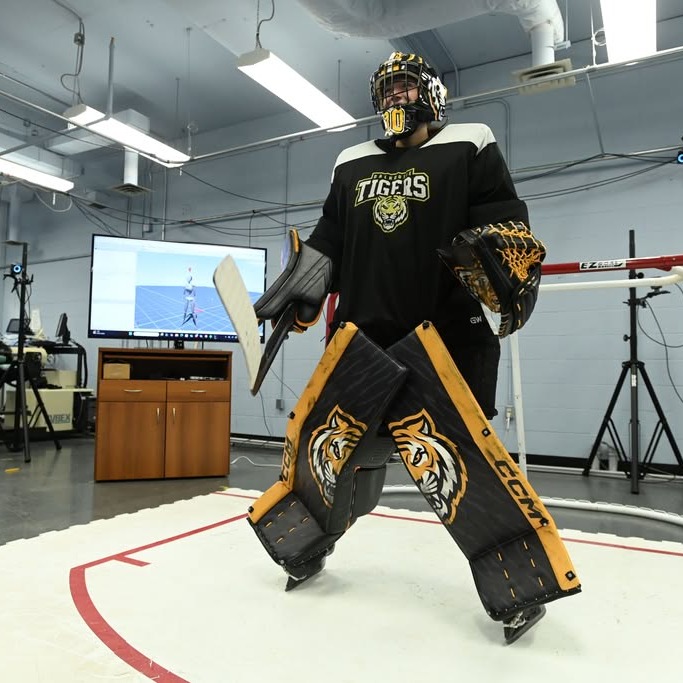
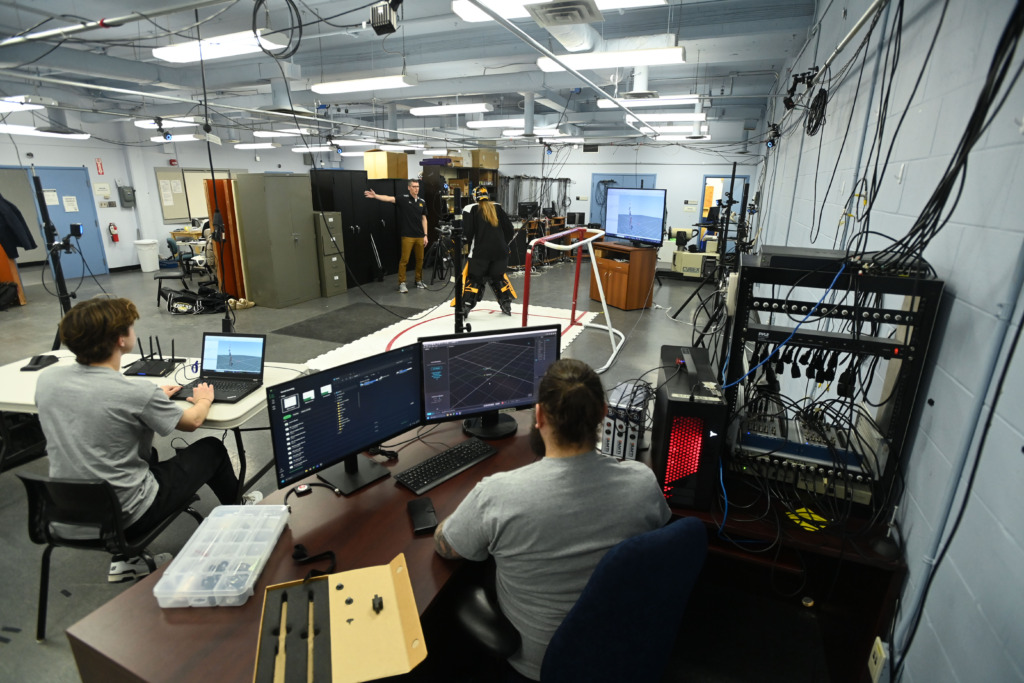
Dal has started using a 3D kinematic suit that allows scientists to track full-body human motion in real time. The suit is worn underneath the Dalhousie Tigers goaltender’s equipment.
“The goaltenders can wear their full equipment, and we still get an idea of what their bodies are doing underneath all the gear,” says Frayne.
Frayne maintained a partnership with CCM Hockey for 13 years, where his research on goaltender safety and performance was implemented in CCM’s equipment designs. The research involved an in-depth analysis of forces on the goalies’ joints.
This is done by taking the positions of goaltenders and modelling back forces occurring on the body.
“Goaltenders are classically known for having hip problems,” says Frayne. “We can start to identify any high-use [areas] or examples where they’re getting high impact, but they’re also in a bad hip posture which could potentially leave them susceptible to injury.”
Jasmine Kwan, a second-year master’s student in kinesiology at Dalhousie, played for the Tigers between the pipes for six years. She has experienced both sides of the research.
“It’s been fun to change my perspective on goaltending through that biomechanical lens, because before I was like, ‘I’ll just strap on my pads,’ but now I’m actually thinking, ‘Oh, these are the forces that are being applied,’” says Kwan.
Kwan says she’s found many goalies are now experiencing knee injuries rather than hip injuries. She says this could be due to the evolution of equipment and how it causes goaltenders to put strain on different parts of their bodies by applying different forces.
“Technology is changing everything with what we are putting in the gear,” she says.
Seth Daley, a part-time academic for the kinesiology program at Dal, has helped Frayne develop the data used to create the 3D kinematic suit despite having little to no interest in hockey.
“I come at it very much interested in the math and the movement side of things,” says Daley.
He says during a facility tour for high school students, among them was a goaltender whom they showed around the goalie lab. This added to their decision to come to Dalhousie to do a kinesiology degree.
“It’s important for us to get the word out as to what’s going on because there might be somebody out there who wants to do it,” says Daley.

Read more from the gazette
The AUS to ACAA pipeline
Chartwells manages half of SUB food vendors after Abstract takeover

Africville tribute on display at Nocturne
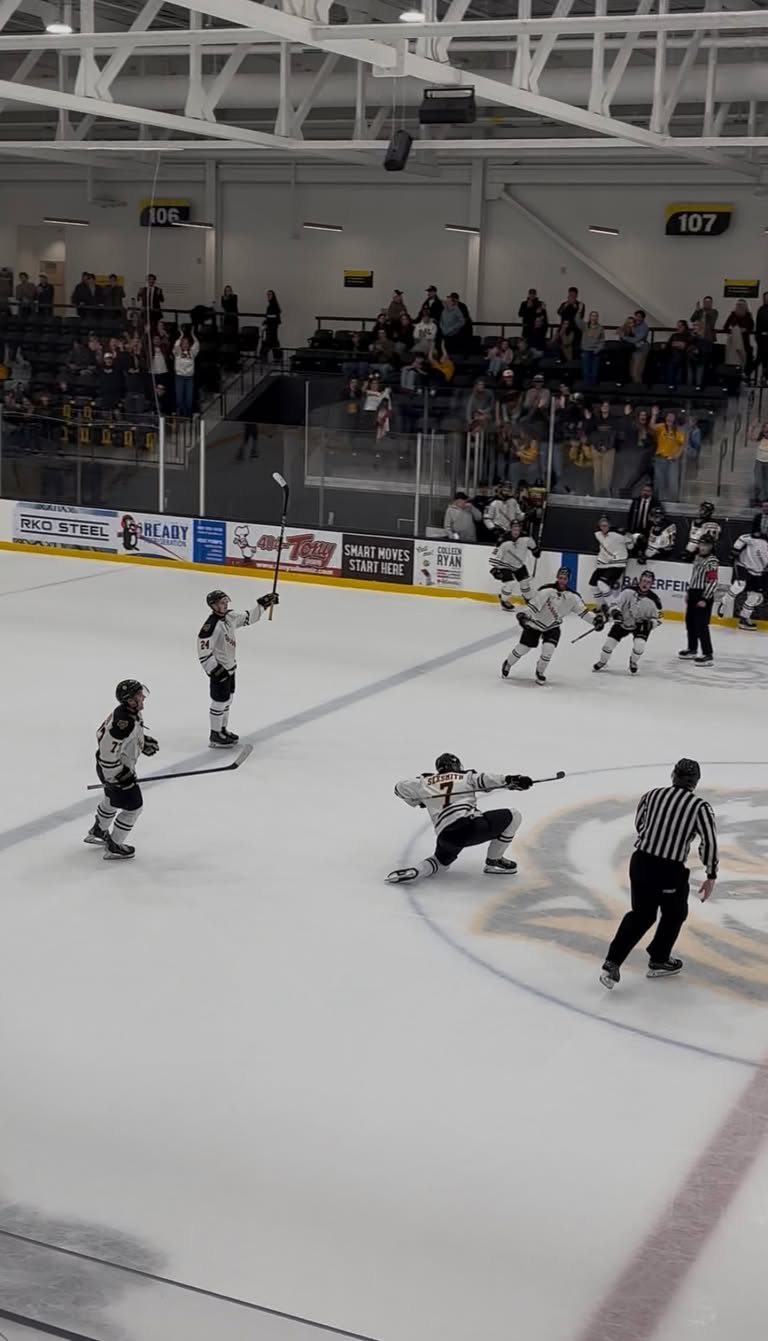
Tigers defeat Moncton 3-2 in a dramatic overtime finish
The Gleeboot could save lives