
Grabbing the bull by the horns at the Hants County Exhibition
Ox pulling continues at North America’s longest-running agricultural fair
October 8, 2026 / Laura Publicover
Just outside of Windsor, N.S., the faint sound of cowbells mixes with the chatter of families. A crowd has gathered for the Hants County Exhibition, North America’s longest continuously run agricultural fair.
Beginning in 1765, the exhibition is run by the Windsor Agricultural Society and celebrates rural living, connection to the land and — you guessed it — agriculture.
This year’s fair ran for two weekends between Sept. 18 and Sept. 27. On the second Sunday, I made the journey from Halifax to Windsor for one purpose: ox pulling.
Ox pulling is a time-honoured tradition in Nova Scotia that goes back to the province’s agricultural roots. Centuries ago, two bulls would be castrated and trained to work as a pair, then promoted to the rank of ox. Together, the oxen would move across the field and drag a plow behind them.
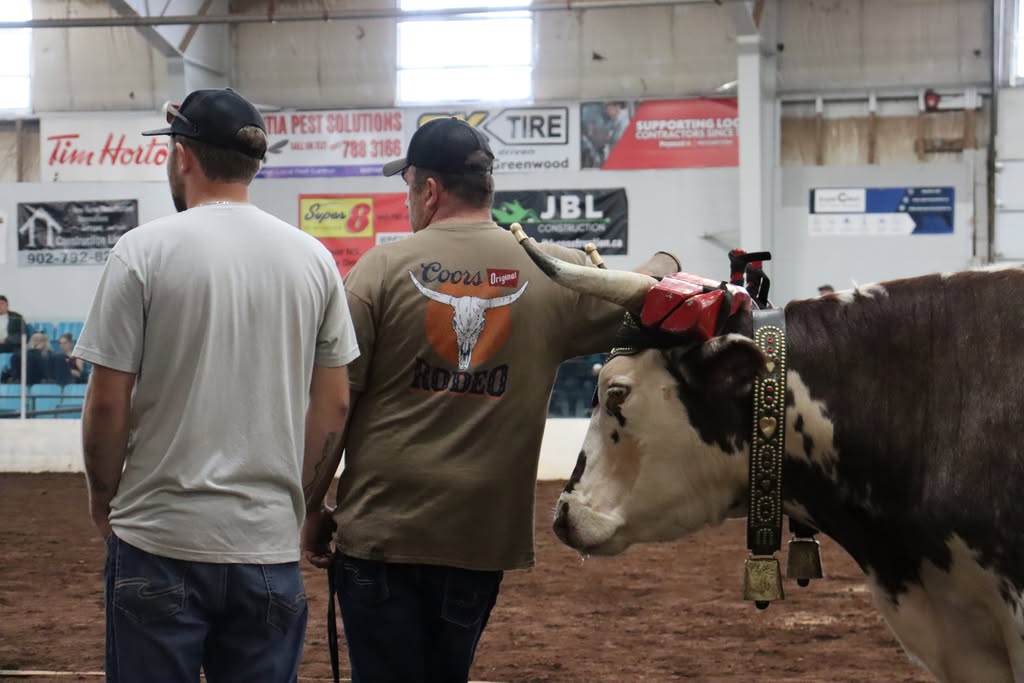
While farm technology looks drastically different now than 100 years ago, many people still pull oxen competitively.
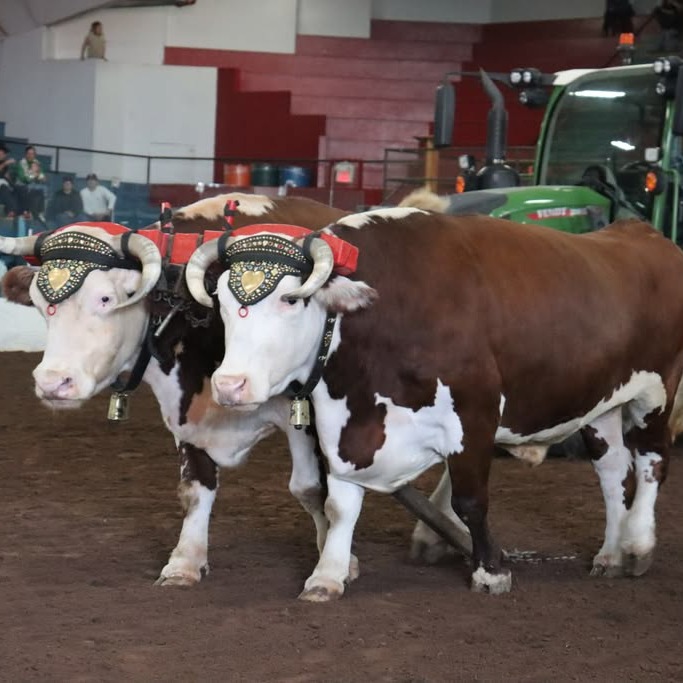
In Nova Scotia, the beauty of the ox pull has been celebrated by many photographers and artists, including Maud Lewis. The competing oxen wore a scarlet-coloured yoke — a crossbar used to harness the pair together as they travelled across the arena. Their horns are tipped with brass, a bell is put around their neck and an ornate headpiece falls across their brow.
The Freeman and Frances Swinamer Memorial Ox Pull took place on the last day of the event.. Many of the teamsters, the handler or driver who commands the oxen, were third-generation pullers, most also bearing the last name Swinamer.
The oxen came into the arena beside their teamster and waited patiently as the course was prepared. A tractor set a steel sled at the start of the course, and the oxen were hitched to it to complete their pull. Concrete blocks weighing 3,000 pounds — about the same as a Toyota Corolla — were loaded onto the sled.
Ox pulling is not an exact science. The starting weight depends on the ox’s size, and the style of pull varies from region to region. At this event, a team has three tries to pull the sled three feet. Once every team has completed their pulls, the sled is reset to the starting line and another block is added to the pile. By the end of the event, the remaining oxen were tasked to pull over 6,000 pounds.
Just outside the arena, the celebration of cows continued. Farmers travelled from all over Atlantic Canada to show off their prize-winning cattle.
Janet Redden, a Windsor local who owns Kingsmeadow Land & Cattle Ltd, came to the exhibition to participate in the agricultural demonstration. She’s a fifth-generation farmer who grew up on a dairy farm. Currently, she raises Charolais cattle, a French beef cattle breed with an ivory hide.
“My husband had a handful of Charolais, and then we just expanded, grew and got bigger and bigger every year,” Redden says. “We’ve been showing here at this exhibition since it started.”
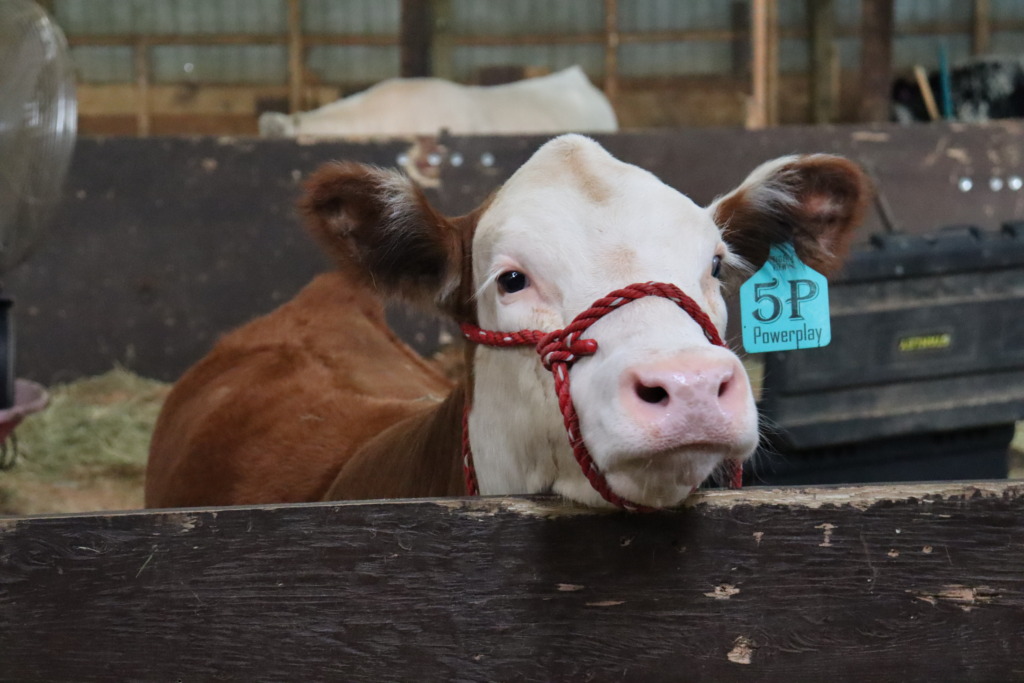
Many of the demonstrators in the tent had been involved in their local 4-H clubs, an organization dedicated to developing the youth, and have deep ties to agricultural societies. They work hard to keep people connected to the land and food systems, while engaging in often friendly — but sometimes fierce — competition with each other.
Marvin Peters had travelled all the way from Tantramar, N.B., to display his herd, most of which had been sired by a bull named Magic Mike.
Originally from Prince Edward Island, Peters took over his father’s farm in 2000. Now his nephew runs the farm, marking the third generation to do so. Despite record-high costs and low profits, countless cattle farmers keep working I because they can’t imagine life without it.
“We just love it. It’s amazing,” Peters says. “It’s a competition, but everybody comes sit with us after the competition is over to have a drink. There’s no more fighting.”

Read more from the gazette
The AUS to ACAA pipeline
Chartwells manages half of SUB food vendors after Abstract takeover
Africville tribute on display at Nocturne

Tigers defeat Moncton 3-2 in a dramatic overtime finish
The Gleeboot could save lives