
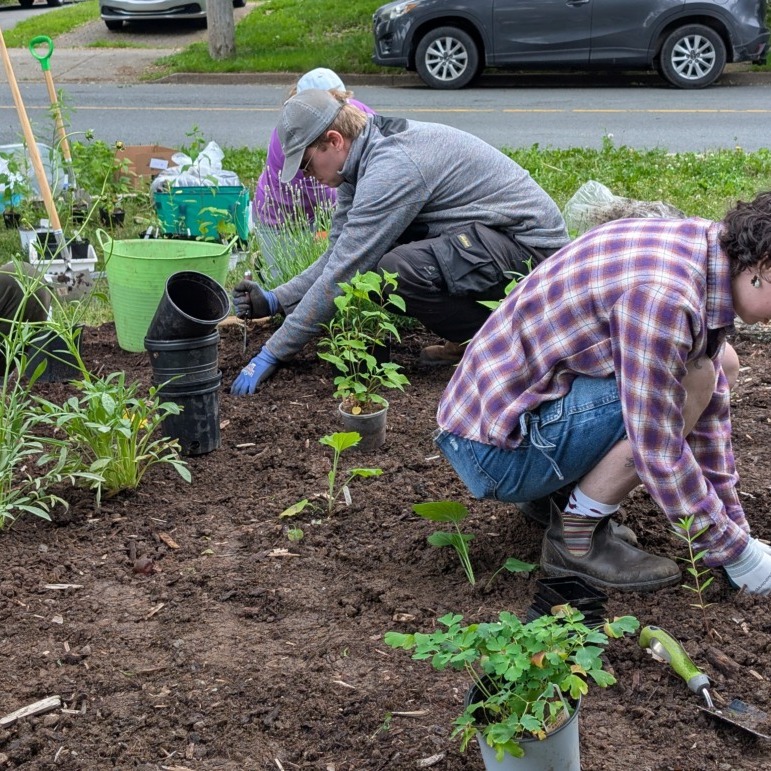
The initiative that is planting hope in Halifax
Dalhousie faculty and students creating native pollinator gardens
September 24, 2026 / Sophie Bolan-Campbell
To combat biodiversity loss, Dalhousie University teaching fellows and professors are planting hope in Halifax with an abundance of biodiverse, native pollinator gardens.
EcoHope, a faculty and student-led group, has curated several newly established native plant gardens, with Flinn Park receiving the most recent pollinator garden in June.
These gardens are designed to make the pollination process easier for species like bees, moths, butterflies and many birds, which are currently at risk due to loss of habitat, non-native plants and pesticides.
Amy Mui, a university teaching fellow in the environmental science program at Dalhousie, says that due to human activity, highly cultivated and manicured gardens are composing the environmental landscape more and more.
Mui says these cultivated gardens do not provide the support Nova Scotian networks of biodiversity need for native species to thrive in an age where biodiversity is already declining.
Native pollinator species have evolved around native ecosystems over thousands of years, creating biodiverse ecosystems before humans entered the environmental landscape, says Mui.
Creating a network of pollinator gardens allows pollinators to have a safe corridor to go through and increase their populations, says Mui.
Eco-anxiety: a growing issue
As both a student and a faculty-led initiative, EcoHope is working to counter eco-anxiety, a growing area of concern in environmental psychology, says Mui.
“Eco-anxiety is a sum of many different emotions that are connected to the state of the environment,” says Mui. “That leads to a feeling of hopelessness in action, despair and the deepest, darkest part of that bucket.”
Mui says eco-anxiety leads to an inability to act, an inability to hope and a “space of stasis.”
Shannon Johnson, who is an associate professor in psychology and neuroscience at Dalhousie and the co-director of the school’s Centre for Psychological Health, says eco-anxiety differs from the anxiety psychologists have traditionally studied.
“A lot of other anxieties are not always realistic,” she says. “They are fears that people can learn to not be afraid of, but [eco-anxiety] is grounded in reality, so it’s different in that regard.”
Johnson says EcoHope seeks to relieve this feeling. Whether it be through planting events or field trips, the group is inspiring hope and making change in Halifax through meaningful local action.
She also says bringing people together and building community is an important aspect of countering eco-anxiety.
“We’re social creatures and we’re also evolutionarily programmed to connect with nature,” says Johnson.
Creating hope for students and species
Ecohope was founded on the premise of enriching the student experience across all disciplines by forming a tangible way to address the biodiversity crisis directly.
Linden Thomas, a Dalhousie student who is studying environmental science and sustainability, says conservation has always been an important part of her life.
“We have a duty to help species that are suffering from the impacts that we have caused in terms of biodiversity loss, climate change and land use,” says Thomas.
Thomas was a teaching assistant for Mui and was also an intern for EcoHope in 2025. She now volunteers with the initiative.
As a student who helped get EcoHope off the ground, Thomas has seen people come together through the group and create positive change on a small — but meaningful — scale.
“You’re planting a garden that you know will support species,” says Thomas. “It’s really satisfying to see the fruits of your labour.”

Thomas says in her field of study, making meaningful impact is often frustrating given the bureaucratic constraints from larger institutions that usually impede progress.
Shauna Doll, an environmental specialist for the Halifax Regional Municipality, says housing is often the forefront issue when developmental decisions are made in Halifax.
“Sometimes people forget that when you’re building something, you’re building it on land,” says Doll. “Everything is on land. This is living, breathing land that supports us and keeps us alive.”
Thomas says the Halifax municipality has been important in the reintroduction of native plants, since projects like EcoHope tend to be overshadowed by larger institutions.
“Local initiatives are important because it all matters,” says Thomas. “All these little community gardens create a kind of landscape of connectivity for species like pollinators.”
Doll also worked as a teaching assistant for Mui and helped to organize and plant the pollinator garden at Flinn Park.
“Amy does a really great job of bridging the scientific parts of climate and environment work, but also making room for people to be human and have emotions and feelings about all of this work — especially given that she works with young people,” says Doll.
Supporting biodiversity
EcoHope has planted four pollinator gardens in Halifax to date, and hopes to collaborate with parks in Halifax more often, and eventually partner with organizations and corporations to bring native plants to local businesses.
The Flinn Park garden has brought together about 15 volunteers to plant about 20 different native species so far, including plants like pearly everlasting, cutleaf coneflower and cardinal flower, according to Mui.
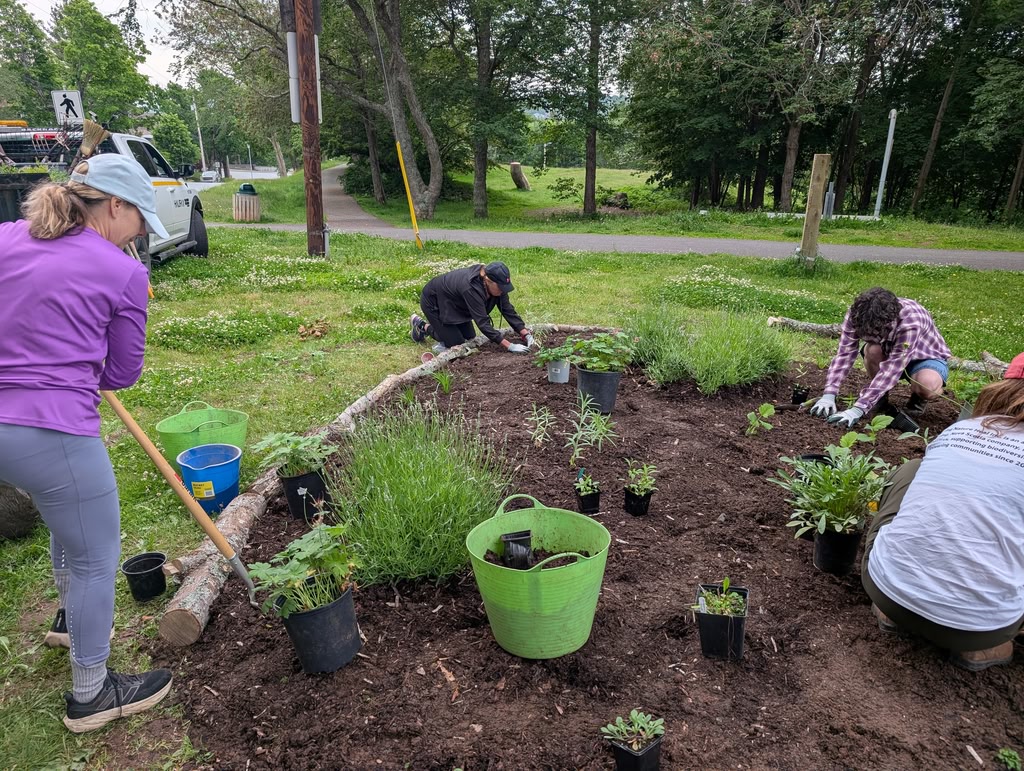
She says these native plants are crucial in supporting local biodiversity.
“Native plant gardens are essentially the ecosystems that existed before humans came on the landscape and changed it to the way that we prefer to have it,” says Mui. “Our whole system has evolved around native plants, native ecosystems and what they provide to biodiversity.”
The cardinal flower and the hummingbird, for instance, have co-evolved to have perfect compatibility given the cardinal flower’s tubular shape and the hummingbird’s long beak, says Thomas.
“They’re perfect companions for each other.”
Melanie Zurba, a co-founder of EcoHope and a Dalhousie professor of environmental studies and sustainability, says we should feel hopeful about the future because connection with nature is an intrinsic part of being human.
“People are still incredibly grounded. People still like planting seeds, connecting to the Earth, engaging with art and thinking about the environment,” says Zurba.
Mui emphasizes that native plants are much more resistant than non-natives to climate change and they point the way to the future:
“This is the natural state that we should be striving for.”

Read more from the gazette

Halifax’s thedottedline is here to finish what Kendrick Lamar started

The AUS to ACAA pipeline

Chartwells manages half of SUB food vendors after Abstract takeover
Africville tribute on display at Nocturne

Tigers defeat Moncton 3-2 in a dramatic overtime finish