
How did housing in Halifax get so bad?
How the city’s crisis still can’t escape decisions made 30 years ago
November 5, 2026 / Dylan Follett
When experts describe Halifax’s housing climate, they tend to do it through metaphors familiar to Maritimers — the metaphors of bad weather and nautical disasters.
One describes the city as “the centre of the housing crisis storm” in Canada. Another says the “perfect storm of crises” have taken Halifax from being a relatively cheap city to one of the least affordable in the country.
Haligonians pay roughly the same percentage of their income toward rent as people in Vancouver, widely considered to be Canada’s most expensive city. Halifax also has lower vacancy rates than Vancouver and has seen rents increase at almost quadruple the rate of the B.C. city in recent years.
Michael Kabalen, executive director of the Affordable Housing Association of Nova Scotia, likened Halifax’s current non-market — or public — housing stock to the end of the Titanic.
“We’ve already got people in the water. They’re drowning, they’re trying to get on whatever they can float on,” he says, adding that the city is a far cry from having lifeboats, let alone avoiding the iceberg.
But up until 30 years ago, it was clear skies.
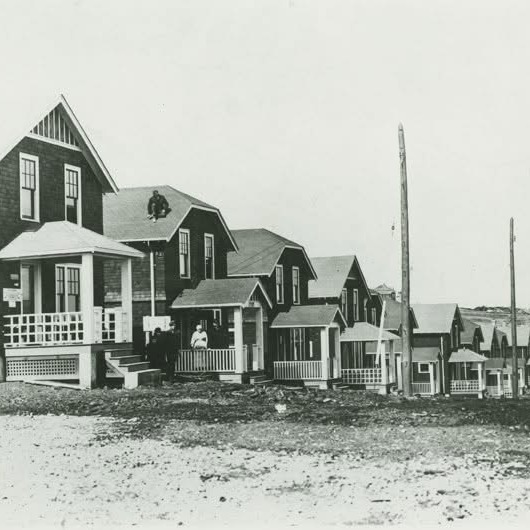
From the ‘50s through the start of the ’90s, housing in Halifax was plentiful, high quality and cheap. The average one-bedroom rent was $497 in 1992, less than 30 per cent of the average monthly income at the time.
“The market solved for affordable housing,” says Kabalen.
A large part of that solution was support from the federal government. In the decades after the Second World War, the government invested heavily in housing, both through direct construction and non-profits. In the ‘60s and ‘70s, the government supported 30 to 40 per cent of all housing construction.
“They were investing in affordable, public housing and partnering with provinces and territories,” says Catherine Leviten-Reid, an affordable housing researcher and professor at Cape Breton University. “You saw investment in brick and mortar construction of housing … happening in the province until the early 1990s.”
“Then you had a period, starting in about 1995, where construction of non-market affordable housing ended,” she says. “It was a very blunt stop to those investments.”
At that time, government budget deficits and shifting political winds led to neoliberalism — a political and economic ideology favouring free-market capitalism and reduced government spending on social programs. Successive federal governments, first under Brian Mulroney and then under Jean Chrétien, began to disinvest in housing and shift the responsibility for it to the provinces.
Through the ‘90s, responsibility for housing in Canada was hot-potatoed down levels of government. In Nova Scotia, it was essentially dropped altogether.
The federal government first stopped funding all new social housing in 1993. Three years later, Ottawa shifted responsibility for existing social housing onto the provinces, and for building new units. The federal government provided some subsidies, but few directions. The last major public housing project in Nova Scotia was completed in 1995.
In parts of Canada, the provinces delegated that responsibility to municipalities that would run housing. Nova Scotia and the other Atlantic provinces did not do that — instead, they passed laws to keep the responsibility and federal funding for housing themself. The only thing is, they didn’t put the money into housing.
The decades of investment from the federal government had led to a plentiful housing market which no longer required as much new construction. There was trust that the private sector would be able to build anything new needed. So, the provincial governments stopped building, instead spending housing money on other government projects.
“That made sense for a few years. Everyone said, ‘we’ll get back to building housing when we need to,’ but then 30 years goes by, [and] you’ve lost all your internal knowledge on how to do it,” says Kabalen. “You’ve lost all your funding mechanisms, and somehow the money’s not as plentiful as it once was.”
“So, it wasn’t a conscious decision designed to create the housing crisis, but that’s one of the dysfunctions of the government. Decisions they make to solve problems, in the long term, often create new problems,” he says.
The ‘90s disinvestment planted the roots of the modern housing crisis, and government housing plans in the following years lacked the scale or funding of previous projects. This meant that by around 2018, a “perfect storm” of issues — including rising cost of living, migration to Halifax and eventually the COVID-19 pandemic — led to the current housing crisis, without government tools to combat it.
“Every [Nova Scotian] government, be it NDP, Liberal or Conservative, really relied on the private sector to build,,” says Jeff Karabanow, a Dalhousie University social work professor who studies housing.
“For about 30 years there has been such little investment in any type of affordable or public housing. So [we’re] playing catch-up now,” he says.
Today, over 1,700 people are homeless in the HRM, almost triple the 2022 total. The modern total is an astronomical increase from before the ‘80s, when homelessness was so infrequent the modern concept of the term didn’t even exist.
The Urban Stress Index, which measures the city’s cost of living based on monthly income, rent prices, and costs of essential food, ranked Halifax the most expensive major city in Canada. It noted housing as the main force driving the unaffordability, with the average monthly rent of a one-bedroom apartment costing nearly 60 per cent of the average monthly income.
The average asking rent for a two-bedroom apartment in Halifax increased 82 per cent between 2019 and 2026.
Today, the average asking rent for a one-bedroom apartment today is what the average rent of a two-bedroom just five years ago was.
Since the post-war government building boom, Halifax’s share of housing that was publicly built or supported dropped from 10 to 20 per cent, to about three in 2026.
Some signs, including increasing vacancy rates and thousands of newly built units that have recently been added to the market or will be coming onto it soon, may point to the crisis lessening. However, Leviten-Reid says we’re still “very much in a crisis,” and that many potential housing solutions don’t solve the neoliberal disinvestment issue at the root of it.
Many of the newly built units are higher-end apartments, meaning they won’t directly provide relief to middle- and lower-income earners, those most affected by the crisis.
“The hopeful solution is the market will solve it,” says Kabalen. “I am not optimistic that it will.”
Leviten-Reid also thinks that the large share of the rental market owned by a small group of corporate landlords may be contributing to the crisis, as the landlords “try to squeeze as much profit out of their units as they possibly can.” According to a study by Dalhousie Legal Aid this summer, 43 per cent of all rentals in the HRM are owned by just 20 landlords.
The provincial and federal governments have begun to take steps to address the crisis, but many are far away from the post-war heydays of investment.
“They were at a point where they had no choice,” says Leviten-Reid, referencing burgeoning government action, including the establishment of the National Housing Strategy in 2017 by then-Prime Minister Justin Trudeau.
“Homelessness was a major crisis and so it just got to the point where the government had to invest in affordable housing … but at the same time, the logic that took over different levels of government with the rise of neoliberalism in the 1990s really remained.”
The strategy, a decade-plus long plan to spend over $100 billion to increase housing access, had a fragmented and slow mandate — one that did not include the direct involvement in building, as seen before the ‘90s.
Nova Scotia also tried its hand at affordability control, with a temporary annual five per cent cap on rent increases implemented in 2024. The cap has been described as “the absolute worst of all worlds” by critics, pricing out small landlords and incentivizing tenant turnover, as increases are not capped when a unit changes tenants.
The Houston government has also hugely increased spending on housing, including the launch of a $1.7 billion, five year plan in 2023.
Last September, the federal government established Build Canada Homes, a Crown corporation and another attempted solution at reckoning with the housing crisis. As one of their first projects, the new agency announced a development in Dartmouth: the federal government will directly build 600 units, while the provincial government has pledged to have private developers build another 300 on government-owned land.
“I think as BCH gets going, they’ll do more and do things differently,” says Kabelen.
“In Nova Scotia, they’ve done absolutely nothing differently than they did when it was [Canadian Mortgage and Housing Corporation],” another federal agency which used to encompass BCH’s role. “In fact, it feels like it’s a lot less and like it’s taking longer.”
Leviten-Reid isn’t holding her breath for Build Canada Homes, or other efforts, to quell the crisis.
“We’re throwing money at at the problem rather than really addressing the root causes of the problem, [that] our social assistance rates are very, very low, we have a shortage of non-market housing and the market housing that’s being provided by profit-motivated landlords is expensive,” she says.
Kabelen says that despite it all, he still has hope.
“There is a lot of optimism in this work. The right people are paying attention to it. I think young people aren’t going away,” he says.
“We just need to kind of navigate the ship the right way through the harbour, and I think we can get through.”

Read more from the gazette

The cost of having a vice

How a psychology and history student affords to live in Halifax

Want to travel affordably as a student? Consider volunteering

I might fail my classes, but at least I have a paycheque

Building sandcastles without sand