School named after Dal changes name due to namesakes links to slavery, racism
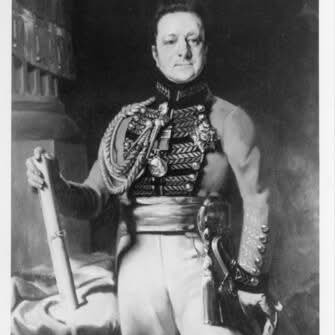
Lord Dalhousie called Black Nova Scotians “slaves by habit” and starved them
September 10, 2026 / Dylan Follett
A school named after Dalhousie University changed its name this summer to cut ties with the university’s pro-slavery namesake.
Dalhousie School, a kindergarten-to-Grade-5 school in Winnipeg now called Aniibiminan School, removed Lord Dalhousie’s name on June 24 over his anti-Black racism and support of slavery — a legacy that has launched previous discussions regarding changing the name of the university, which he helped found in 1818.
Tori Patzer, the assistant superintendent of Aniibiminan’s school board, says the name change came from a community inquiry led by the students.
Students at the elementary school learned about Lord Dalhousie’s legacy, and in light of the history and a desire to reflect the cultural and linguistic diversity of the school, they moved forward to seek a more inclusive and locally meaningful name.
Consultation with the broader community and Indigenous elders led to “Aniibiminan,” a local Indigenous word for summer berries.
Isaac Saney is the co-ordinator for Dalhousie University’s Black and African diaspora studies program and has taught at the university for 34 years.
“[Name change] is not a subject that’s actually resurfaced to any significance in the last little while,” says Saney. “But the fact that this elementary school has renamed itself once again puts it in our consciousness.”
“At some point you have to render account with history,” he says.
Saney contributed to a 2019 report into the school’s ties to slavery and Lord Dalhousie’s legacy. The report called for apologies and reparations, but stopped short of recommending a name change. Saney was not on the panel that decided against a name change.
The report found Lord Dalhousie saw Black Refugees “as servile persons who had to be whipped into submission [and he] marginalized African Nova Scotians in almost every aspect of their lives.”
“If you go back to [Lord Dalhousie’s] generation, the world as it was 200 years ago, you’ll find controversial things in every walk of life really,” says James Ramsay, the current Lord Dalhousie and a descendant of the university’s founder.
“His legacy is his legacy. Whether people want to continue to remember that part of it is really up to them.”
The report also revealed the funds allocated to start the university came from duties collected at a port in Maine occupied by the British, about 30 per cent of which came from slave-made goods.
The lieutenant governor before Lord Dalhousie collected the duties, but Lord Dalhousie chose to put the money towards the school. He had the option to use the funds to support impoverished Black Nova Scotians and instead “blames them for their desperate situation and turns his back on them,” says the report.
As a British military officer in 1794, Lord Dalhousie also personally worked to re-enslave Black people on the Caribbean island of Martinique who’d been freed by French revolutionaries.
The panel that created the report gave “serious thought to a recommendation to rename the university,” but ultimately decided against it.
They decided that the legacy of the name “Dalhousie,” as an internationally recognized university of 200 years that’s worked towards reconciliation and equity, mattered more than that of its founder.
Saney thinks a name change would be a good step, but it isn’t the most important act in reckoning with racism at Dal.
“A name change is not inconsequential and trivial,” says Saney. “What’s more important is actually concrete programs to address these issues of inequality, inequity, disenfranchisement and marginalization.”
He says the first step to reconciliation with Lord Dalhousie’s legacy is the understanding of it among the Dal community, and there should be a prominent section about it on Dal’s website.
The only mention of ties to slavery and anti-Black racism on the history page of the school’s website is when it says “some of the customs duties collected from [the port in Maine] were generated by West Indies traders dealing in slave-produced commodities.”
The page also says Lord Dalhousie created Dal “to establish a Halifax college open to all, regardless of class or creed,” though it was only open to white men and wouldn’t see its first Black student for 78 years.
Lord Dalhousie’s beliefs on education were considered progressive for his time. Dal was the first degree-granting Nova Scotian college to accept students of all Christian denominations.
“Is Dal perfect? No … But we have made significant accomplishments and a significant impact on people’s lives,” says Saney.

Read more from the gazette
BREAKING: Ella Mowbray Chriske acclaimed as KSU president in by-election

Over 100 people protest against AI data centre at legislature

Halifax’s thedottedline is here to finish what Kendrick Lamar started

The AUS to ACAA pipeline
Chartwells manages half of SUB food vendors after Abstract takeover