Klara and the Sun seriously lacks soul
The adaptation fails to articulate the true nature of the source material
November 19, 2026 / Maia Dalla-Costa
“Do you think there is such a thing? Something that makes each of us special and individual?”
This is the question that lingers after you close Kazuo Ishiguro’s book, Klara and the Sun. The answer is what the new 2026 film adaptation struggles to translate onto the screen.
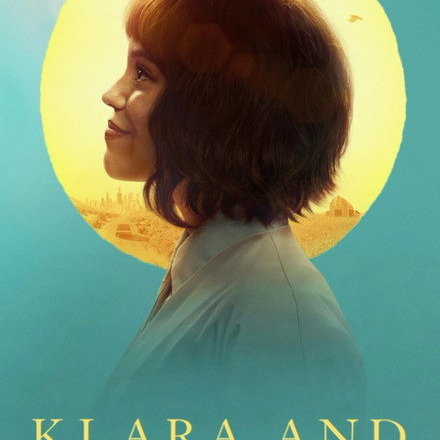
Directed by Taika Waititi, the story centres around Klara (Jenna Ortega), an “Artificial Friend” bought to keep Josie (Mia Tharia), a sickly teenage girl, company.
In the aftermath of the Third World War, a brand-new society has emerged where children are genetically modified, and teenagers rely on robots designed for companionship.
Klara is “nourished” by sunlight. Her role is simple: to help Josie with whatever she needs while learning about human behaviour. After a light and playful beginning, the tone darkens. Josie’s illness worsens, and Klara is convinced she can save her with the sun’s help.
What begins as a beautiful story about friendship turns into a more disturbing one about grief and what it means to be human.
This brings up an important question the story asks: could humans be replaced?
In a world where AI grows faster every day, and concerns about its use arise, this question feels incredibly relevant. Both the movie and the book convince you that Klara is part of the family, giving you just enough to nearly forget that, deep down, she’s not human. It offers a perfect glimpse of what our future could look like, a future where the line between human and artificial becomes harder to draw.
For a movie that is supposed to emphasize the uniqueness of humanity and our capacity to feel, I was disappointed walking out of the theatre no different than when I walked in.
The book fully immerses the reader in its unsettling atmosphere, deliberately creating a strange feeling of not knowing everything that makes you want to keep turning the page.
The movie, however, barely sets the scene. It jumps from one idea to another without developing them, making the story difficult to follow.
Waititi adds humour in a way that feels inauthentic and wastes minutes shifting the film’s tone instead of preserving the novel’s wistful nature. The movie consistently breaks the emotion to fit in a joke. The novel’s quiet, melancholic tone comes from Klara’s observations, which build the atmosphere and maintain its unique feel.
One of the novel’s strengths lies in how the reader gets to know the characters and follow their development through Klara’s eyes, discovering what makes them special and irreplaceable. In Waititi’s adaptation, these same characters feel like strangers even after the credits have rolled, and you can hardly understand their motives.
This is especially true of Josie’s mother, Chrissie (Amy Adams). In the movie, she seems cruel, whereas her actions in the book are explained through a deep dive into her past. Understandably, certain plot points are left on the cutting room floor, but changes like this make it hard to understand the characters’ true intentions without having read the book.
Despite failing to capture the book’s central message, the movie successfully transports you into another world, using colours to reflect the characters’ inner feelings.
When Klara waits for Josie in the early scenes, the movie uses bright, warm and golden tones reflecting her hope. As Josie’s illness worsens halfway through the movie, these bright colours give way to colder, darker ones that shift alongside the narrative. Combined with Michael Giacchino’s captivating soundtrack, the audio and visual elements are the only aspects that build tension throughout the film.
In the lead role, Ortega perfectly captures Klara’s personality. Through her curious gaze and childlike movements, she makes Klara feel both mechanical and strangely alive. As a robot slowly discovering emotions, she blurs the line between an Artificial Friend and a human.
In the end, the movie Klara and the Sun keeps the story but forgets its soul. Despite a beautiful atmosphere and strong performances, the movie feels incomplete and will leave you with heavy disappointment.
If you are curious about watching the movie, make sure to read the book first, a place where the real answers truly lie.

Read more from the gazette

Gratitude starts with attitude
What you can see in You Can See Everything
Paul Wozney wants Nova Scotians to get angry

The Dal review: La bola negra and All About My Mother
Friendship is dead