Panelists discuss the pros and cons of open access
Dal libraries host panel as part of Open Access Week
October 30, 2014 / Quinelle Boudreau
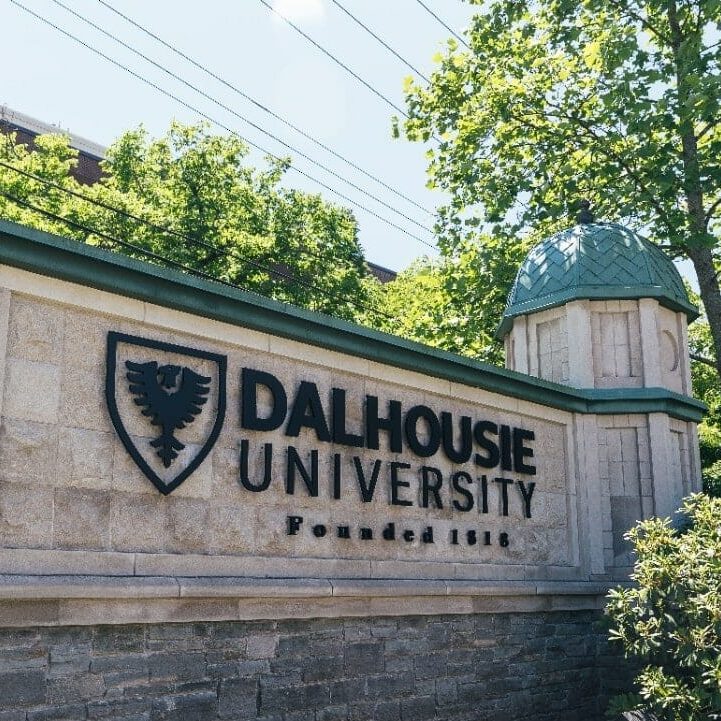
Dalhousie hosted a panel discussion on the differing opinions on open access on Oct. 23. The panel consisted of Dal English professor and Faculty of Arts and Sciences Associate Dean Research Julia Wright, Dal’s digital scholarship librarian Geoff Brown, and McGill-Queen’s University Press’ editor-in-chief Jonathan Crago. It was facilitated by University Librarian Donna Bourne-Tyson.
Open Access is an initiative that allows free, unrestricted, online access to scholarly publications, allowing a broader audience to access scholarly research.
This past week marked the eighth year of Open Access Week. Dal libraries hosted two events, including this panel discussion.
Wright spoke from the perspective of an academic in the field of social sciences and humanities research. Wright said she feels there are problems with the structure of open access. In the early 90s, there were many free online journals that published academic works. Over time, it became the norm to have an author processing fee, which ranges from $1500 to $3000.
“This model presumes that authors can pay $1500 to publish an article, and it presumes that there are grants to support these kinds of charges,” Wright said. “This is going to siphon millions of dollar from Canadian research because journals that are charging these kinds of fees are going to publish outside of Canada. It is also $3000 that is not spent here on research, or on supporting graduate students.”
Brown spoke about the general opinion of libraries about open access.
“If we look at the macroeconomics of academic publishing, it’s not really sustainable,” he said, “because the inflation of library materials has outpaced regular inflation rates by about 300 per cent, and our budgets have not been increasing.”
He added that scholars want to get feedback on their work by sharing it online. However, publishers limit their ability to do this using copyright laws, and not granting permission to publish many things online. Because of the high inflation rate and lowered budgets, there are many pieces of scholarly research that are not available through the library.
“The result is that a lot of publicly funded research and writing is not publicly available to the public, and to other researchers,” Brown said. “Open Access has evolved to try to fix this.”
Crago spoke from the perspective of a publisher of academic papers.
“The University Press is always in an uncomfortable in-between space,” he said. “It has a foot in academia, but also a foot in the publishing industry.”
Crago added that the problem with open access for a university press is that it isn’t a business model. It doesn’t account for the publication cost to remake a scholarly monograph, which is about $20,000 to $30,000. He said if we introduce open access, there is nothing to replace the money that the book sales would provide.
“A full-on push for open access is going to require a significant investment from universities and the research community,” Crago said. “I don’t think it is necessarily an immediate social good if something is available free of charge.”

Read more from the gazette
PWHL Takeover Tour returns to Halifax for three games, sets league record

Dalhousie women’s soccer team goes coast-to-coast to compete in nationals
Former Houston minister Becky Druhan elected Nova Scotia Liberal leader
A new director, upgraded space and provincial grant cut for Dal’s transition year program

Your vote matters