
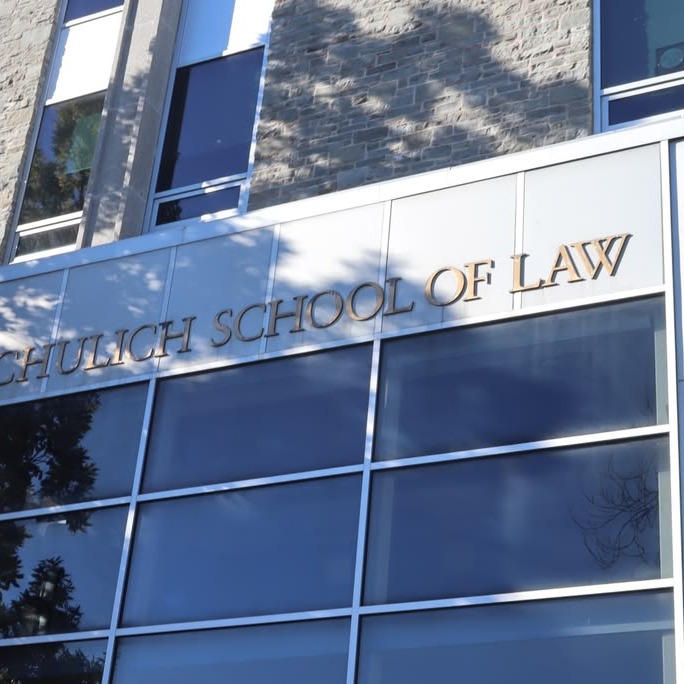
Dal aims to establish program for foreign-trained lawyers to practice in Canada
Schulich School of Law hopes to start program next year
October 22, 2026 / John Watson
Dalhousie University aims to offer a program to help foreign-trained lawyers get their certifications to practice in Canada.
Sarah Harding, dean of the Schulich School of Law, says there is an increased number of foreign-trained lawyers coming to Canada, which makes now an opportune time to step up and meet growing demand.
The program would allow lawyers with non-Canadian degrees to take Canadian law courses at Dal to help them get accreditation to practice law in the country. This would offer prospective immigrating lawyers another option for meeting the National Committee on Accreditation’s requirements.
The program was outlined in Dal’s 2026-27 operating budget as one of seven “key priorities and impact projects” which were allocated almost $4 million combined.
Harding says Dal has only done background research on the idea thus far. They are currently evaluating what would be required to create the program and determining what market demand looks like.
The goal is for the program to be made available for enrollment by next year. However there is not a set-in-stone timeline assigned to its development.
She says only a small portion of the money allocated in the 2026/27 budget has been dedicated to the idea so far. The exact amount already set aside has not been made public, and there is not an available estimate yet of how much the program will cost the law school.
“It is really about determining that market and how we might meet it. That is really the work that has gone into it. We have been looking at hiring somebody to help create and navigate the program,” says Harding.
Courses offered would allow foreign-trained lawyers to fulfil the requirements given to them by the National Committee on Accreditation, which certifies international lawyers to practice in Canada.
Harding notes the NCA currently certifies at least 1,500 people a year including a “substantial number” of foreign-trained lawyers.
The committee gives prospective lawyers instructions indicating courses and exams which will need to be successfully completed in order to become certified.
Harding says the majority of foreign-trained lawyers are required to complete tests or courses in Canadian constitutional law, administrative law, criminal law and professional responsibility, among others. She emphasized a growing need for options for them to take courses in Canadian law, as opposed to only writing exams.
“Some people have to do more, particularly if they are looking for entry into a common law jurisdiction and they are coming from a civil law jurisdiction.”
Universities in British Columbia, Alberta, Manitoba and Ontario already offer programs geared for foreign-trained lawyers, similar to the program proposed for Dal.
Through the NCA, requirements and expectations are standardized nationwide. The aim is to require foreign-trained lawyers to have the same qualifications as what is required by the Federation of Law Societies of Canada, which regulates domestic law schools and administers the NCA.
Development of such a program at Dal requires internal law school approval, as well as support from the Dal senate.
“For us in the law school, we have to figure out when, where, why, and how we do it,” says Harding.
Several of the ongoing logistical concerns include how courses would be crafted, who would teach them, when they would be offered and ensuring the program will not lose money.
Harding added an additional challenge would be in regard to space for accommodating an increased student population, as Schulich is already experiencing program saturation.
“This year, we had about a dozen people apply to us, who are foreign-trained lawyers, looking to take individual courses,” says Harding. “We are doing what we can to admit them to one of our classes,” she says.
Harding says most of It is very hard to squeeze them into what we currently do.”.
Harding says the school is “leaning towards” creating a separate program for foreign-trained lawyers to not overburden existing classes and faculty.

Read more from the gazette

The funding is lost, but the story goes on
Q&A with a member of the Gin and Jazz trio
“The quality is already suffering:” Dal makes all faculties and units cut 6.3% of spending
Could there be affordable housing hidden in Halifax? This group thinks so

Phoebe Bridgers wants you to be in the moment