
Dalhousie students, faculty will be involved in $30M natural gas project
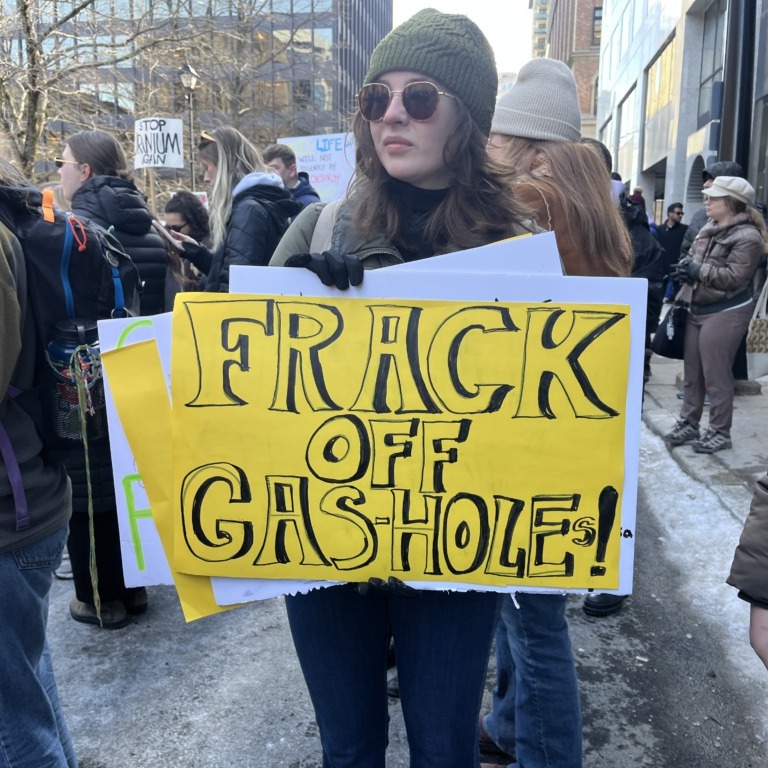
Community protests against onshore gas developments as project moves forward
March 12, 2026 / Isabel Duque
Multiple Dalhousie University faculties and their students are set to be involved in a program intended to bring onshore natural gas drilling to Nova Scotia.
In December, the provincial government tapped Dalhousie to administer a $30-million program to identify potential locations for onshore natural gas drilling and help select which exploration companies could drill in the province.
Now, Graham Gagnon, Dalhousie’s acting vice-president of research and innovation, said the university’s faculties of engineering, architecture and planning, science, and medicine will be involved in the program.
Student involvement in the research will be determined by the faculty members leading each team, according to Gagnon, because each program manages its own projects.
“I know that most of the faculty members are committed to learning, committed to research,” said Gagnon. “I have every expectation that there will be some student engagement.”
Seeking proposals
The university announced on Feb. 27 that it is seeking proposals from companies to participate in the natural gas exploration project. This marks the beginning of the second phase of the program, officially titled the Subsurface Energy Research and Development Investment Program.
The province released the agreement in February, outlining how Dalhousie, as the program’s administrator, would spend the $30-million budget, including $24.3 million in incentives to developers and $4 million to research.
Related: Dalhousie given $30 million to research onshore natural gas drilling
Gagnon said the university is passionate about the program’s ability to generate a portfolio of sustainable energy sources, including natural gas, alongside hydrogen and wind.
“The ability to use a cleaner fuel that’s more localized will be obviously a much better form of energy than something that’s abroad,” he said.
Dalhousie will also serve as the project’s researcher. Responsibilities outlined in the agreement include analysis of drilling results, geological assessments and environmental impact studies such as methane emissions and groundwater analyses.
Related: Dear Dal, I don’t want this
Community rallies to voice concerns over ongoing developments
Four days after the university’s call for participants, hundreds of Mi’kmaw groups and allies gathered outside Province House, protesting provincial cultural program cuts and resource extraction projects.
“I was really dismayed when I found out that the place that I pay tuition money to is going to be providing support for basically the return of fracking,” said Sadie Beaton, a Dalhousie interdisciplinary PhD candidate.
In March 2025, the province lifted a ban on hydraulic fracturing that had been in place since 2014.
“People and communities all across this province already said no to fracking,” she said. “It feels like a huge betrayal, not only of Dalhousie’s own stated values around climate, but for everyone in this community who’s already made it clear that we don’t want this.”
Mi’kmaw communities have opposed fracking since Tim Houston’s government lifted the ban.
Speakers at the rally also referenced the Alton Gas project, proposed by AltaGas, which aimed to store natural gas in underground salt caverns with the province’s approval. The project was cancelled in 2021 following opposition from Mi’kmaw community members.
Sébastien Labelle, the artistic director for Mayworks Festival of People and the Arts, spoke at the rally.
“We don’t want [public money going] to extraction companies in our communities,” he said. “We want support for the people who help us in our communities. To bring us joy. To bring us spiritual fulfillment. To help teach us to be good stewards of the land.”
The university is expected to produce a finalized report to the Department of Energy by the end of this calendar year.
“I’m fully confident,” said Gagnon. “All the conversations that I’ve had to date gives me great insight to the enthusiasm in the gas sector to deliver safe technology for Nova Scotians.”

Read more from the gazette
The Gazette Reviews: The biggest blockbusters at AIFF
The Gazette Reviews: AIFF films shot in Atlantic Canada
The Gazette Reviews: AIFF Films Based on True Stories

The Student Chef – ‘Coffee Cake’

Sydney Sweeney’s ad isn’t ‘just sports,’ it’s a political statement