
The cost of being social
Halifax students are struggling to pay the bill that comes with a social life
September 24, 2026 / Brielle O'Meara
For university students, going out is no longer a social decision. It’s a financial one.
At the end of another late night, the $7 vodka cranberry, cover charge, Uber ride home and drunken fast-food dinner add up. What is meant to be a fun time with friends often makes you too afraid to look at your bank account the next morning.
It begs the question: does having a social life depend on one’s willingness to spend money?
A 2026 report by Canada Mortgage and Housing Corporation found that Halifax stands out as experiencing one of the most significant deteriorations in affordability in Canada. Combined with the costs of tuition, textbooks, groceries and transportation, it places university students at a distinct disadvantage.
Living on a student budget during a time of severe economic struggle is already hard enough. Feeling like you have to spend money every weekend to have a social life makes things even harder.
It makes me wonder if affordability determines who can participate socially.
As a kid, I learned about social exclusion, but now it’s more than explicitly telling someone they aren’t welcome. The price of showing up has gotten steeper, and social settings are limited to those who can afford the cost.
Researchers at the University of Southern California studied the correlation between students’ financial stress in university and their well-being. Students experiencing financial stress reported finding it challenging to navigate relationships with wealthier peers, leading to feelings of isolation and embarrassment.
I know that feeling of embarrassment. Of being overly conscious of how much money you can spend in a night while others don’t give it a second thought. You can try to keep up with those around you in almost every sense, but still find yourself held back because of your financial situation.
Eva Illouz, a professor in the department of sociology and anthropology at the Hebrew University of Jerusalem, describes how relationships and social interactions are tied to the capitalist market. Illouz says our ability to form social and romantic connections has become deeply intertwined with consumer culture. She calls it “commercialized sociability.”
This could help explain why some bonding relies on participating in the consumer market and purchasing goods.
For university students, some relationships lead to professional opportunities, and nowadays networking isn’t exclusive to formal settings. Students with limited budgets are at a disadvantage when they can’t participate in informal social gatherings.
The lack of spaces in Halifax that don’t pressure people to purchase goods perpetuates this issue as well.
The limitation of third spaces in Halifax — areas separate from work and home where people can gather — can reinforce existing economic divides. While Halifax has many libraries and parks, it feels like there’s been a shift to cafés and restaurants as the new designated meeting place.
While I can be slightly caffeine-dependent, I also struggle to justify an overpriced latte and muffin every time I want to see my friends.
This isn’t to say there aren’t ways to socialize without spending money. My friends and I love a good movie night or walk through the Halifax Public Gardens, but even these activities are not equally accessible.
Hosting requires having an available space to gather, and activities outside tend to depend on the weather.
A $10 coffee isn’t enough to exclude someone from a relationship. Neither is a $7 vodka cran. However, when every interaction comes with a price tag, these stop being isolated purchases and rather become a pattern that not everyone can afford to keep.
If money determines which spaces we can enter, how often we can participate and who we have the opportunity to meet, can we really claim that every student has equal access to a social life?

Read more from the gazette

Halifax’s thedottedline is here to finish what Kendrick Lamar started

The AUS to ACAA pipeline

Chartwells manages half of SUB food vendors after Abstract takeover
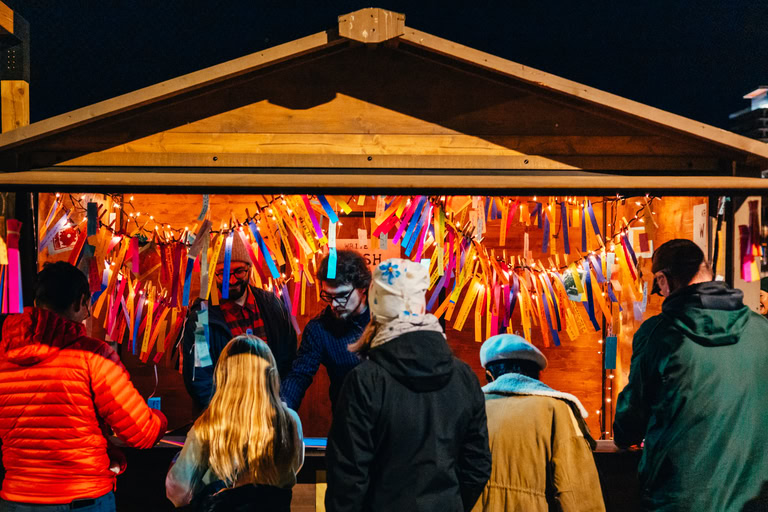
Africville tribute on display at Nocturne

Tigers defeat Moncton 3-2 in a dramatic overtime finish