

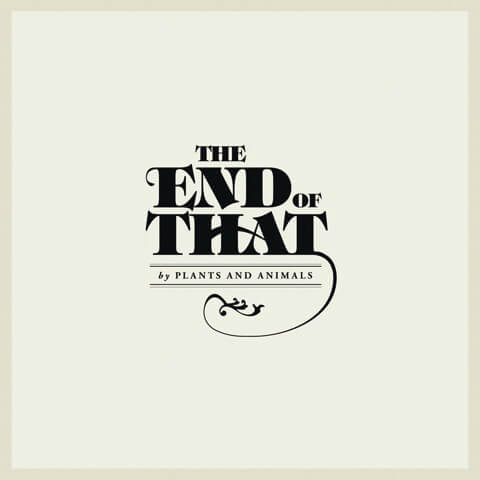
 The title of Plants and Animals’ third LP, The End of That, especially resonates with those who are about to finish their four-year stay in Halifax. Endings evoke all sorts of emotion—confusion, anger, frustration, sadness, nostalgia, excitement—often all jumbled together in our minds as we enter into a period of transition. The Montreal trio’s new album explores all of these emotions and at times conveys the psychological commotion as they sing about various endings: of relationships, seasons, mischief and young adult life.
The opening track, “Before,” feels like a warm breeze blowing away the end of winter. The electric guitar is soft, smooth and uncomplicated. There’s a sense of calmness, contentment and acceptance as lead singer Warren Spicer sings: “Forget about me and everything that came before.” The track is reminiscent of Daniel Lanois, mixed with a Radiohead-like sound.
Repetition occurs in the melody and lyrics of many of the tracks, but most notably in the darker songs. “Lightshow” has one short guitar riff used throughout. The repetition could be taken as less exciting, but it seems to fit with the album’s theme. Though it may seem tiresome, it does mimic the struggle in the lyrics: “What a disappointment I thought there’d be so much more/ But all this talking is driving me insane.” The lengthy “2010” has one ascending riff for the first four minutes, exemplifying the determination it takes to get past an ending. Lyrics come in sets of threes in “Control Me,” as if to desperately fight the end that’s coming.
The realization that life goes by faster than expected is expressed in “Crisis!” It’s a song about noticing that everyone around you has grown up. The cool but dissonant chords, contrasted with peppy tambourine reflect the tensions between “a crisis and a pretty good time.” There is a point where the guitar sounds sharp and high-pitched, evoking memories of an alarm clock signaling that it’s time to wake up and get on with things, despite feeling exhausted and hung over. After that the song changes into an epic search for “something more,” getting louder with lead Warren Spicer screaming, finally ending it all with aggressive guitar and pounding drums, similar to the chaos of saying goodbye to your youth.
The band itself is in their own transition state, as this is the first time they decided to plan their songs before recording. The transition from the liveliness of a jam band to the more conventional method of recording leaves listeners a tad nostalgic for the vibrant energy of the trio’s past albums. Whether it is the constant reminder of the difficulty of things ending, or the band’s new approach, listeners will really feel the group’s growing pains.

Read more from the gazette
Budgeting tips, from the provincial government

Hungover, Hungry and on a Budget

How has affording to be a Dalhousie student changed in the last 30 years?
Affordability means nothing in Halifax

The cost of having a vice