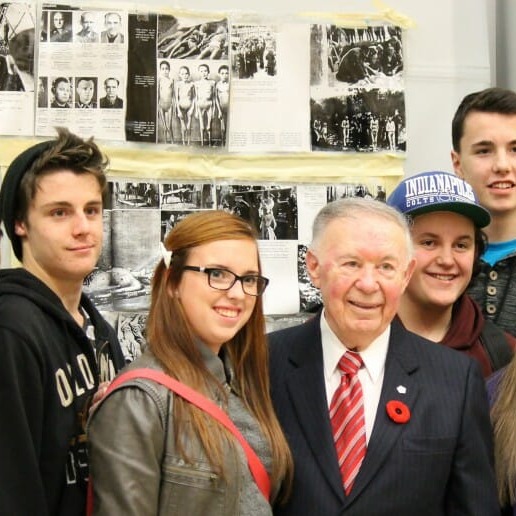
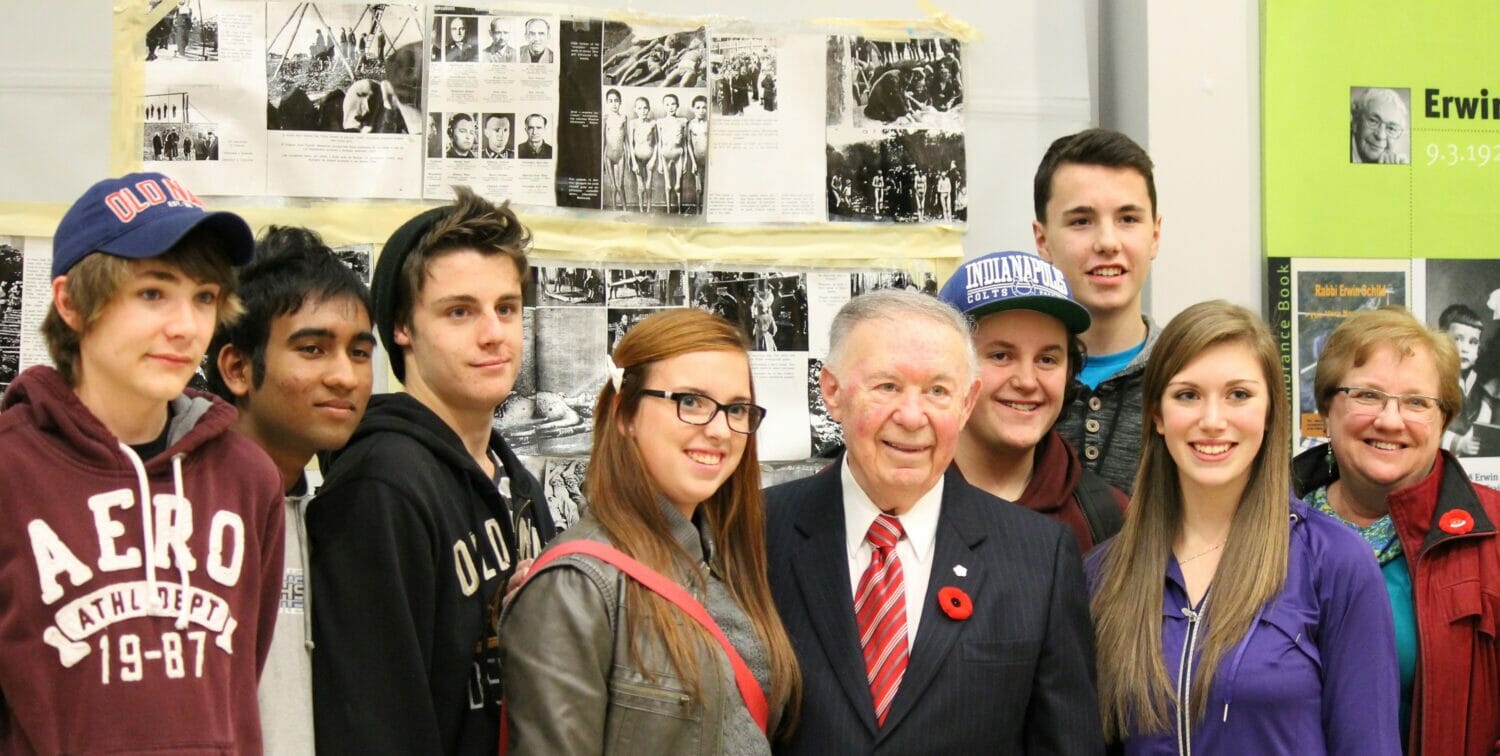
Reitman attracted more people than the Scotiabank Auditorium could handle. (Photo by Asrar Ul Haq)
“I never, never in my life, ever, thought it was going to happen to me. Never,” said Holocaust survivor Philip Riteman. “But it did happen, and it can come again. It could happen again.”
Riteman, the sole survivor of his immediate family, has been speaking internationally since 1989 about his harrowing experiences during the Holocaust, when over six million Jews and millions of other victims were murdered.
As part of the Atlantic Jewish Council’s Holocaust Education Week, Riteman spoke to a crowded auditorium in the McCain building on Nov. 5.
“For 40 years I didn’t want to talk about it. I want you to ask questions. The book I wrote is for you guys, you living people,” Riteman implored, referring to his book Millions of Souls.
Born in Shershev in modern Belarus, Riteman first encountered World War II as a 14-year-old in 1941 during Nazi Germany’s invasion of the Soviet Union. After the army passed through his town, he described the entrance of the Einsatzgruppen, Nazi mobile killing squads, or “the real murders” as he put it.
“You make sure that you teach your children to love, not to hate. You should not hate anybody,” Riteman said, hoping the audience would leave with at least this message. “You don’t like him? Don’t invite him for dinner to your house. But don’t hate.”
Riteman recalls being forced out of his home in the middle of the night and marching 40 kilometres out of the city to shallow empty graves, where hundreds of people were mercilessly shot and covered with earth. Those who remained were forced into a nearby ghetto.
“You don’t know what hunger is,” he said, tearfully describing the ghetto. “I hope you never know. People lying on the streets starving to death. You can’t even imagine.”
He recounted the horrifying week where he and nearly 100 others were crammed into a small freight car taken to the Auschwitz-Birkenau death camp.
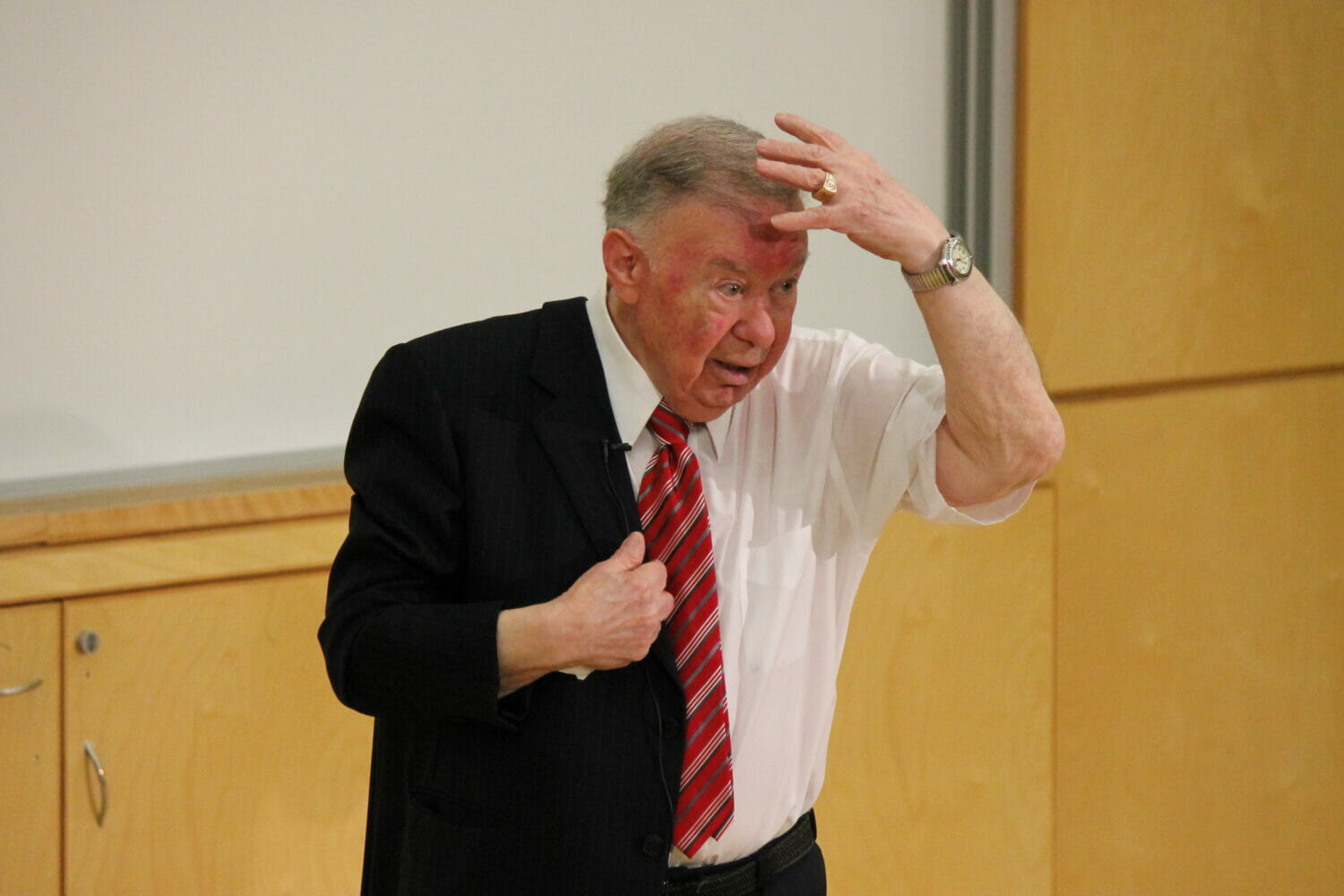
Holocaust survivor Philip Riteman. (Photo by Asrar Ul Haq)
As Riteman began to describe his initial moments in the infamous death camp, he removed his blazer, revealing the short-sleeved dress shirt underneath and the number ‘98,706,’ clearly visible from several rows away, branded into his left forearm.
The U.S. Army liberated Riteman in 1945 after surviving ‘death marches’ to several other concentration camps. He was brought to the Dominion of Newfoundland by an aunt when Canada’s Mackenzie King government refused him entry due to its shameful ‘none is too many’ policy regarding Jewish refugees.
“It’s a real privilege for the Atlantic community to be able to have access to hear him speak,” says Naomi Rosenfeld, the director of Jewish student life for Atlantic Canada. “To see the room packed and standing room only with predominantly Dalhousie students is amazing because this really was for them to educate the student population.”
Riteman ended his four decades of silence in 1989 to speak in New Brunswick following the emergence of Holocaust denial rhetoric from people like Malcolm Ross.
“A lot of people just don’t know [what happened],” says Shael Brown, a member of the Hillel executive who helped organize the evening. “It’s so important that we continue to have events like this.”
Education is fundamental to why the 90-year old Riteman continues to speak across Canada and the United States, exhorting audiences to accept the role and responsibility of passing along stories like his.
“You’re witnesses. You saw me in person and I spoke to you guys,” said Riteman. “You make sure you tell your children what did happen and don’t forget because it could come again.”
Riteman’s talk will air on Eastlink channels 10 and 610 on Wednesday, Nov. 13 at 9 a.m., 5 p.m. and 11 p.m.

Read more from the gazette
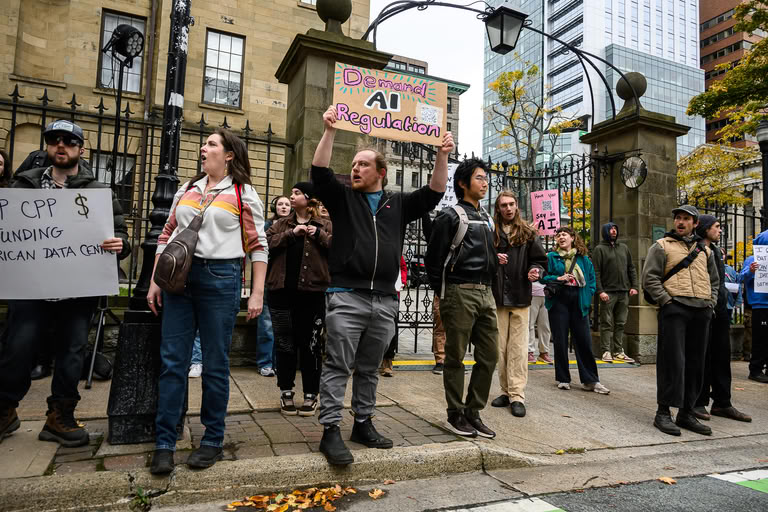
Over 100 people protest against AI data centre at legislature
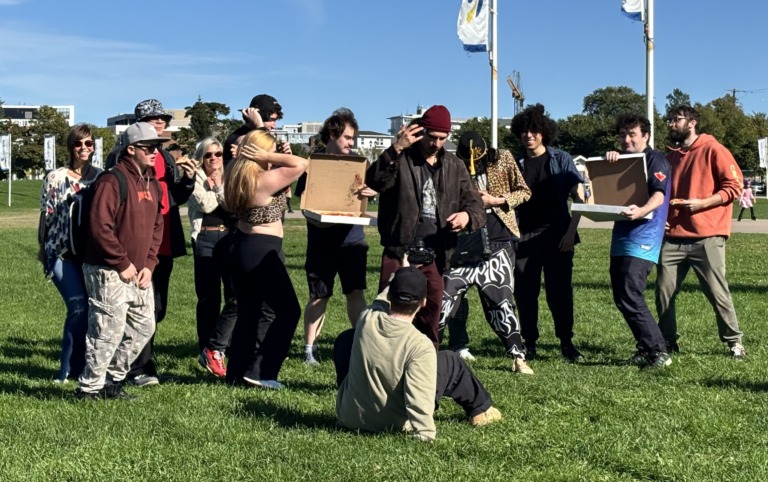
Halifax’s thedottedline is here to finish what Kendrick Lamar started
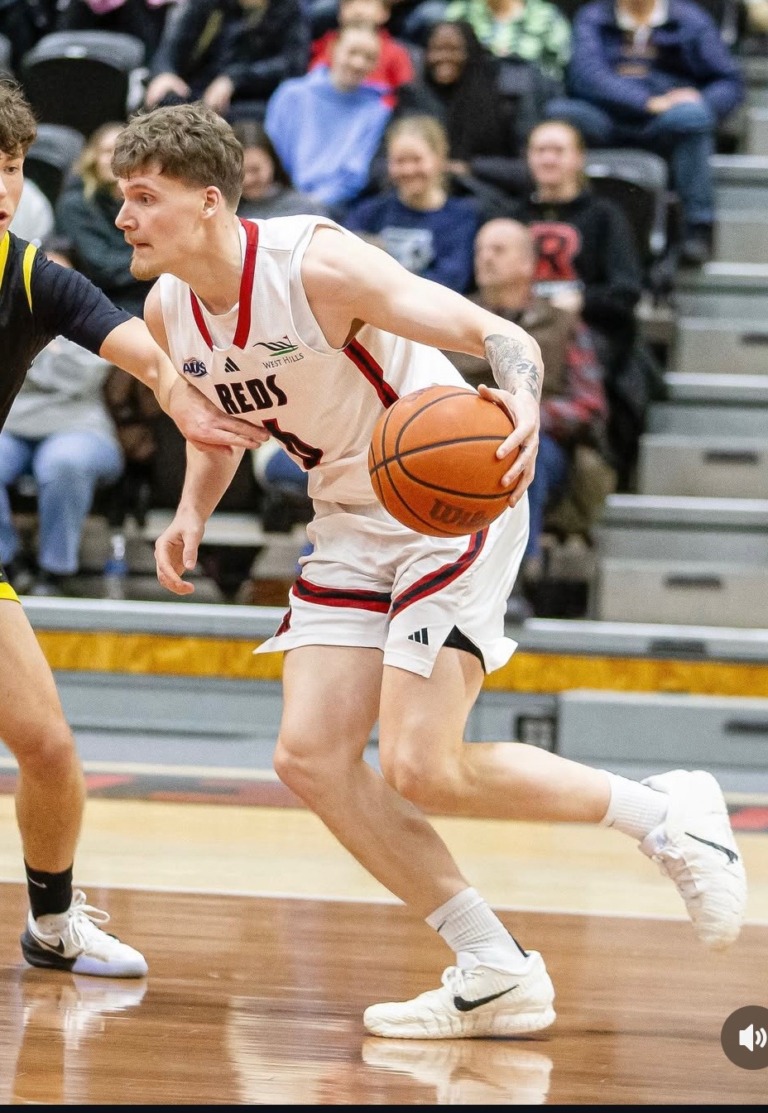
The AUS to ACAA pipeline
Chartwells manages half of SUB food vendors after Abstract takeover
Africville tribute on display at Nocturne