
African Heritage Month celebrations kick off at Dal
Students, faculty and community members gather for Dal’s flagship event
February 19, 2026 / Lily Van Beek
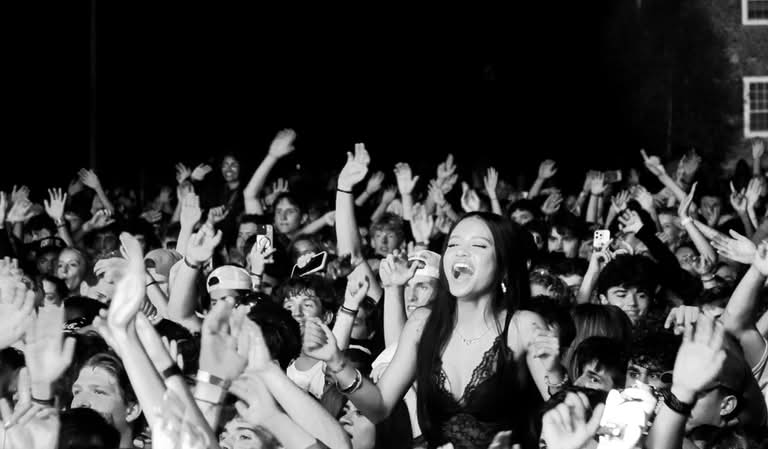
Dozens of Dalhousie University students, faculty and families crowded into the Dalhousie Arts Centre’s Sculpture Court, moved by the rhythms of an African drumming performance.
The university’s flagship African Heritage Month event held on Feb. 4 featured performances from local creatives, including a rendition of “Lift Every Voice and Sing” by University of King’s College student Dáminí Awóyígà.
Niah Bernard, a second-year sociology student, attended the event for the first time two years ago while she was in Dalhousie’s transition year program.
“It’s a great way to kick off African Heritage Month, which is really important to me,” said Bernard. “I just wanted to show up and be a part of it.”
Bernard’s favourite part was the flag-raising ceremony, when the Pan-African and African Nova Scotian flags were unfurled inside the Arts Centre.
“Especially with the history that [the flags] have and represent, it was a powerful moment.”
Community-Building
Keymorah Urgelles, co-president of the Dalhousie Black Student Society (DBSS), said that events like the flagship ceremony are important for developing community ties.
“Representation is just really important,” said Urgelles.
Vanessa Kuku, a first-year master’s student in health administration, agrees. Having recently moved to Halifax, the event helped her build a sense of community.
“It was really grounding,” she said. “It was nice to see a bunch of people come together to celebrate Black History Month.”
Kuku also praised the event’s focus on ties between Africa and diasporic communities.
“I’m from Nigeria, so it was nice to see that a lot of the event was centred around honouring home.”
Creative Advocacy
This year, Dalhousie’s flagship ceremony centred around a new theme — creative advocacy.
Drawing on her experience as a medical student, co-keynote speaker Aaliyah Arab-Smith emphasized the intersections between health, creativity and advocacy.
“Health lives in our stories, our art, our culture and our communities,” said Arab-Smith. “Black health is shaped by history, identity and systems; advocacy has to reflect that whole picture.”
Bernard said that advocacy happens beyond institutions, which is what makes art important.
“Art and culture and storytelling are great tools for change,” she said. “Advocacy doesn’t just happen in political spaces. It also happens through expression and community-building.”
What’s Next?
The Dalhousie Art Gallery began showcasing its newest exhibit, “It’s About Time: Dancing Black in Canada 1900-1970 and Now,” on Jan. 22.
After visiting the exhibit, Kuku said she learned a lot about the history of Black dance in Canada.
“There were some really amazing pieces,” said Kuku. “I didn’t really know a lot about being Black in Canada in the 1970s. Going [to the gallery] was very grounding and cool.”
Following the flagship ceremony, Kuku said she hopes Dalhousie will organize additional events to celebrate Black history in Nova Scotia throughout the month of February.
“I’d definitely love to see more art, music, performances and things that bring people together that are centred on … people of African Nova Scotian heritage.”
Urgelles said that the university did not reach out to the DBSS regarding event planning for African Heritage Month. She said Dalhousie should take a more active role in coordinating events for the Black community on campus.
“There can be better [work] for creating awareness outside of the 28 days of February,” she said. “More outreach can be done to [connect with] Black communities and leaders on campus.”

Read more from the gazette
KSU council to choose new interim president on Sunday

The Student Chef – Corn Chowder
BREAKING: KSU president resigns
BREAKING: Faculty union holds vote of no confidence in Dal president, others
Make-A-Wish partner society founded at Dalhousie