Tate McRae forgot her Canadian roots
Promoting a country that’s threatening her own was the wrong move
February 26, 2026 / Georgia MacDonald
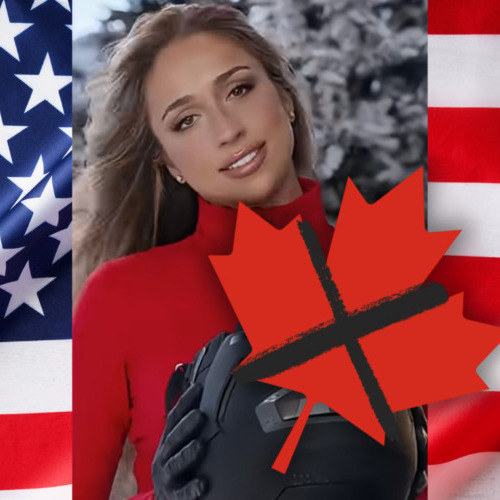
Albertan singer Tate McRae recently starred in an NBC ad promoting Team USA for the 2026 Olympic Winter Games. Many Canadians, myself included, were more than a little upset at her willingness to promote a foreign team, while pocketing the money that likely came with it.
I love McRae; I even own some of her merch. And I took her ad as a personal stab in the back.
The commercial features a ski-gear-clad McRae asking an owl for directions to the Olympic opening ceremony, all while promoting American athletes like alpine skier Lindsey Vonn and figure skater Ilia Malinin.
American athletes deserve to be celebrated. The question is: why does a Canadian icon need to be the one leading the charge? American pop stars like Sabrina Carpenter, Taylor Swift or Olivia Rodrigo could have delivered the same message with less backlash.
I blame whoever suggested hiring McRae, and aggressively question why McRae and her team accepted this job at such a politically-charged moment. The reality is, it’s not just an ad.
Amid American tariffs targeting the Canadian economy and threats by U.S. President Donald Trump to make Canada the 51st state, I’d hope McRae would oppose becoming the face of Team USA.
The Olympics are a time for national unity. McRae isn’t American, so her choice to align with the U.S. draws a line in the sand. It’s even more glaring when some American Olympians are distancing themselves from the American image.
“Just because I’m wearing the flag doesn’t mean I represent everything that’s going on in the U.S,” said American freestyle skier Hunter Hess at a recent press conference.
It says a lot about McRae’s character that she’s willing to associate herself with the U.S. at a moment when even their own athletes won’t.
Canada has its own dark past that shouldn’t be ignored, but the recent resurgence of Canadian pride partly stems from gratitude that we aren’t experiencing the same democratic backslide as our neighbours. There’s no shame in that.
Seventy-eight per cent of Canadians reported being proud or very proud to be Canadian last spring, according to a Statistics Canada survey, a 5.4 per cent uptick from the previous year.
Geneviève Tellier, a political science professor at the University of Ottawa, attributes this rise in Canadian patriotism to Trump’s tariff threats in February 2025.
McRae’s decision stands out because she chose to abandon ship during a visible wave of Canadian solidarity.
If McRae was going to get political, why couldn’t she have followed Mike Myers’ example? Like McRae, Myers splits his time between Canada and the U.S., but he made his loyalty clear last April when he wore a “Canada is Not for Sale” shirt on Saturday Night Live.
Beyond questions about national loyalty, I would have criticized any celebrity — Canadian or American — for taking part in this campaign. They’re complicit in promoting the idea that America is worth celebrating right now.
Public figures don’t have the privilege of acting in a vacuum.
On paper, McRae doing an ad for NBC isn’t that serious, but she’s advertising a polished image of America that is disconnected from its current, violent reality.
I’m not the only one who feels this way. Many Canadians expressed similar frustrations on social media. “No amount of money could make me endorse the country that threatens mine,” one user commented on McRae’s Instagram post of the commercial. Over 22,000 people liked the comment.
Her response to the backlash over the campaign didn’t sit right with me either. She posted an Instagram story, writing, “Y’all know I’m Canada down.” Her response is not only apathetic; it’s entirely contradictory. Being “Canada down” means not picking and choosing when to support our country.

Read more from the gazette
Olivia Chaput chosen as KSU interim president
KSU council to choose new interim president on Sunday
The Student Chef – Corn Chowder
KSU president resigns
Faculty union holds vote of no confidence in Dal president, others