
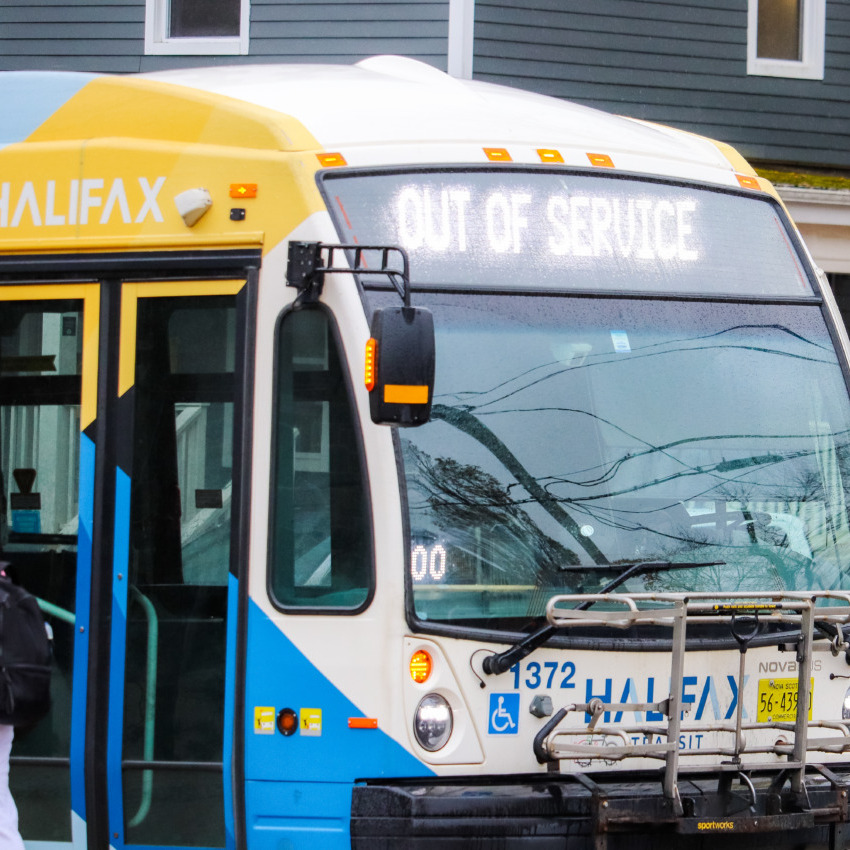
Transit changes to expand service for rural students, add 24/7 airport route
Plan proposes 21 changes across Halifax Transit
February 26, 2026 / Peter Shokeir
Halifax residents could soon see 24/7 airport bus services, increased service to rural areas and a new route connecting to West Bedford, following proposed changes to municipal transit approved by Halifax’s transportation committee on Feb. 9.
Based on rider feedback, the Core Service Plan recommends 21 changes that would impact 25 routes — 37 per cent of the transit network. These include altering routes and increasing the frequency of trips.
“We have a city that has the bones, but we have to grow,” Coun. Becky Kent said during the meeting.
Route 320, connecting downtown Halifax and the Halifax Stanfield International Airport, will move to 24-hour service under the proposed service changes. The report noted regular rider requests to extend the route from 22 to 24 hours daily to accommodate late-night and early-morning flights.
Halifax Transit said the change will serve as a pilot for other 24-hour routes.
Changes requiring additional funding would be implemented over three years, beginning in the 2027-28 fiscal year. The plan requires 30 additional buses and $53 million in infrastructure upgrades, along with an additional $10.2 million in annual operating costs once implemented.
Regional council approved Halifax Transit’s last service plan in 2016, with implementation concluding in the 2024-25 fiscal year.
Impacts for students
The overhaul will impact three routes that travel through Dalhousie University’s campuses. The 9A/B would see additional afternoon trips, and longer service hours would be offered for the 137 and 138 routes. Several of the adjustments focus on increasing service to the greater Halifax Regional Municipality and its business parks.
Ahsan Habib is the director and founder of the Dalhousie Transportation Collaboratory, a transportation engineering research unit.
He said it’s important to “reinvigorate” transit to meet demand while keeping essential routes for rural communities. Improvements like dedicated bus lanes and increased transit access for underserved areas are needed for Halifax to retain its large student population, according to Habib.
“It’s important to embody the energy of the youth who want to live a fuller life, and an active public transportation system will offer this the best,” he said.
Fourth-year science student Aryan Vidwans takes the bus to campus. He lives in Timberlea, a small community about 14km away from Dalhousie. His route, the 21, will see expanded coverage and more frequent Sunday service to address demand.
Vidwans supports improving service beyond Halifax’s downtown core.
“Over there, we get buses once every hour,” he said. “It’s crazy.”
Elijah Rayner-Paris, a first-year psychology student who uses the bus twice a week, is largely satisfied with the current transit system but would like to see more stops and bus lanes.
He said increased transit out of the city is a welcome change to the current system.
“It would be a good improvement.”
Other additions to transit routes
The changes would also see the addition of a new route, the 95 Brookline. The route would increase service for West Bedford and improve service to Bayer’s Lake and connections in Clayton Park.
“This route aims to provide more travel options for West Bedford residents who are currently only served by routes oriented to downtown Halifax,” said Reuben Walker, a transit planning technician for Halifax Transit.
Halifax Mayor Andy Fillmore said the recommendations directly address traffic concerns in Halifax, which was recently ranked the third most congested city in Canada by TomTom, a location technology company.
The transportation committee also approved an on-demand service model, the microtransit service plan, aimed at addressing service gaps in rural areas.
Transit users would make on-demand bookings through an app, and mid-size transit vehicles would pick up passengers who requested rides near each other. The municipality would pilot the model in Lucasville before expanding to other areas.

Read more from the gazette

The AUS to ACAA pipeline

Chartwells manages half of SUB food vendors after Abstract takeover

Africville tribute on display at Nocturne

Tigers defeat Moncton 3-2 in a dramatic overtime finish

The Gleeboot could save lives