Killam Library renovations paves way to make Dalhousie greener
The library estimates to have reduced energy consumption and utility costs by over 50%
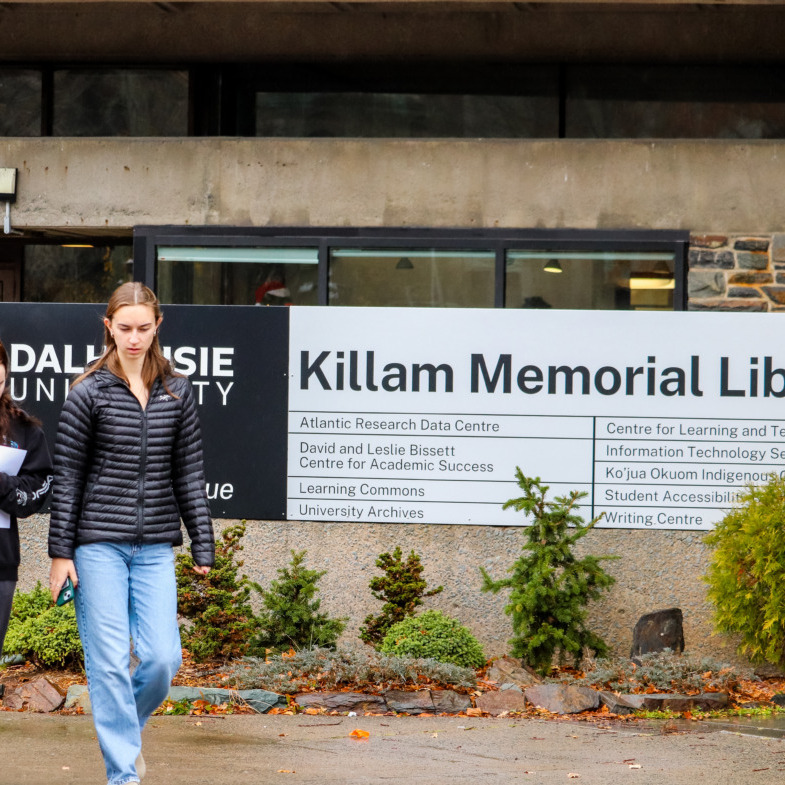
The Killam Memorial Library’s greenhouse gas emissions and energy use are projected to drop more than 50 per cent following a recent retrofit, with Dalhousie University’s Office of Sustainability aiming to replicate the approach in other campus buildings.
The library was targeted because of the building’s high energy consumption, as well as outdated equipment and energy systems. The retrofit cost $17.6 million, with approximately $500,000 being funded by the provincial and federal governments.
“The Killam is such a great example of what we were able to achieve doing this steep energy retrofit,” says Stephanie MacPhee, the sustainability office’s executive director. “The results will speak for themselves … it’s just something that we need to replicate.”
Facilities management and sustainability office led the retrofit project. Renovations were completed by the MCW Group of Companies.
Construction on the nine-year project concluded in December. Dalhousie’s sustainability office did not confirm the cost of the deep retrofit to the Dalhousie Gazette before publication.
The building’s utility costs are also estimated to be reduced by nearly $500,000 per year — a 53 per cent reduction.
Sau Fan Lee, the sustainability office’s on-site energy manager, says the project has entered a two-year measurement phase to verify the actual savings. She says the library was an easy target for a retrofit.
“Killam was one of the top five energy-consuming buildings; the other four are all about labs,” says Lee. “Labs consume much more energy because of their energy-intensive equipment.”
Changes to the library include updated LED and motion-detection lighting, a hot-water heating system and upgraded ventilation, which is expected to improve the building’s air quality.
Early results show energy savings are 44 per cent above initial targets. Heating and ventilation data will be analyzed after a full year of use.
What other buildings at Dal can become more energy efficient?
The sustainability office recently completed an assessment of the Kenneth C. Rowe Management Building and the Student Union Building to determine their suitability for future retrofits.
The SUB consumed the sixth most energy of all of Dalhousie’s campus buildings, based on 2024-25 utility data.
Funding for the assessments was received through the BOMA Enspire deep-retrofit accelerator program, designed to help enhance the energy efficiency of commercial buildings.
Assessment results are currently being analyzed to determine what energy efficiency measures would be cost-effective for these buildings, says MacPhee. Any project would not be as intensive as the Killam retrofit.
“We are not really looking to do that extensive deep-retrofitting of those buildings at this point,” she says.
The office is currently targeting projects that give Dalhousie the “biggest bang for our buck,” amidst financial constraints.
“If we do this, it’s going to reduce energy consumption, it also reduces some [utility] cost, but maybe it’s going to take 35 years to pay that back,” says MacPhee. “Is it worthwhile for us to do that? These kinds of studies allow us to make those decisions.”