Q&A with DSU vice-president internal candidate, Marzan Chowdhury
The DSU general election’s voting period is from Feb. 10 to 11
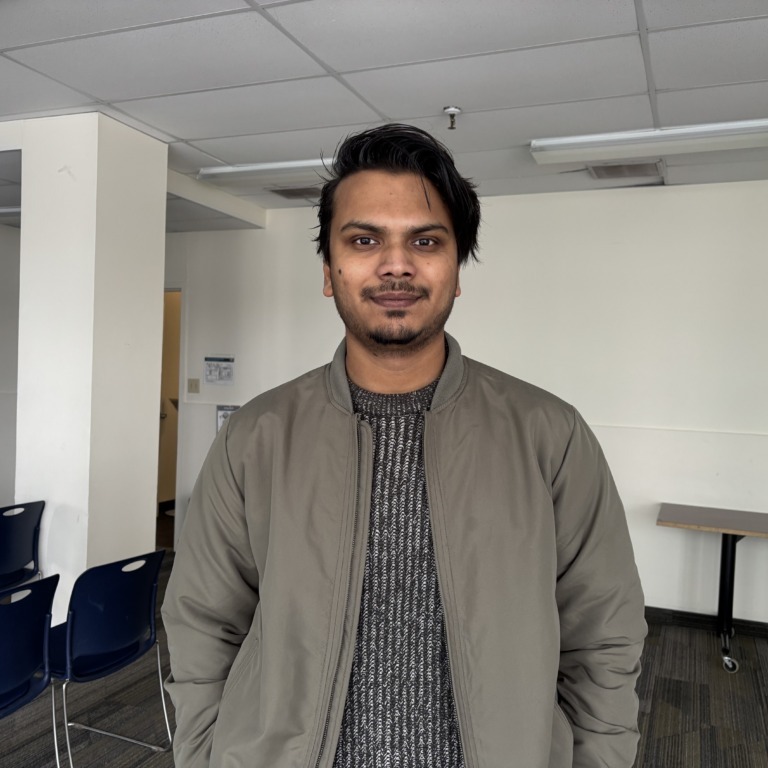
Marzan Chowdhury is a third-year applied computer science student running for vice-president internal of the Dalhousie Student Union.
He is one of four candidates for the role, alongside Zain Ul Abideen, Alexander Tzovolos and Suha Manal.
Originally from Bangladesh, Chowdhury moved to Canada in 2022. He is a former vice-president for the Dalhousie Muslim Students Association at Dalhousie University.
This interview has been edited for clarity, grammar and length.
Why do you want this position?
I’ve seen the problems and discrepancies in the communication between the DSU and societies. There is room for improvement, but that step hasn’t been taken. That’s why I’m campaigning; my campaign promises are not big, bold or shiny, but they’re simple things that I know, being part of a society and being a student here myself, that will make a huge change in day-to-day student life.
What previous experience do you have that makes you the best candidate for this position?
I’ve been at the helm of one of the bigger societies at Dal. Understanding operations and procedures has helped me significantly understand how we can make this better. What we need is fresh ideas; [the DSU is] repeating whatever ideas they’ve had for the last four, five years. It’s important that the DSU shows up for students and societies when they need them, so they don’t have to worry about what to do when they get in trouble.
What are the three most important things to your campaign?
My campaign slogan is informed, engaged and empowered. If our societies and students are informed on what the DSU is doing, how they’re doing it and what processes are happening, they will automatically be engaged with the DSU activities. We need to make sure that we are providing societies with every sort of support they need, starting with training, their ratification and even their banking needs.
What is the largest issue facing students on campus today?
Representation, and in general, student support. We should constantly make sure Dalhousie is a vibrant community; it’s a diverse community. We need to focus on making sure no one feels left out. The DSU is the best place for that to start. Every single student, no matter what nation they’re coming from, what their gender is, should feel like they belong at Dal.
How do you plan on interacting with the Dalhousie community if you assume this position?
My biggest priority would be communicating with the societies. I plan to meet with the society leaders through monthly meetings with the society review committee. Every society comes up with different problems, and for us, it’s important to listen to their concerns. We’ll make sure that updating documentation on the DSU website happens more quickly. Our students need to know what’s happening, the societies need to know what’s happening. On the website, I plan to introduce a society events page. We can set up templates to make the ratification process easier for societies. For smaller or newly starting societies, we will explore the plan of a five-member nomination system and give them a provisional ratification system. We’ll explore the opportunity of partnering with banks, so banks recognize our official documentation and make it much simpler for students to open bank accounts.
What do you think is the main challenge you will face in this position?
Funding approval is a big deal. The DSU doesn’t get a lot of funding, and a lot of societies complain about not getting enough funds to run events. What we can do is create a grant timeline with a grant scoring rubric, which we will make public for societies to see how much grant funding is available to them. We’ll give them clear timelines on how they can get their funding and how much funding they can get.