Why does the Order of Canada reward financial exploitation?
Kim Brooks should not be rewarded for disrupting our education and pocketing our money
The Order of Canada is one of the country’s highest honours, recognizing individuals for outstanding achievements and service. The order has recognized over 8,000 leaders and innovators, who’ve dedicated their lives to making Canada a “better country.” The award recognizes individuals from every field, like athletics (Andre De Grasse), literature (Yann Martel), activism (Janine Fuller) and the financial exploitation of students (Kim Brooks).
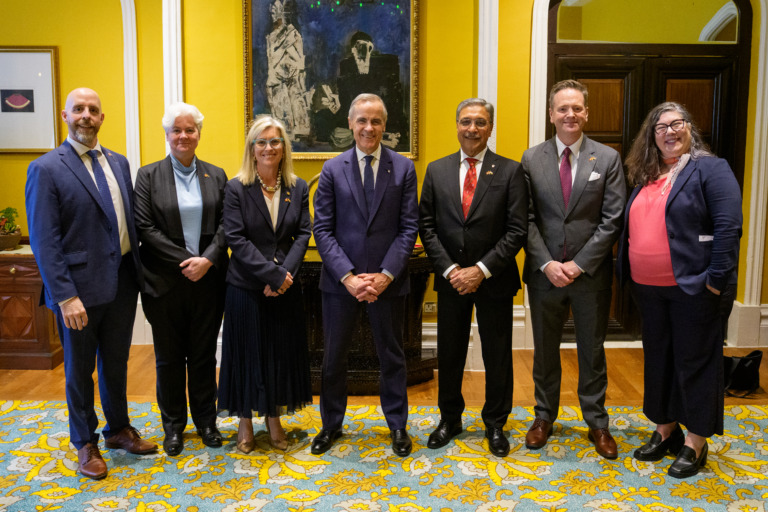
That’s right, in December 2025, the president of Dalhousie University was appointed to the Order of Canada, and I cannot understand why.
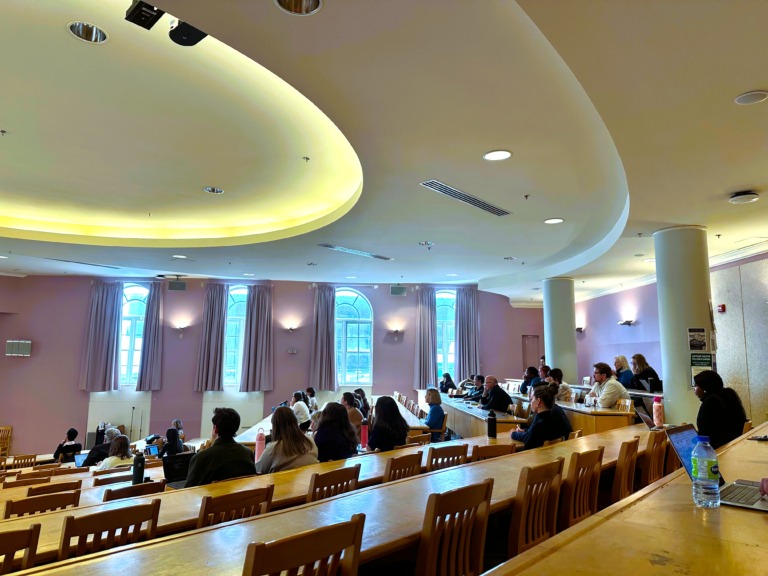
It goes without saying: last term had a rough start. Classes were delayed by three weeks when Dalhousie locked out its faculty amidst contract negotiations, a move denounced by the Nova Scotia Federation of Labour in a public statement as “a reckless and damaging step that undermines both fair labour relations and the university’s core mission of education.”
Students paid full tuition without adjustment or compensation for lost class time, and we’ve yet to see a single dollar refunded. We lost 21 per cent of the semester, meaning over $1,000 is still owed to most full-time students, and the university has made no indication of giving it back.
Charging full-time fees while withholding class time and still penalizing students for late tuition payments puts students in a lose-lose situation. Either we withhold our tuition for valid reasons — not wanting to pay full tuition for a semester cut short by managerial malfeasance — and we accumulate late fines, or we pay full tuition for instruction we’ll never receive.
If we pay tuition, we lose money; if we don’t pay, we lose even more money. This sounds like financial exploitation. This exploitation occurred because of a lockout overseen by a university head whose salary is over $400,000 a year — roughly the equivalent to the annual tuition of 40 full-time students. So why aren’t we getting our 21 per cent refund?
Probably because that would total over $20 million. Given Dalhousie’s bleak financial situation, including a projected $20.6 million deficit this year, it seems unlikely we will see any money returned. Just three months after swindling her students out of millions, Brooks was awarded one of the highest honours in the country.
W. Galen Weston, the former chair of Loblaws’ controlling company, is also a member of the order, despite his role in fixing the price of bread in Canada from 2001 to 2015. The same year the bread scandal broke, the Queen appointed Weston a Commander of the Royal Victorian Order, another prestigious honour. In other instances, the fraudulent have been held accountable under the standards the order claims to uphold — Alan Eagleson, the disgraced lawyer and hockey promoter, was disbarred from the order after committing fraud. That was in 1998. Now, in 2026, Brooks holds the venerable title.
The struggle to understand how Kim Brooks could be appointed to the order is easily resolved by realizing that the honour has historically celebrated and rewarded financial malfeasance in the business practices of Canada’s elite. We often forget the university is a business, in which students are customers, consumers and patrons.
In light of this history, I question: how does the Order of Canada differ from an elementary school distinction system? How is the snowflake-shaped lapel any different from a gold star or shiny trinket doled out by the principal to an obedient student? Both seem to be ways that authoritative forces determine what behaviour is not only acceptable, but distinguished.
Swindling students out of over $20 million through coercive business practices is not only apparently legal but compatible with the order’s motto, which rewards “[those] who desire a better country.”
It’s hardly surprising that the coercion, exploitation and outright manipulation of students and faculty members were rewarded. What’s “good for Canada” seems to really mean “what’s good for its elite.”
Brooks’ business practices must be part of what the order’s advisory council admired about her “thoughtful voice for inclusive leadership, transformative education and research that builds Canada’s future,” which was the stated reasoning for awarding the honour. I can’t say the students admire it so much.