Faculty strike rumours explained

Class photo by Calum Agnew.

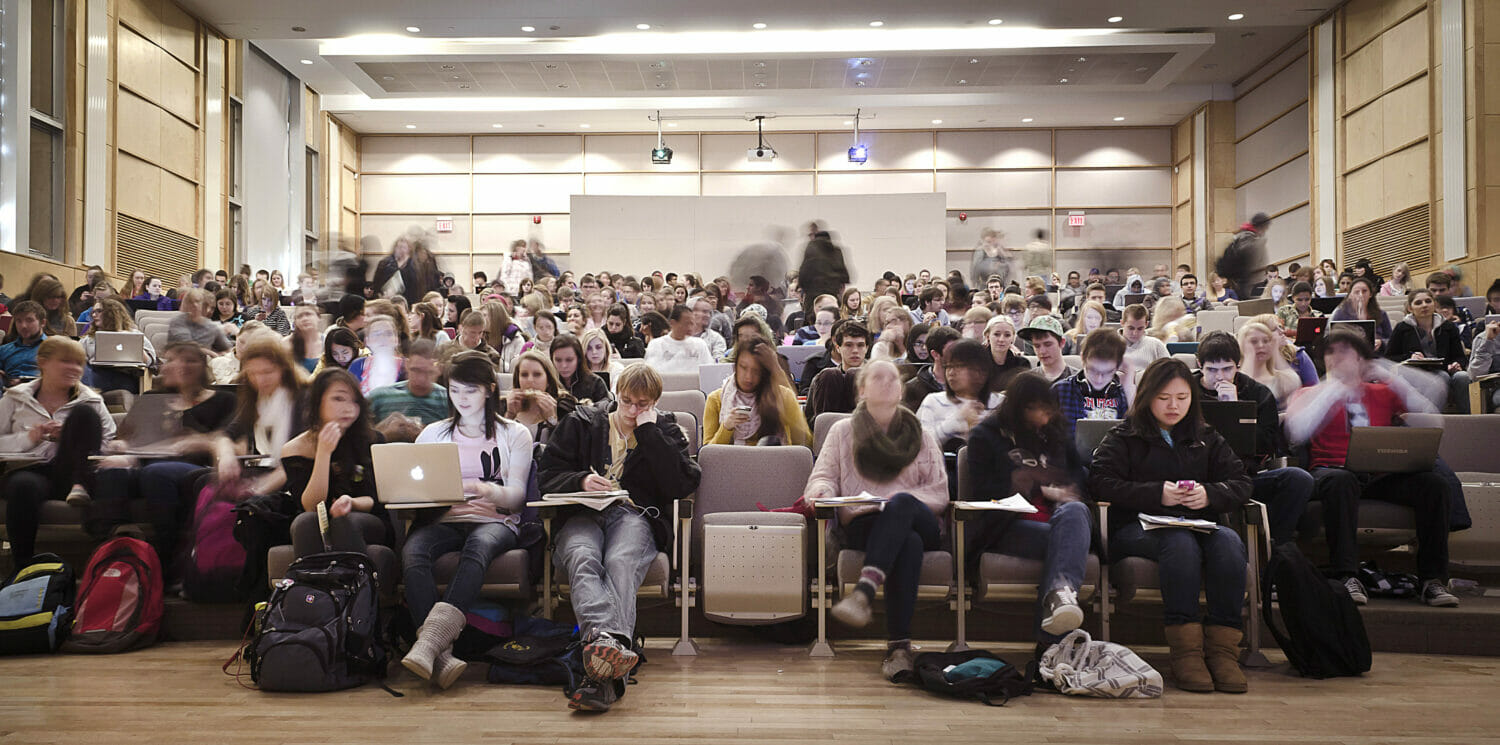
Class photo by Calum Agnew.

Nissim Mannathukkaren says he might support a faculty strike. Fellow professor Lorn Sheehan says he might not.

By the end of next month, both of them may have some tough decisions to make.

The Dalhousie Faculty Association (DFA) has been negotiating with Dal administration for eight months. If the next stage of negotiations doesn’t work out, the DFA will have to decide whether or not their problems are worth striking for.

Carrie Dawson, a former president of the DFA, is not part of the negotiating team but says the possibility that all faculty members could stop working sometime this term has not been ruled out.

“It’s entirely possible. We’re certainly hoping for a resolution. We’re working around the clock to try and get one, but it’s entirely possible,” she says.

The main issue is their pension, which is insolvent – meaning it doesn’t have enough money to work as it should – and issues of salaries and non-financial rights such as child care and maternity leave are also on the table.

Throughout February the DFA and the Dal administration will meet for three full days with a conciliator, a third party appointed by the province, to try to come up with a compromise.

The last of those meetings is Feb. 15. A media blackout will be in effect from Feb. 1-15. All interviews in this article took place in the weeks prior to the blackout.

The conciliator will prepare a report on a solution he thinks would work, and from that point the DFA and administration have two weeks to decide if the compromise is acceptable.

If it is, the story ends there. If not, a vote concerning a strike is next up.

As for whether or not it will come to that, it all depends on what happens during those three meetings. Mannathukkaren, the chair of the IDS department, is one faculty member who is on the fence.

“It depends on the final package, on what’s coming out of the negotiations,” he says. “If something is being taken away that I think is vital, then I will be willing to go to a strike for that and to pay the price. But if it is a minor, adjustable thing that can be sorted out, or which can be ceded, then that’s not a problem.”

For Mannathukkaren, it’s all about democracy.

“It’s a question of democratically coming to an agreement,” he says. “Obviously no one wants to support a strike if there’s a minor ceding of rights. But if it is a major one, many people – even I – would support a strike.”

Sheehan, associate director of Dal’s school of business, is less sure. His wife, Katherine Sheehan, is on the negotiating team for the Board of Governors.

“Us as faculty members do not want to be in a strike position,” he says. “We don’t receive pay during the strike time and it disrupts all the students who we are trying to teach; they do not complete their degrees on time.”

He also says the issue of salaries isn’t one that at this point can realistically be solved.

“That money has to come from somewhere, and the university doesn’t have a bottomless pool of money,” he says. “It only gets what the government gives them plus what tuition raises, so it really is a zero sum game.”

Sheehan says he knows the negotiations have been largely ineffective so far, but has hope for this next phase.

“This is the first attempt to try to essentially bring the two negotiating teams together in a serious and concentrated way,” he says. “Certainly what I’m looking for as a faculty member is to see more effort being made at the table to reach an agreement.”

A brief the DFA sent to the Ministry of Labour and Advanced Education on Jan. 19 emphasizes that faculty haven’t ruled out paying more toward their pension each month, and is also looking for a provincial exemption from a solvency test, which would give them more time before the millions of dollars needed to pay the pension is due.

Mannathukkaren says any agreement needs to be about more than just the faculty and their monetary issues.

“My interest is seeing that it is equitable, it is just, and it’s not just benefiting the faculty as a union,” he says. “It’s also about benefiting the students, the community as a whole, and the university as an employer.”

And he worries about the effect of a strike on the wider community.

“The students would face the brunt of it,” he says. “That’s why I’m saying that I sincerely hope it doesn’t come to that, and that no one is put through such difficulties.”


With files from Katrina Pyne.


CORRECTION: The original version of this article neglected to mention that Lorn Sheehan, associate director of the school of business, is the spouse of Katherine Sheehan, who is on the negotiating team of the Board of Governors. The Gazette regrets this error and has clarified this connection in the article.

  • Hotmale

    so no exams?

  • Guest

    Why not try and lower the salary of the president of Dalhousie? He makes more than Stephen Harper…

    • Guest

      But Stephen Harper really shouldn’t be making much anyways…

      • Guest

        Stephen Harper shouldn’t be prime minister. He’s screwing Canada up.

  • Fr638304

    I’m happy Mannathukkaren is “willing to pay the price” but I sure am not! Some of us are trying to graduate this year and it seems like alot of people in the Halifax area are being selfish. Some people are dying to find a job right now and Bus Drivers and now Profs are taking their jobs for granted. Why can’t we have this discussion over your pensions in the summer time when it doesn’t effect most students, seeing how the students would face the brunt of this strike. We pay our tuition (international students even more!!) so we expect to get our money’s worth. If the University goes on strike, when will we make up the class credits we are missing? In the summer???? I really hope everyone involved really takes into consideration what is at stake here, especially for us seniors, international seniors to be exact. We unlike local students, have plane tickets, living abroad expenses, student permit fees etc etc etc etc we have to take into consideration. Not to mention, job prospects. Let’s think rationally here!!

    • DarlaVladschyk

      You should pose your question about timing to the Dal Administration. They are the ones who consistently stalled and delayed contract talks to time any possible strike action for the fall/winter, when it would do the most damage and get the most bad publicity. The Professoriate has always been in a pitched battle with the Administration, *because* the administration refuses to address DFA concerns, proposals and frameworks until a strike seems almost certain. Your professors are not the enemy. Dalhousie, you may be interested to know, is the only university in the country to have suffered back-to-back faculty strikes in two consecutive negotiations. That shameful record can be laid right at the feet of the Dal Administration. Also FYI: The DFA brought their concerns and proposals to the Dal Administration before the end of their last contract, which would have been in April/May of 2011. Ask President Traves why nothing was done over the summer— and why it has been discovered that the Dal Admin has been lobbying the government— behind the backs of the DFA, in contravention of their collective bargaining agreement— to push legislation that will change the pension framework with no input from those it affects.

  • Peter Schotch

    Right on! Profs are obviously selfish and undeserving and should be made to stay at work, at gunpoint if necessary. Just because the Board refuses to negotiate is no reason that the the DFA should make trouble. It’s that damn tenure I tell you, this is what it leads to. We need more fair and balanced articles like this one by Torey Ellis!

    • It’s a sad state of affairs

      I’m willing to bet that quite a few professors have no desire to strike at all. They don’t get paid during a strike, it’s a waste of all the hours they put into planning courses and as much as it may surprise those of you you don’t bother to get to know your professors, they actually care about the students a lot. If they didn’t care they wouldn’t be in academics. Take this from someone who’s watched first hand how run down a mother is when they’ve spent the last week marking 200 reports, finishing a conference submission and dealing with students who after not having the decency to show up to class come and complain about failing their mid-terms. Not saying all students are like this, but all professors are ‘real’ people too.

  • A Concerned King’s Student

    So should King’s students be worried about the approaching strike as well? Or will this only effect Dal students?

    • http://dalgazette.com Dylan Matthias

      King’s-specific faculty have a separate union, so King’s courses like journalism and FYP wouldn’t be affected by a strike. Any class at Dal, though, would be off. I’m not sure about CSP, EMSP and HOST as they’re joint programs, but I think most of the classes are taught by King’s faculty, so they should be safe, too. It really depends on who the prof is and how the strike would work. It’s still a bit too early to know all the specifics.

      We’ll keep you posted as we find out for sure, though. And we’ll certainly have more articles on how the strike would work as it becomes more likely.

      • Torey Ellis

        Sorry Dylan, small correction – King’s profs don’t actually have a union. The one mentioned in the sidebar, non-professorial faculty (e.g. instructors, teaching fellows), is the only union at King’s and it’s existed for less than a year.

        Anyway, the conclusion is the same; they’re not part of the DFA, so they won’t be on strike. Just clarifying that detail.

  • #opposed

    If they strike, and me and my class would potentially lose our hours of clinical hospital time because our professors won’t be there to supervise, my class and I will lose this semester of clinical hours, not be permitted into the next year of study due to the incompletion of clinical hours, which are tediously and painstakingly hard to process, schedule and plan with capital health and the local hospitals. The loss of clinical hours would mean incompletion of the course. This would potentially cost us a whole semester, and be a huge waste of our money as students. Scary stuff – i’m not the only one who can’t afford for this to happen.

  • Alex Finck

    Perhaps if the professors decide they don’t like their salaries they should go try and get a job somewhere else in the city with it. I’m sure an English PHD is paying big bucks right now in the city right? I certainly understand why certain professors would want higher compensation, engineering, medicine, business all of those professors have skills that are paid quite highly in the regular work force. That is not the case for a lot of professors though. Many degrees have little practical application besides using them to apply to grad school or attempting to become a professor. In that case we shouldn’t be forced to pay a premium wage for someone who has nowhere else to go. It certainly sucks for a lot of faculty members to hear that but that is the reality of the situation, many Canadians with very applicable skills and education are struggling to find jobs right now.

    As for the pension I believe the saying goes a “mistake on your behalf does not consitiute an emergency on mine.”

    Pensions only become unsustainable for two reasons:

    Not enough money being paid in (trying to scrape by hoping the stock market will yield unrealistic returns)
    Too much money being drawn out.

    Problem two really goes hand in hand with problem one. The faculty should be given a choice, pay more into your pension to make it solvent or cut the amount you receive and increase the age until you receive it.

    I just don’t see why students should be forced to bail out through tuition hikes or lost time due to a strike mistakes either the faculty or University itself made.

    • http://dalgazette.com Dylan Matthias

      Ah, you have to love spurious logic. Because of course all degrees not in… oh, I don’t know… neo-liberal economics are of course completely useless and impractical. Yes, let’s do away with higher learning, critical thinking and culture–all those things that corporations and companies have repeatedly said they look for in high-level applicants.

      There are a lot of issues at play in this strike, many of which go beyond simple compensation and into issues of bargaining fairness and other benefits. And the usefulness of various degrees has absolutely nothing to do with it, really.

  • It’s a sad state of affairs.

    Groan… why did we let the world get to a point where before anyone will do or agree on anything they must be threatened and hit over the head with a lemon? and then go through a gazillion layers of paper work to clean up the mess that most of the time with some good logical, practical thinking and planning could have been avoided in the first place?

  • BlackBrant

    Glad I haven’t paid my tuition yet.

  • Anonymous

    If Dalhousie teachers go on strike, they are going to have to have some kind of exam before they leave to show exactly what we all know, seeing as one tiny test in each course does not show what people know, it only shows a tiny part. If we are going to be screwed over, I’d expect a refund in tuition fees, and an A or A+ in each class as by the end of the year, with exams and all put together, that would be my mark as it is with my previous courses. I do not expect a 10% test mark to be bloated up into being worth more than it was promised from the first of the year. This would drastically hurt students marks and in the end disallow some for programs due to doing bad on one tiny test that was given as a small piece of their mark. We all know that students know the most around exam period as they study a lot and learn their material; it’s not right to take that from them. Students are the ones paying the price as they are losing a chance at the future that they have been working hard to get.

  • Ch734632

    There’s a very sensible reason why they dont wait until the summer to strike… they’d have zero leverage on the administration and BOG. And it has nothing to do with being selfish or with having tenure (seriously, you realize that only a small proportion of faculty have tenure…). This whole situation has been going on for a long long time and the BOG has always banked on the faculty not putting students in this awkward position, but eventually certain things have to change, whether it be by strike or not.

  • Votepat

    Be prepared to get a lawyer to take BOTH sides to court in such an eventuality for failure to provide a service that YOU have paid for.

  • Russell Murdoch

    Perhaps the Gazette should consult a faculty member who actually understands the issues.

    • http://dalgazette.com Online Editor for Dal Gazette

      The issue is more finding ones that can/will talk. This was written just prior to a full media blackout, and people were nervous as all get out — it took more than a week of digging and calling around to find people to go on record. Fun stuff.

    • Torey Ellis

      You’re right if you are noting that I didn’t go very deeply into the issues behind the potential strike in this article; those complex issues deserve attention. My reasoning was that the Gazette has covered those problems in two previous stories this year, which are linked both in the article and in the timeline. For a more in-depth look at the negotiations and the problems behind them, I’d recommend checking them out.

    • http://dalgazette.com Dylan Matthias

      I think the two quoted faculty members probably do understand the issue just as well as anyone, and it’s a bit unfair to say they don’t.

      We also have to remember where this negotiation is at right now. Faculty will get more information next week when they have the general meeting. A lot of negotiation at this stage happens behind closed doors for both faculty and students. We know it doesn’t look good, but it’s unfair to criticize anyone for not knowing at this point. There are issues we won’t know about–not now and probably not ever.

  • msm

    Shame on the DFA. Holding students futures hostage is no way to better the workplace or the world.

  • Pingback: Dalhousie teacher | Bestoptionsnew