KPop Demon Hunters is not just for kids
The message speaks to post-secondary students too
January 29, 2026 / Sarah El-Chaar
Spoiler alert for KPop Demon Hunters.
KPop Demon Hunters (2025) is the most-watched movie of all time on Netflix, racking up over 325 million views since its release in June 2025. It recently won Best Animated Feature Film at the Golden Globes, and the movie’s music video for the song “Golden” reached over one billion views in six months.
I couldn’t understand what all the hype was about. Isn’t it a kids’ movie?
When I watched it, I found my answer: the movie is so much more than a cartoon for kids. I’m not a fan of K-pop or anime, but I loved the story about a girl coming to terms with her shame, embracing her flaws and overcoming insecurity. Everyone should watch KPop Demon Hunters — especially post-secondary students.
I was finally convinced to watch the movie after my 29-year-old movie buff brother watched it with his girlfriend and loved it. He pointed out its deeper message, comparing it to the Disney movie, Soul (2020) — a movie we both love.
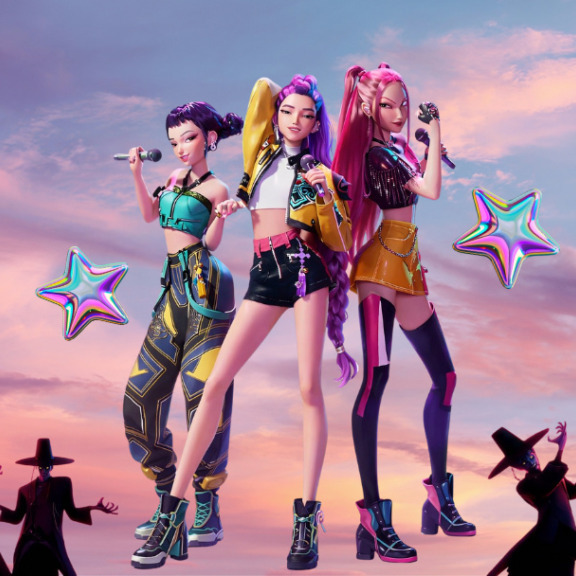
The main character, Rumi, performs K-pop with her bandmates, Mira and Zoey, and hunts demons. Together they form a trio named Huntr/x and protect South Korea from demons with the power of K-pop music — hence the name KPop Demon Hunters.
The intrigue really begins when it’s revealed that Rumi is part demon herself, but she’s concealing her identity for fear of being rejected. Over the course of the movie, the secret becomes harder to hide.
The hunters grew up with a specific mantra: their faults and fears must never be seen. Rumi, growing up half-demon, holds a lot of shame about who she is, since she’s taught to hate and kill demons; this leads to her hating herself. When talking about her demon traits, she says, “I hate them, just like I hate all demons.”
Though I can’t say I’m part demon, I relate to this feeling of simultaneously being too much and not enough. These thoughts restricted the way I expressed myself, believing that staying small was the only way people would tolerate me.
I’m not the only one.
The transition into university is marked by the development of self-conscious emotions such as guilt and shame, according to a Frontiers in Psychiatry study. When feelings of inadequacy grow, students are at risk for developing depression, anxiety, suicidal thoughts and even post-traumatic stress disorder. Their inner demons become extremely prevalent.
Thirty-two per cent of Canadian university students say they have poor mental health. It seems we all have our own inner demons, feeding us negative thoughts.
But the side effect of hiding insecurities is that shame and self-doubt begin to control thoughts and actions. It becomes a form of self-sabotage and leads to a more unfulfilling life.
Demon Hunters shows us exactly that. Toward the end of the movie, Rumi realizes the more she hides her shame, the more it grows and destroys what gives her purpose. Once she starts opening up about her identity, her fear is no longer able to control her. The answer isn’t to hate her “demons,” but to face them head-on.
This is something I’ve learned over the past few years. I had to learn how to slowly face the parts of myself that I deemed unworthy.
The movie ends with Huntr/x singing the powerful song “What it Sounds Like,” talking about letting “the jagged edges meet the light,” while Rumi embraces what she once hated.
The movie’s animation and music are undeniably great, but more than that, the story is relatable and touching. I should have known. Movies don’t reach 325 million views on Netflix for no reason. KPop Demon Hunters is clearly a movie that is speaking to people.
Before writing off KPop Demon Hunters as a silly kids movie, give it a chance. You might learn something valuable. You might be the one who needs to see it most.

Other Posts in this category

Make-A-Wish partner society founded at Dalhousie
DSU rehires same security contractor for DalFest after alleged assaults last year, adds new safety measures

Tony turns Provincetown into Hollywood
Meta’s AI glasses are for perverts
MacLeod is out of tune with Nova Scotians