
Q&A with DSU board of governors representative candidate, Mizel Cluett
The DSU general election’s voting period is from Feb. 10 to 11
February 10, 2026 / Dylan Follett
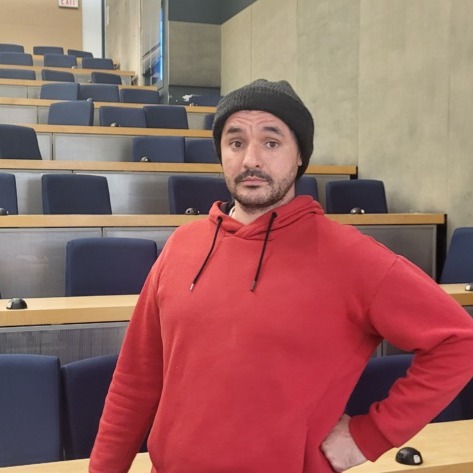
Mizel Cluett is a first-year computer science student running in the Dalhousie Student Union election for a board of governors representative position.
He is one of two candidates running for this role, alongside Steven Mata.
Cluett is a mature student, returning after a partially completed degree at Dalhousie University and the University of King’s College in the mid-2000s. Since then, he has worked for companies and non-profits around the world and has sat on multiple boards. He says he was a DSU representative when he was previously at Dalhousie.
Why are you running for this position?
I’m already on three boards. I started my own non-profit [called Indigenous Futures Canada], and we won an award last year. I thought [the board] was a place where I could genuinely offer something and provide value. I was thinking strategically about having somebody who’s in their late 30s, being able to provide that perspective, but also being able to communicate to the other folks on the board in a different way.
What experience do you have that makes you the best candidate for this position?
I’m on three different boards of directors for big organizations, Hearts Global Network, the ReCover Initiative and Youth Art Connection, where I was the chair of the board. I have started my own [non-profit], and we are an award-winning organization. A lot of that is because of the board and our ability to bring people together to build consensus, to build empathy, understanding, to advocate and to hold our ground. I work as a consultant, drafting and writing policy for non-profits, non-governmental organizations and governance bodies. I’ve been a student for a long time, and I have a huge network in Halifax, in Nova Scotia and in the provincial and federal governments. I have just a huge network.
What are the three most important things your campaign is based on?
Honestly, I want to give everybody who has a vote a choice to make a decision on what this role really means to them. I just see it as a job. If [students] want me to do the job, I’m more than happy to do it. And I think that accountability, integrity and affordability are the major things that matter.
What do you think you could bring to the board that the other candidate can’t?
Obviously, my resumé, my experience, skill set, perspective and just unc status. It’s cool that I’m old in terms of being one of the reps for the students; it gives us leverage, it gives us a wider strategy to appeal or communicate what we want. It would be cool to be the first Mi’kmaw person on the Dalhousie board. As far as I can tell, I looked back, there was one [non-Mi’kmaw] Indigenous person once, but so that would be icing on the cake and a new fundamental perspective.
The board has been a contentious point amongst students following last semester’s lockout, howare you going to make sure the student body is properly represented at the table?
These people don’t intimidate me. Like, point blank, 20,000 versus five? Number one is ensuring that you’re meeting with the reps, ensuring that you’re hearing from DSU in general. At the same time, my ability to concisely articulate the reasons why the board needs to do exactly what we’re advising them to do [is important]. Being able to leverage that knowledge base and be like, “This is exactly why it’s in all of our best interests to do this thing that the student body feels is important.” My job is to be a conduit and to make sure that students are being represented in a professional, persuasive and integral manner; one that’s not just going to get walked over.

Other Posts in this category
Make-A-Wish partner society founded at Dalhousie

DSU rehires same security contractor for DalFest after alleged assaults last year, adds new safety measures

Tony turns Provincetown into Hollywood

Meta’s AI glasses are for perverts

MacLeod is out of tune with Nova Scotians