
Condoms aren’t cool
Gen Z is turning against condoms, STI rates suggest it's a bad move
February 12, 2026 / Lindsay Catre
In the basement of Dalhousie University’s Student Union Building, next to the bookstore, a clear bin of free condoms is taped to the wall outside the Sex Education Resource Centre. It’s well supplied, the condoms packed in a mix of bright, unmistakable wrappers. Above it, “safer sex products” is written in bright blue marker, complete with an arrow pointing straight at the box.
I’ve watched people walk past it all year and haven’t seen a single person take one. I’ve started to wonder if it’s purely decorative. Something about it feels like an attempt to glaze Gen Z’s reputation as the generation that bothers with safe sex.
Dalhousie students, it turns out, are overwhelmingly indifferent towards condoms, according to results from the Dalhousie Gazette’s Dal Purity Test. Our data shows that 84 per cent of respondents who’ve had sex have had sex without a condom at least once.
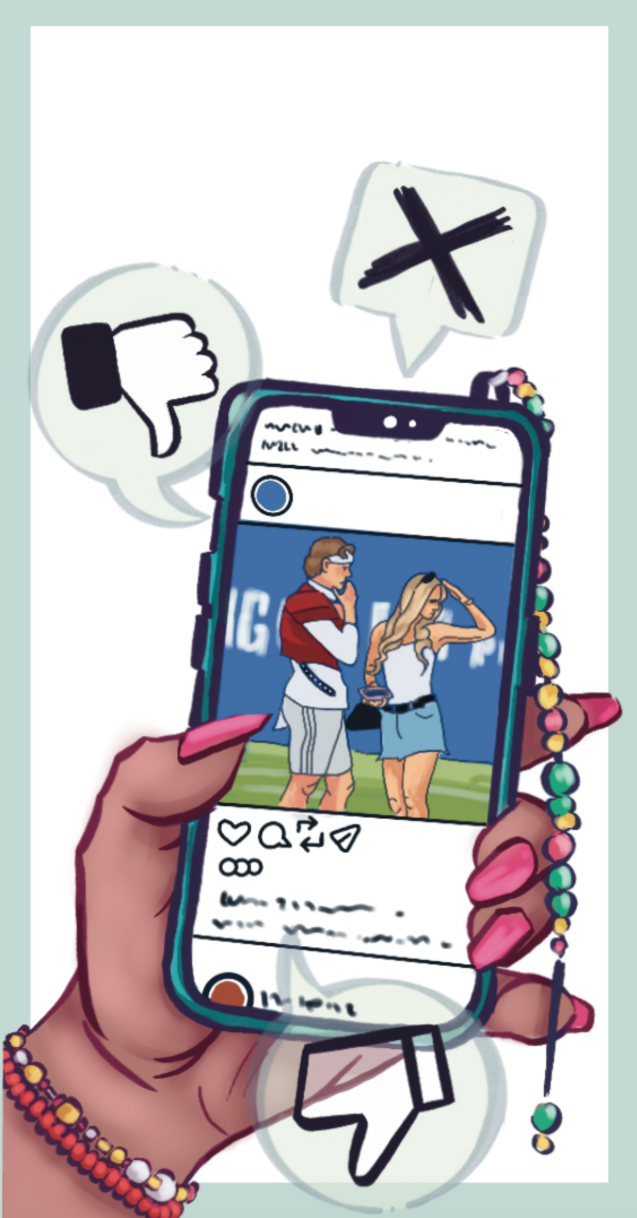
Condom apathy isn’t limited to Dalhousie. Last fall, American influencer Hallie Batchelder went viral for saying condoms “ruin the vibe” and calling requests to use them offensive, declaring society had a “condom epidemic.”
Even after backlash, she doubled down, which is remarkable considering abortion access in the U.S. is increasingly restricted, and STI rates are climbing. But her hot take resonated because it echoed a belief many in Gen Z already seem to believe: condoms are optional.
Curious if this held up beyond statistics and social media, I did what any responsible journalist would do; I went straight for the group chat, asking my girlfriends for their condom thoughts.
“I can’t remember the last time I used one.”
“It just feels better without it.”
“I’m on birth control anyway.”
Meanwhile, STIs are on the rise. Compared to a decade ago, overall cases have jumped 13 per cent. Young people aged 15 to 24 make up about a quarter of the population in the U.S., but account for roughly half of new STI cases each year, according to a University of California, Los Angeles study.
Roughly half of sexually active people will get an STI before the age of 25, according to the Centre for Disease Control and Prevention, and that’s based on 2014 data from before condom use started falling.
According to the World Health Organization, the rate of adolescents who used condoms the last time they had sex fell from 70 per cent to 61 per cent among boys, and 63 per cent to 57 per cent among girls between 2014 and 2022.
What changed? Shouldn’t it be in our best interest to practice safe sex?
Somewhere along the way, “I got tested” replaced “I brought protection.” With endless options for birth control, emergency contraception, and easy access to testing, condoms can just feel like one tool in a crowded kit. Maybe Gen Z takes more chances now because the safety net feels bigger than it used to.
Layered onto that is the way porn has reshaped expectations around sex. In a Psychology Today article, Robert Weiss, an intimacy disorder expert, notes that heavy porn users often take significantly longer than others to reach orgasm with a real‑world partner — and some struggle to reach orgasm at all. Raise your hand if you’ve heard a guy say, “Condoms make it hard to finish,” or “They just don’t feel good.”
From there, the usual lines start. “I’m clean,” “I’ll pull out,” “You’re on the pill,” “I haven’t slept with anyone since my ex.” There are enough excuses floating around to fill a bingo card.
Some of those claims might be true, but they’re still no substitute for protecting yourself from pregnancy and STIs. In the Gazette’s survey, 60 per cent of respondents who’ve had sex said they’ve had a pregnancy scare.
I’m not trying to police anyone’s sex life, and I’m not about to oversell condoms, but students shouldn’t be buying Plan B before they grab a free piece of latex from the SUB.
Just take the condom. It’s right there.

Read more from the gazette

Make-A-Wish partner society founded at Dalhousie

DSU rehires same security contractor for DalFest after alleged assaults last year, adds new safety measures

Tony turns Provincetown into Hollywood

Meta’s AI glasses are for perverts

MacLeod is out of tune with Nova Scotians