Three years ago, a Dalhousie student died from meningitis B in residence. What has the university done so it doesn’t happen again?
Students, experts say not enough people know the dangers
By: Marielle Godfrey, features editor and Jenna Olsen, editor-in-chief
Chloe Kerton had just come back to her residence room when she noticed purple bruises covering her arms.
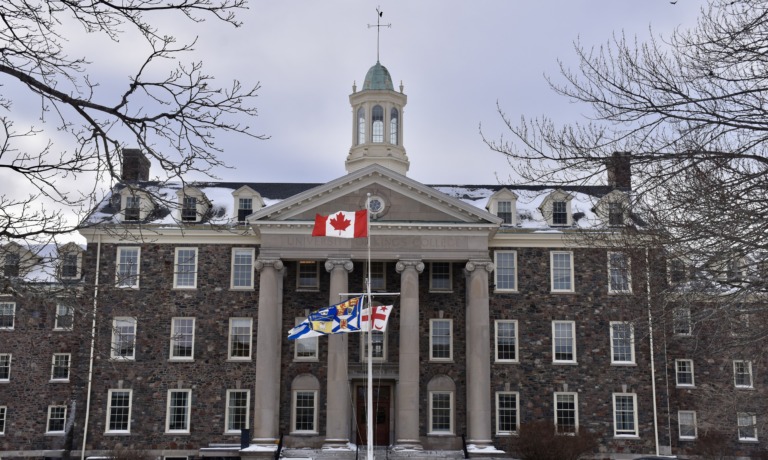
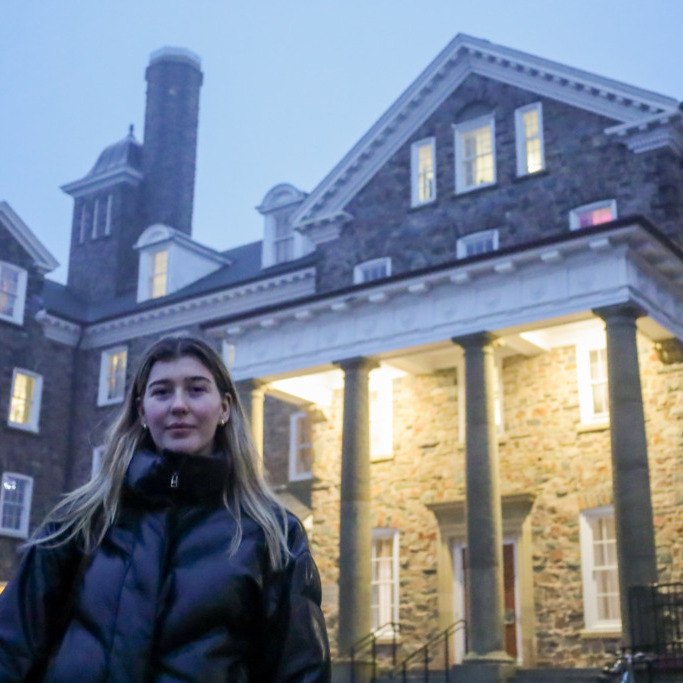
The now fourth-year Dalhousie University commerce student was a first-year living in Shirreff Hall in 2022. Her flu-like symptoms started the day before, but after pushing through the aches to write an exam, her pain became overwhelming, and the sudden appearance of the bruises made her go to the hospital on Dec. 9, 2022.
After waiting two hours in the emergency room at the Halifax Infirmary, Kerton felt too sick to keep waiting and took an Uber back to residence. She barely mustered enough strength to open the car door.
As Kerton crawled into bed, her phone rang. The doctor on the line urged her to come back to the hospital where she was immediately treated for a suspected case of meningitis.
“A doctor asked me if my heart stopped, if I wanted to be resuscitated,” Kerton said. “I knew it was bad, but to be asked by a doctor if I wanted to be resuscitated? There’s a lot of life left in me.
“I just remember feeling like I was going to die.”
Kerton had meningitis B, and if she’d waited even an hour more before returning to the hospital, treatment might not have been so successful.
“It’s a miracle that those doctors were able to save me, and that I didn’t lose any limbs.”
Maria Gaynor wasn’t so lucky. The first-year student died in residence on Dec. 13, 2022, four days after Kerton was hospitalized. Gaynor was 18-years-old.
The two confirmed cases caused Nova Scotia Public Health to declare a meningococcal outbreak in Shirreff Hall on Dec. 16, 2022, one month after a Saint Mary’s University student died of a confirmed case of meningitis.
Though Halifax hasn’t had any reported outbreaks of meningitis in the past three years, Kerton and experts say not enough students are aware of the disease’s dangers.
“It’s important for universities to reach parents and guardians with a message about vaccination before students arrive to campus in first year; students aren’t typically thinking about things like this,” Kerton said. “If my parents had known about the meningitis B risk and previous cases in Nova Scotia, they would have had me vaccinated before I got to Dal.”
Meningitis spreads through saliva from coughing, sneezing, living in close quarters — like in university residence — and sharing drinks, utensils or food. It’s not spread just by talking to or being in the same room as an infected person.
Despite both Kerton and Gaynor living in Shirreff Hall, they had no known social contact.
According to the Centers for Disease Control and Prevention, college students are at increased risk of contracting meningitis.
“The stories are a little scary, but I know I’m vaccinated, so I’m not overly nervous,” said Juliet Sarabura, a first-year Dalhousie student living in residence.
Vaccine only free for Nova Scotian students
Five months after the outbreak, the province made the meningitis B vaccine free for students from Nova Scotia who are under the age of 25 and living in a residence operated by their post-secondary institution for the first time.
Out-of-province students with Dalhousie Student Union health insurance can get both doses of the vaccine for $48.90 total, with insurance covering the remaining $195.60 price tag.
Dalhousie doesn’t require any vaccinations — including meningitis B — for students living in residence.
“Dalhousie University supports NS Health and the NS Government by sharing additional information with our students in the fall around Meningitis B, including how to receive the vaccine both on and off campus,” university spokesperson Janet Bryson told the Dalhousie Gazette in an email.
Nova Scotian students who don’t live in a post-secondary managed residence are not eligible to receive the vaccination for free.
The SMU student who died from meningitis was not living in residence and would not have been eligible to receive the vaccine for free.
“I wish that the vaccine was publicly funded across Canada,” Kerton said. “I think it would make a lot of students feel much more safe about going away to university and reducing the spread of it.”
Health Canada told the Gazette that provinces and territories are responsible for vaccination programs, including which vaccines are publicly funded.
Dalhousie didn’t tell students about meningitis
Dalhousie notified students in a Dec. 12, 2022 email that “one case of an infectious disease was identified within our residence community,” but said it wouldn’t specify the diagnosis.
The case was Kerton. Dalhousie didn’t warn students that the infectious disease was meningitis or say what symptoms to watch for.
That email was sent the day before Gaynor died in her Shirreff Hall residence room.
Gaynor’s father, Mike Gaynor, told CTV News in 2022 that his family was unaware Nova Scotia Public Health and the university were already investigating a suspected meningitis case when his daughter started to feel sick two days before her death.
He said the university should have notified students as soon as it knew about the suspected case.
“If a text or an email could have been sent, if a note could have been slipped under the door, all these kids are holed up in their rooms studying for exams,” he told CTV News. “Somebody knew, we didn’t know, Maria didn’t know, that there was [that] case.”
Multiple attempts by the Gazette to contact Mike Gaynor went unanswered.
Kerton also experienced a lack of communication from Dalhousie.
“I didn’t feel like I was offered the support that I needed during that very difficult time,” she said.
In response to the Gazette’s inquiry about Dalhousie’s communication with students during the outbreak, university spokesperson Michael Fleury said, “Dalhousie follows Public Health guidance and protocols when supporting members of our community who may be impacted by infectious diseases. We cannot comment on details of specific cases.”
Though they never met, Gaynor’s story sticks with Kerton.
“I think about her every day,” she said.
Lack of awareness
Norrie Matthews founded BforKai, a non-profit that advocates for meningitis B vaccines and educates the public about the disease, after his 19-year-old son Kai suddenly died of meningitis in 2021. Kai had just come home for the summer after his first year living in residence at Acadia University.
“I had no idea about this disease, and basically everybody we knew at the time we lost Kai didn’t understand what this was,” said Matthews.
In August 2023, after the meningitis B outbreak at Dalhousie, Matthews worked with three Dalhousie medical students to educate students about the disease by hanging posters in residences and holding training sessions with residence assistants.
Dr. Shelly McNeil, the chief of the division of infectious diseases at Nova Scotia Health Authority and a professor at Dalhousie’s school of medicine, told CBC that not everyone knows the meningitis B vaccine isn’t included in routine children’s immunizations.
Matthews started BforKai for that reason. He wants to spread the message, “because when you have that lapse of awareness, that’s when people can have what happened to us.”
Raising awareness has also been healing for Kerton.
“My hope is to spread more awareness of meningitis B, and for people to know that I was healthy, and if I had known about the meningitis B vaccine, I would have gotten it.”