
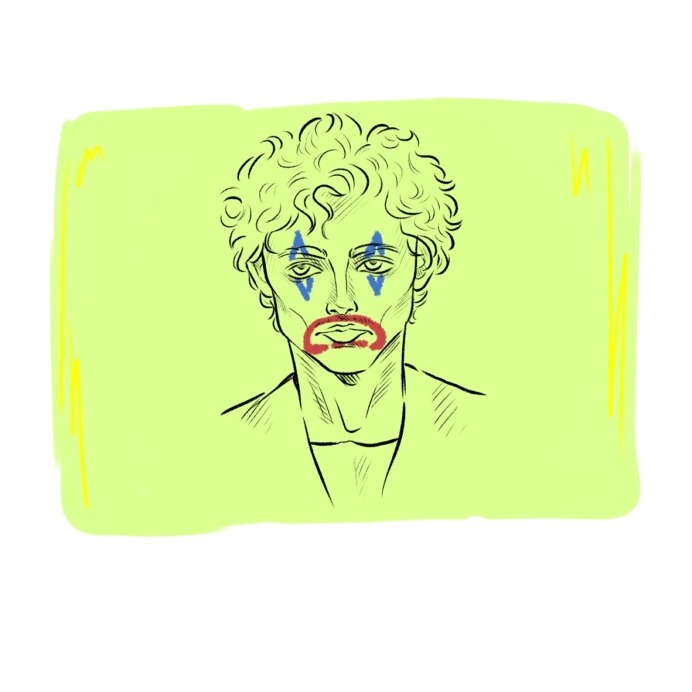
It’s more than opera: Timothée Chalamet’s comment shows Hollywood’s pervasive misogyny
How can female artists be taken seriously with men like Timmy around?
April 9, 2026 / Alyssia Halvorsen
Timothée Chalamet announced he’s “in pursuit of greatness” while accepting a SAG Actor Award in 2025, and that was the beginning of the end.
“I want to be one of the greats. I’m inspired by the greats,” he said. But in this pursuit of greatness, he’s also marked a shift towards embodying the style of masculinity Hollywood continues to reward.
On the press tour for his film Marty Supreme (2025), Chalamet adopted a new style, haircut and attitude.
Chalamet himself embodies the asshole, Marty Mauser, on carpets and in interviews. For some fans, these aspects distinctly oppose the old Chalamet, who rose to fame as a vulnerable heartthrob, a skinny, curly-haired actor with an extensive IMDB page featuring female-focused films.
Chalamet’s behaviour reflects an idea that to be one of the greats, he must be serious, and to be serious is to be masculine. He’s stripped himself of the introspective, soft-spoken persona that built his — primarily female — audience.
In this version of greatness, seriousness appears to be measured by an actor’s willingness to centre their life around a role. One must only think of Austin Butler’s voice change for Elvis, or Daniel Day-Lewis, one of the actors Chalamet credits as an inspiration, who’s known for method acting, living with a character’s voice, mannerisms and, once, physical disability.
However, as Kristen Stewart said in an interview with the New York Times, it’s just different for women. There’s less room for the showy displays of acting prowess Hollywood allows men to boast.
“Have you ever heard of a female actor that was method?” asked Stewart.
The method acting that Hollywood rewards Chalamet for, some female actors can’t afford to do, because they’re relied on as breadwinners, parents and community members.
Kirsten Dunst feels the same. “What, am I gonna be like that with my kids when I come home? Speaking in an accent?” she said in a 2024 interview with GQ.
“Honestly, I can’t do that. It seems like something only men can afford to do.”
Contributing to his newfound persona, Chalamet made matters worse during an event in February hosted by CNN and Variety, where he insulted ballet and opera.
“I don’t want to be working in ballet or opera,” said Chalamet, “Where it’s like, ‘Hey, keep this thing alive,’ even though no one cares about this anymore.”
He leaned back in his chair with a laugh and followed his comment with, “All respect to the ballet and opera people out there.”
Respect, however, seems to be the last thing on his mind. It’s impossible to ignore the subtext of what his comment represents.
Both ballet and opera are female-dominated art forms, yet while women are often associated with the femininity of ballet, men are more often selected for high-profile roles and leadership positions. A 2019 study from the Dance Data Project estimated that women outnumber men 20-1 in ballet classes, but remain grossly underrepresented in leadership.
Chalamet may not have been intentionally targeting women with his speech, but his comments about ballet and opera disparage female-driven art forms and further separate him from femininity.
It’s the irony of all ironies that Chalamet himself was raised surrounded by ballet. His sister, mother and grandmother all professionally danced in the New York City Ballet, and he’s spoken about how he “grew up backstage at the New York City Ballet.”
He was once lauded as the face of a younger generation fighting against toxic masculinity, aided by his unique fashion sense and comfort taking a secondary role to female leads and directors, like in Little Women (2019) and Lady Bird (2017).
Where could it possibly have gone wrong? The insidious, oppressive roots of Hollywood itself. In his mission to become one of the greats, Chalamet is distancing himself from femininity. As one TikToker commented, “I miss when he was French and quiet.”

Read more from the gazette

KSU council to choose new interim president on Sunday
The Student Chef – Corn Chowder
BREAKING: KSU president resigns
BREAKING: Faculty union holds vote of no confidence in Dal president, others

Make-A-Wish partner society founded at Dalhousie