Emerald Fennell takes Wuthering Heights to new lows
The highly anticipated adaptation misses the plot
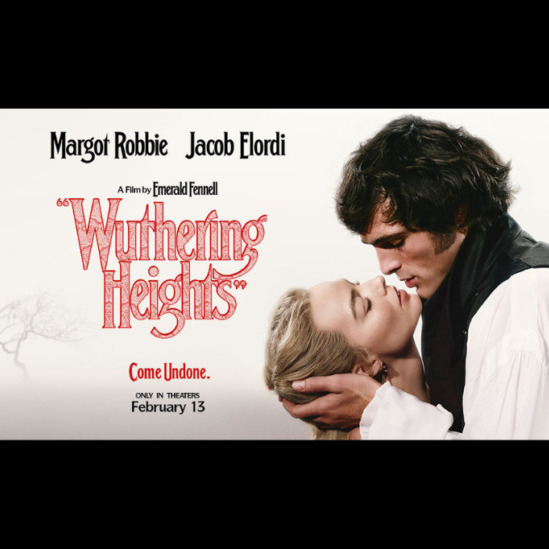
As someone who suffers from chronic naiveté, I had high hopes for Emerald Fennell’s “Wuthering Heights” (2026). I re-read Emily Brontë’s novel in preparation, and excitedly awaited Charli xcx’s original soundtrack. I trusted Fennell’s judgement, as a fan of her debut film Promising Young Woman (2020), and expected a progressive perspective on the classic.
I couldn’t have been more wrong.
In her defence, Fennell did recommend viewers disconnect the film from its source material, hence the quotation marks. But due to the original’s notoriety, separation is not an option.
Fennell wanted all of the clout associated with the classic, and none of the responsibility of honouring Brontë’s story.
Her decision to cast Jacob Elordi as Heathcliff, who in the novel is famously a non-white character (readers speculate he was Romani or Black), is notable. This decision erases the racial prejudices and tension that, in the novel, would “degrade” Catherine Earnshaw, played by Margot Robbie, if she married him.
In Fennell’s version, it’s economic tensions that drive Cathy into Edgar Linton (Shazad Latif)’s arms. Cathy’s father is a gambling addict and abusive alcoholic, leading Cathy to pursue a relationship with the extremely wealthy Edgar.
In contrast to the desolate poverty at the Earnshaw’s Wuthering Heights estate, Linton’s Thrushcross Grange property is absurdly extravagant. The first time we meet Linton, Cathy is peering over his garden wall into a completely different universe than the one Cathy occupies. You almost expect to see a rabbit in a top hat seated at the head of his tea table.
While Brontë’s novel is grounded in struggles that provided commentary on the time she lived in, Fennell’s adaptation has its head in the clouds.
This version of “Wuthering Heights” is more similar to a Bridgerton version of Fifty Shades of Grey than it is to Brontë’s classic. Fennell boiled down the entire narrative to sickly sweet yearning and sex appeal. Then she infuses it with erotic sadomasochistic dynamics.
Tina Fey said it best on the Las Culturistas podcast: a sexually violent third act in a Fennell project is like a fork found in the kitchen.
Sure, the original gothic romance novel does point to sadomasochistic themes in Cathy and Heathcliff’s dynamic, but it’s an undercurrent for a broader story. One that Fennell cuts short to focus on a version that amps up an already violent romance.
Robbie’s Cathy is deeply unlikable: materialistic, cruel and selfish. Fennell has written out all of the character’s redeeming qualities. It’s hard to empathize with Cathy; it’s harder to feel satisfied with her.
Elordi, despite being the master of puppy dog eyes, offers little substance as Heathcliff. His romance with Cathy is devoid of heart, relying on their mutual lust. When the story reached its climax, I was left underwhelmed.
Despite this being a horny retelling, it’s not hot.
It’s honestly impressive how Fennell managed to make these characters the worst versions of themselves in every way.
Perhaps the character most victimized by Fennell’s retelling is Isabella Linton (Alison Oliver). Depicted as a simple, overly privileged stay-at-home sister, Isabella ends up as Heathcliff’s willing but debased wife.
Brontë’s version of Isabella arguably had the most autonomy of any of the novel’s female characters. In Brontë’s version, Isabella is tricked into an abusive marriage with Heathcliff and ultimately runs away to London with their child.
Fennell reduces Isabella to Heathcliff’s pet. Chained to the fireplace with a metal restraint around her neck, Isabella barks at Heathcliff’s demand and eats out of the palm of his hand.
The next time Fennell announces she plans to adapt one of literature’s prized novels, I will treat it like a threat.