Dalhousie cadaver lab to reopen this fall
Lab’s new downdraft ventilation system meets Nova Scotia's air quality standards
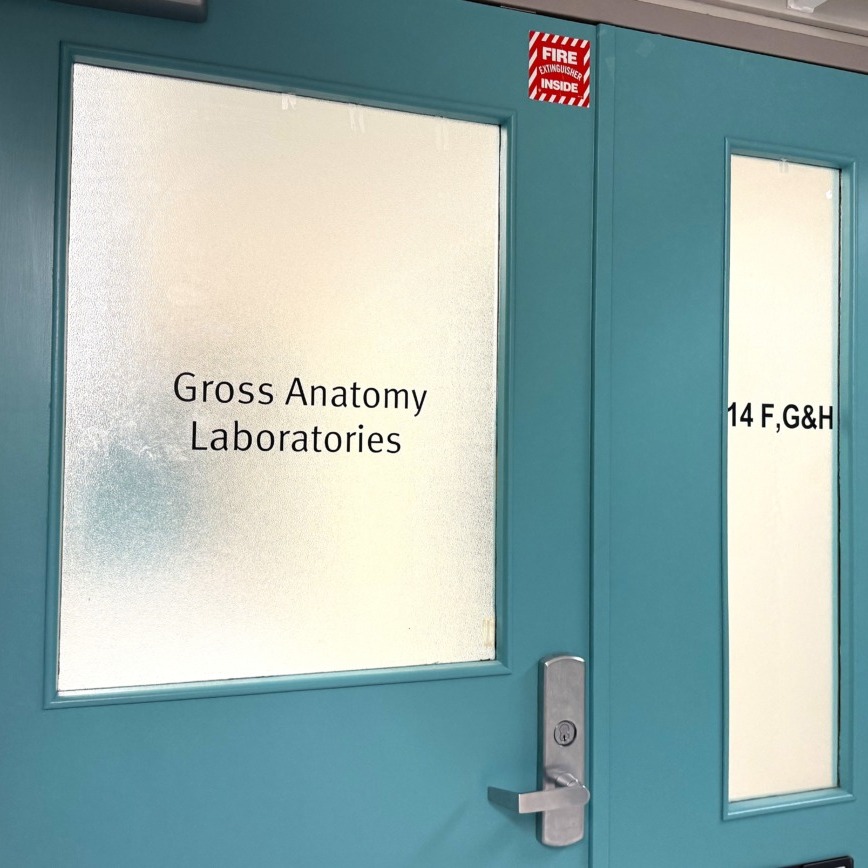
Following its shutdown in October, Dalhousie University’s cadaver lab will reopen this fall after adopting a new preservation method and upgrading its ventilation system.
“We have implemented a new, lower-formaldehyde embalming method, which is working very well,” said Jason Bremner, director of communications for Dalhousie’s faculty of medicine, in an emailed statement to the Dalhousie Gazette.
Formaldehyde, a colourless chemical commonly used to preserve bodies from decomposition, is widely used in anatomy labs but can also pose health risks at elevated exposure levels.
“Air quality testing has been completed using these newly embalmed specimens, and the results met long-term exposure guidelines,” Bremner said.
Dalhousie is also installing four downdraft dissection tables in the lab, which draw fumes away from workspaces, to reduce formaldehyde exposure and improve air circulation.
Bremner said the lab is expected to resume normal operations in the fall once the newly prepared specimens have been dissected over the summer.
The lab was initially closed after air-quality testing revealed formaldehyde levels exceeding updated provincial safety standards — the strictest in Canada and aligned with the Canada Labour Code.
Related: Dalhousie cadaver lab fails inspection, shuts down
Eshan Arora is a second-year medical student at Dalhousie, who sits on the university’s board of governors as a Dalhousie Student Union representative.
“If one province is saying it’s acceptable levels, and Nova Scotia made it really stringent, then you start to wonder who is in the right and who is in the wrong,” he said.
Students say alternatives weren’t the same
Since the lab closed last fall, anatomy teaching has continued using alternative teaching tools, including plastinated specimens, anatomical models and instructional videos created during the COVID-19 pandemic.
Arora said learning with specimens virtually is helpful, but doesn’t replace the in-person experience.
“Going in person and seeing it is very valuable.”
Plastinated specimens — bodies or body parts preserved through a process that replaces water and lipids from the specimen with polymers, such as silicone or epoxy — allow for the long-term preservation of bodily structures.
However, plastinated specimens don’t replicate the texture or flexibility of living tissue found in cadavers.
During the lab closure, Dalhousie instructors also introduced another temporary solution — the use of preserved, pre-dissected cadaver parts.
The specimens were sealed in bags designed to preserve them while limiting the release of formaldehyde into the air.
“We weren’t necessarily able to go in depth and move or touch the nerves the way we used to,” Arora said. “But we were still able to have a prosection in front of us and look at things with our own eyes.”
Following the initial closure, the university considered removing the existing cadavers entirely and replacing them with newly donated bodies, according to Arora.
“It would take approximately three years to recuperate the number of bodies we would need,” he said. “It would also be a waste of the individuals who have provided their bodies for the sake of medicine and science.”
Instead, Dalhousie opted to modify preservation methods and upgrade its ventilation systems.
Although students were disappointed by the disruption, Arora said the return of cadaver labs will allow an opportunity to engage in a key part of medical education.
“A lot of our first-year students feel a sense of disappointment in not having the opportunity to do this.”