Dalhousie partners with Indian universities on new satellite campus
Dal won’t contribute to construction costs, says university
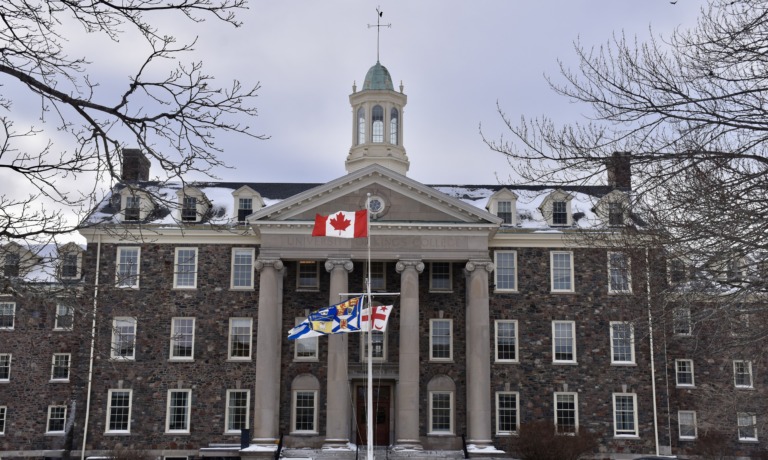
Dalhousie University is joining two Indian universities to develop an innovation campus in India over the next decade, offering joint-degree delivery and graduate student programming.
The Tirupati Tri-Institutional Global Innovation Campus, a collaboration between Dalhousie and two Indian research institutions, will serve graduate students from all three schools.
“This is really about extending our reach as a research university [and] extending the kinds of opportunities that we can provide to graduate students and researchers,” said Matt Hebb, Dalhousie’s vice-president of strategic engagement.
Hebb didn’t characterize the new project as an overseas campus — while the university is assisting with programming, it won’t build or pay for any infrastructure.
Over the next year, Dalhousie will use existing staff resources to determine specifics of the collaboration. There won’t be an isolated budget for the project until it fleshes out the programming, Hebb said.
The university received a $520,000 federal grant that will help cover travel costs for over 30 grad students, researchers and faculty to India to build in-person research partnerships over the next two years.
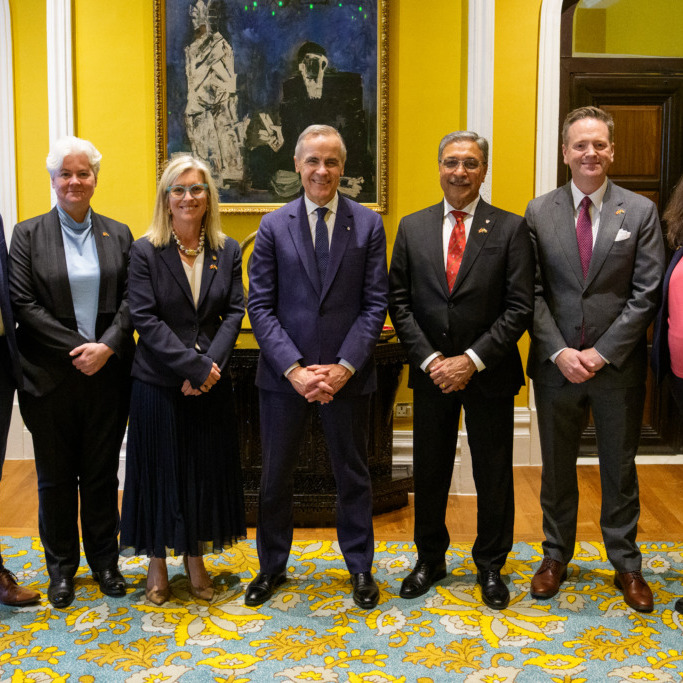
The new campus was announced during Prime Minister Mark Carney’s visit to India on Feb. 28. Dalhousie President Kim Brooks appeared at the announcement event. The university was one of four Canadian universities that joined the delegation aimed at strengthening economic ties between the two countries.
The new campus is part of Carney’s strategy to reset ties with the world’s most populous country and diversify from the United States, but Dalhousie had already been developing its partnership with the Indian Institute of Technology Tirupati and the Indian Institute of Science Education and Research Tirupati over the last five years.
Dalhousie’s global relations office had been discussing how to deepen the relationship with the two institutions. Brooks visited India in early February as part of a delegation of presidents from Canadian universities from Feb. 2 to 6. There, the idea of an international campus was formed, says Hebb.
“[The collaboration] is certainly a bit fortuitous, but it’s also a function of a lot of hard work that’s been ongoing,” he says.
The campus will focus on four shared areas of research: digital and precision agriculture; health technologies and biomanufacturing; digital systems and applied AI; and clean energy, critical minerals and electric mobility.
Hebb says the goal of the collaboration is to deepen innovation and research ties between the two countries.
“Places like Tirupati in India are developing very, very rapidly,” he says. “The ability to be exposed to that also would be fascinating and interesting for students.”
Canadian universities have a mixed track record with overseas campuses. Financial pressures recently forced Memorial University to sell its U.K. campus. Meanwhile, McGill University plans to open more foreign campuses in the face of Quebec’s out-of-province tuition hikes.
Dalhousie has partnerships with over 200 institutions around the world, but doesn’t operate any satellite campuses in foreign countries.
As the university projects a $13.1 million deficit for the next academic year, Hebb says the project will have a modest impact on the operational budget.
“It’s something that Dal can afford,” he says.
While the campus is not meant to be a major revenue generator or a “quick fix” for international student caps, Hebb says it could help attract students in the future.
“I do think — and very much hope — that these kinds of partnerships with elite institutions in India will help to establish the Dalhousie brand in India as an excellent school and a desirable place to go,” he says.
Dalhousie recently signed memorandums of understanding with two other Indian institutions, separate from the Tirupati project, including one for a nursing degree program offering dual credentials in Canada and India, and another for joint agriculture research.
The dual-degree program is expected to create a pathway for nurses to come to practice in Nova Scotia. It includes 25 seats for students, dual credentials and clinical experience in Canada.
The university has other collaborations in India, including partnerships with 23 universities and nine joint-degree programs.