DSU calls meeting to vote on one-week student strike
March 16-21 strike is part of a provincial campaign building to an indefinite strike
The Dalhousie Student Union has called a special general meeting for students to vote on joining a province-wide student strike, which would involve students not attending classes or submitting assignments for the strike’s duration.
The student union called the meeting after a petition calling for the DSU to vote on joining the strike was signed by 305 Dalhousie University students. The petition was emailed to DSU President Maren Mealey and Ryan Dee, DSU council chair, on Feb. 13.
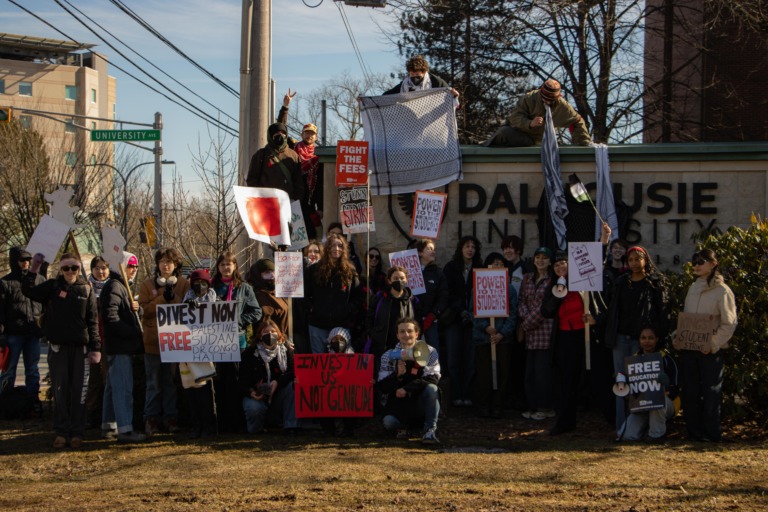
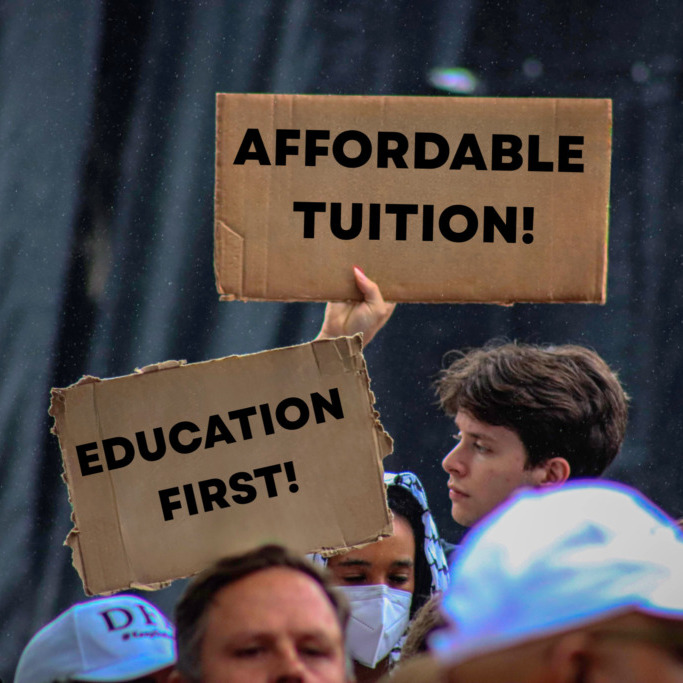
The special general meeting is scheduled for March 12 at 6 p.m. If students pass the strike motion, the student union’s campaign would publicize two central demands: affordable tuition and Dalhousie’s divestment from investments tied to weapons manufacturers, fossil fuels and entities that support genocide.
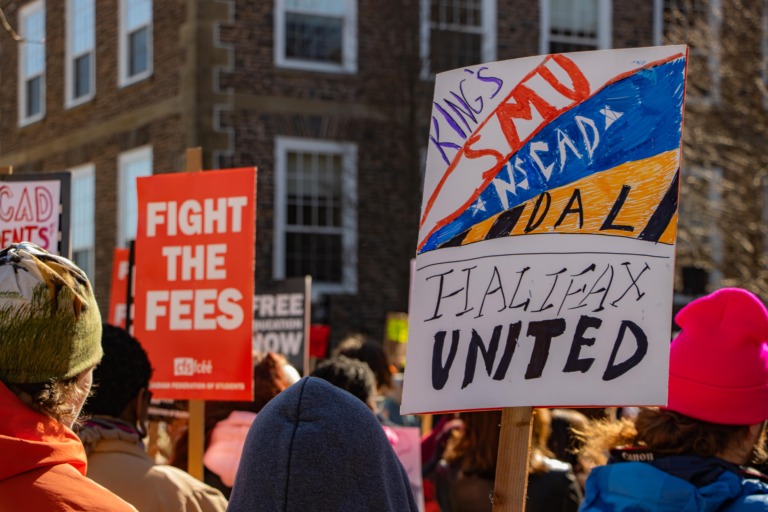
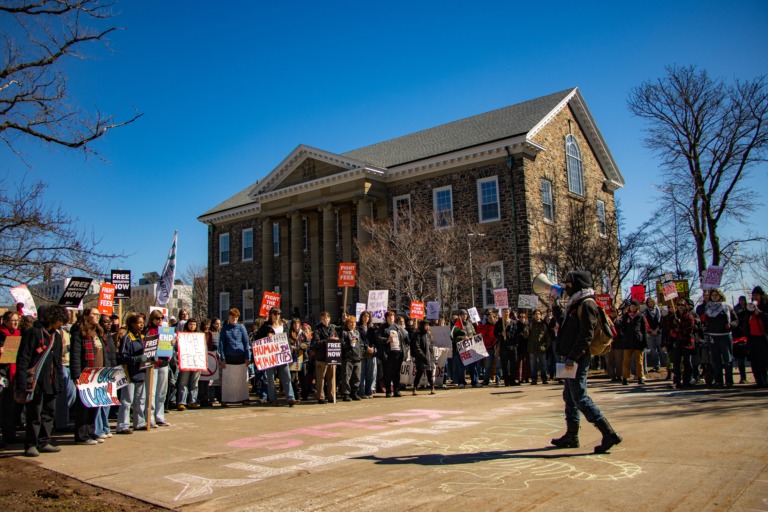
The strike is being organized by Nova Scotia Student Strike, an organization that identifies as being anti-tuition, anti-war and pro-Indigenous sovereignty. The strike is expected to take place from March 16 to 21.
The broader student-led initiative is calling for a 20 per cent decrease in tuition, an end to the federal international student cap and divestment from the aforementioned investments at public Nova Scotia universities. They plan to build towards an indefinite strike in May of 2028.
“It’s incredible to see students motivated to organize and leverage student collective power,” Mealey said in an email to the Dalhousie Gazette on Feb. 19.
The strike has been endorsed by on-campus groups, including the Dalhousie Palestinian Society, Nova Scotia Public Interest Research Group, the Dalhousie Social Work Student Group and the Canadian Union of Public Employees Local 3912.
Malcolm Mealey, an organizer for Nova Scotia Student Strike — who is also Maren’s sibling — said the petition is an encouraging step for the movement.
They said that the passing of the strike motion would put less pressure on students to participate in the walkout.
“[Then] you’re simply participating in what the student union says you should be doing,” says Malcolm.
Chloee Sampson, a spokesperson for Nova Scotia’s advanced education department, said the province “understand[s] the pressures [students are] facing with rising costs,” in an emailed statement to the Gazette.
“While the province is managing a fiscal deficit and doing its part to live within its means, we remain committed to supporting university students,” said Sampson.
What is the purpose of the strike?
According to Malcolm, a strike at Dalhousie would also focus on tuition refunds for three weeks, or 21 per cent, of lost class time in the fall semester after the university’s board of governors locked out members of the Dalhousie Faculty Association on Aug. 20, suspending most classes.
Nova Scotia Student Strike doesn’t expect to reach their goals for students from the one-week strike alone, according to Aaron Abogado, an organizer for Nova Scotia Student Strike and the vice-president external for the Nova Scotia College of Art and Design’s student union.
“There’s no belief that this will really [lead to] divestment or cheaper tuition — it’s that it will build capacity, build the movement,” he said.
Nova Scotia Student Strike hopes to utilize more smaller strikes — like the one planned in March — to lead into an indefinite strike in May 2028, according to Abogado.
“There’s no other way to get [the universities’] attention,” he said. “We’ve marched for climate change. We’ve marched [against the] genocide in Palestine. We’ve marched for so many different things, and ultimately the only way they will ever listen to us is economically.”
Students have already paid tuition for the winter semester, including the week in March when the strike would take place.
The strike’s planned structure takes inspiration from the 2012 Quebec student strike, according to Abogado, which spent seven years building support before launching an indefinite strike that lasted more than 200 days.
The strike involved violent clashes between protestors and police, with thousands arrested. Ultimately, the provincial government rolled back the tuition increases that sparked the strike. Today, domestic tuition in Quebec is less than half the national average.
“This isn’t about taking a week off school,” said Malcolm. “[It’s about showing] that we can push forward with what we would like to see from our universities.”
Maren declined to comment on the possibility of Nova Scotia Student Strike organizing an indefinite strike in 2028.
“I support students’ rights to organize and leverage student power,” she said.
Are other universities going to be striking?
Nova Scotia Student Strike has a presence on other university campuses across the province. As of Feb. 22, no student unions in Nova Scotia have officially mandated a strike. Acadia University and NSCAD University’s student unions will hold special general meetings to vote on the strike on Feb. 24 and Feb. 28, respectively.
The University of King’s College’s student union is also considering a walkout, though Iman Mannathukkaren, the KSU’s external vice-president, said she hasn’t seen much student interest in striking.
“We have no intention of holding a strike vote if students don’t want to do that,” Mannathukkaren said.
Malcolm said they expect a good turnout of Dalhousie students for the strike, but isn’t worried about the effect the number of strikers will have on reaching their goals.
“Regardless of how many people show up, it will still be a powerful action of building community,” says Malcolm.
“[We will be] showing the province and schools how we feel and how we can organize together and show a better future.”