Provincial budget cuts $3.7M in graduate scholarships
Dalhousie will fulfill NSGS scholarship agreements with current recipients
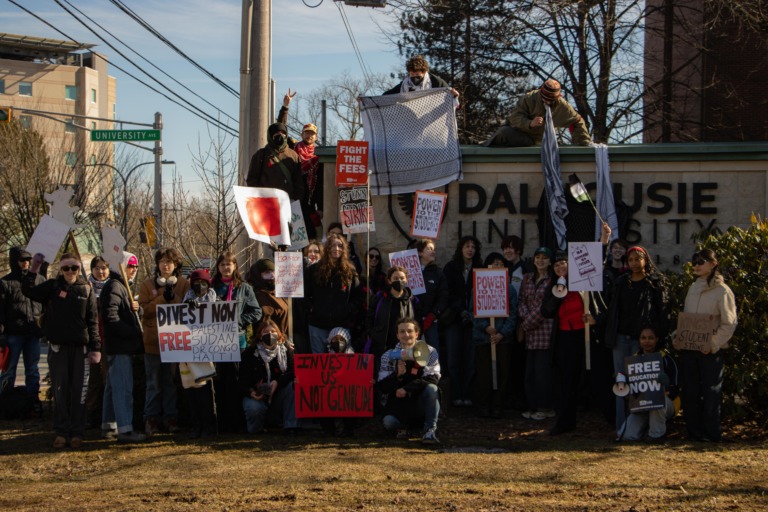
Dalhousie University graduate students who receive funding from the provincial government were stunned to learn their scholarships are being cut from next year’s budget.
“I was heavily relying on [the scholarship] to help pay for my tuition,” said Alzena Ilie, a fourth-year clinical psychology PhD student at Dalhousie and a current recipient of Nova Scotia Graduate Scholarship (NSGS) program funding.
“It was really concerning and disheartening, especially because it came out of nowhere.”
The NSGS program, which provided Nova Scotia graduate students with $3.7 million in scholarships, was among the cuts in the proposed 2026-27 provincial budget tabled on Feb. 23.
Funding for NSGS recipients will continue through the 2025-26 academic year. Those who were previously given scholarships for 2026-27 and beyond will not receive funding from the province, and no new awards will be offered for incoming students.
In an email obtained by the Dalhousie Gazette and sent to current NSGS scholarship recipients, the university said it would fulfill any financial commitments made by the province, as outlined in students’ individual award decision letters.
“We will continue to work with our provincial and federal counterparts to emphasize the importance of this type of funding for graduate students now and into the future,” said the email signed by Wanda M. Costen, Dalhousie provost and vice-president academic, and Christian Blouin, dean of graduate studies.
The proposed budget contains an increase of $8.5 million for advanced education. But targeted grant funding to universities, graduate scholarships and research and innovation incentives saw a reduction of $20.5 million.
It also includes an increase of $6.7 million to student assistance and $7.8 million to university operating grant funding.
Premier Tim Houston announced that the province is reversing grant funding cuts that were originally proposed to help African Nova Scotians and Indigenous people access educational opportunities in a press conference on March 10.
The initial version of the budget included a $50,000 to Dalhousie’s Transition Year Program, which helps African Nova Scotian and Indigenous students transition to university, and $25,000 to its African N.S. health program, which aims to increase representation in health professions.
Nova Scotia’s Department of Advanced Education acknowledged the potential effects of the budget cuts in a statement to the Gazette.
“They are not a reflection of the important work community organizations are doing, and no sector or group has been singled out,” said Chloee Sampson, a spokesperson for the department.
How is this impacting Dalhousie graduate students?
Mike Fleury, the senior manager of strategic communications and media relations at Dalhousie, said the university is “actively considering” how the proposed cuts may affect it, in a statement to the Gazette.
“The reduction in directed grants, particularly the elimination of the Nova Scotia Graduate Scholarship Program, will have a real impact, particularly for graduate students,” said Fleury.
Ilie says she, like many graduate students, relies on scholarship funding to offset tuition and day-to-day costs.
“Not having NSGS funding is a huge blow to graduate students,” she says. “A huge flow of undergraduate students won’t be able to apply because they won’t have money while completing their degrees.”
Adrian Rumson is a fourth-year PhD student in chemistry at Dalhousie and an NSGS funding recipient. He says he was in “disbelief” when the scholarship cuts were announced.
“I found it difficult to accept and believe that the provincial government would not only completely slash an excellent way of funding research, but also cut off students who had already been promised funding,” he says.
Former recipients of the scholarship are also shocked by the cut to the program. Ben Hansson, a fourth-year physics PhD student, says the cuts are “illogical.”
He says that receiving an NSGS scholarship before his first year of graduate studies made it easier for him to be admitted to Dalhousie’s program.
Dalhousie will not accept any graduate students without a predetermined source of funding.
“If there’s less scholarships in the pool, that means there are fewer opportunities for students to enter that program and get an education,” says Hansson.
What can students do now?
Kate Frost is the manager of the Dalhousie Student Union’s graduate office. She says that it’s no secret that graduate students are already in a tough financial situation, and taking away a program that helped many students get by is “obviously not good.”
“This was a huge concern before budget cuts were even in the picture,” says Frost.
Frost says transparency is “the bare minimum” for large changes by the provincial government that directly impact students.
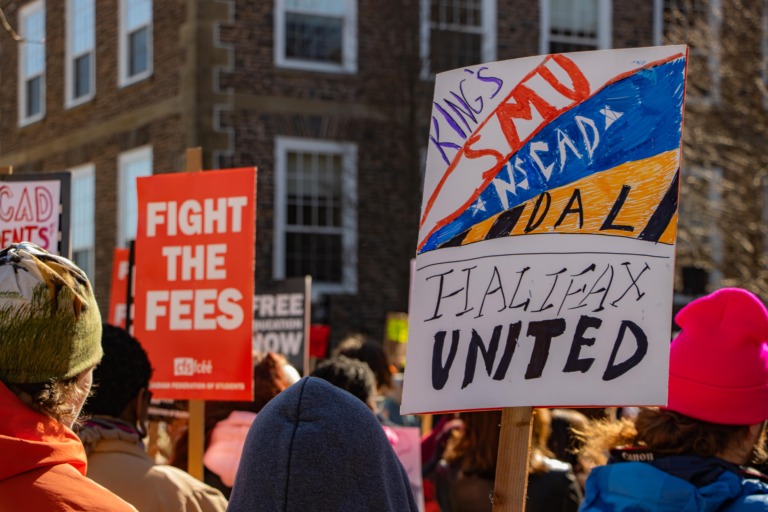
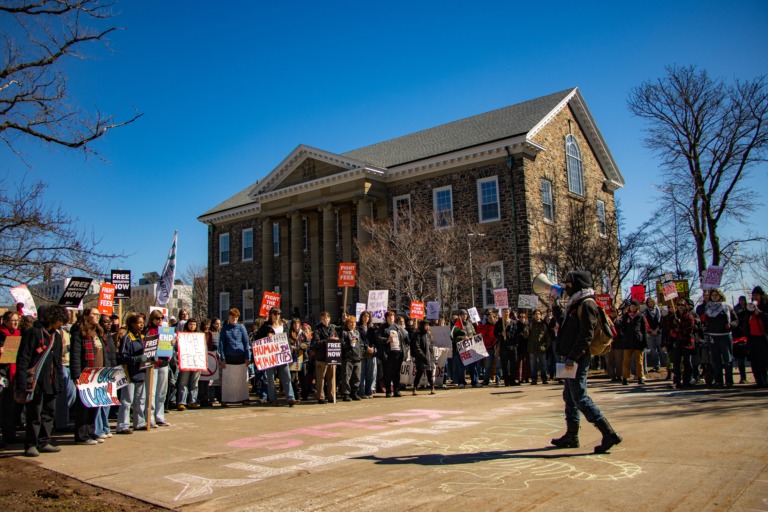
Both Ilie and Rumson say that they want students and student organizations to put pressure on the provincial government to reverse the process of shutting down the NSGS program.
“We do need to fight this change. It’s going to have a huge impact on our education system,” says Ilie. “We need to band together to make sure that this does not become a trend.”