Student union election decided by just 12.5% of students
DSU continues to struggle with engaging students
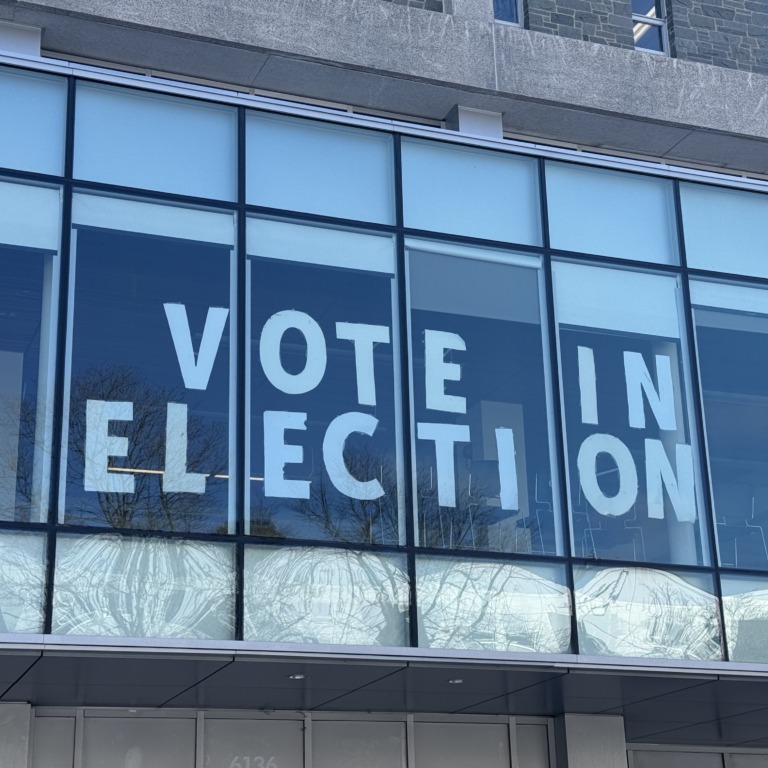
For the sixth straight year, the Dalhousie Student Union’s general election had a voter turnout of less than 13 per cent of the student population.
“There is a wide understanding that people don’t vote,” says Reid Delaney, the DSU’s chief returning officer, who is responsible for organizing the election. “The turnout shows that it’s a struggle to get people to engage in the union.”
The election failed to meet quorum — defined as 10 per cent of the student population or just over 2,000 votes — before the initial Feb. 11 deadline, prompting a 48-hour extension for voters to cast their ballots.
By 8:30 p.m. on Feb. 13, 12.5 per cent of eligible electors voted to elect student union executives and representatives. If a quorum wasn’t met following the extension, the election results would’ve been nullified.
Anjali Seshadri was elected president, receiving 43 per cent of the vote. Opry Dey and Suha Manal were elected vice-president academic and external and vice-president internal, respectively. The results of the election were made official on Feb 20.
Related: Anjali Seshadri elected DSU president
Noah MacAulay is a second-year PhD student in computer science at Dalhousie University. Not only did he not vote in the election, but he also didn’t know it happened.
“I don’t know what decisions the student union makes that are relevant to me,” MacAulay says.
Gerardo Mora, a fourth-year computer science student at Dalhousie, decided not to vote.
Over his time at Dalhousie, Mora has only participated in one DSU election. He says that because he doesn’t live near campus, he mostly “does his own thing.”
His sister, a first-year student at Dal, also chose not to vote in the election. Mora says it’s important for the student union to try to increase first-year students’ engagement with student politics.
“Newer students have the optimism to want to [be involved], so it’s important to engage them,” he says.
How can the process improve?
Alexander Tzovolos, a fourth-year marine biology student at Dalhousie, has been a candidate in the past two DSU general elections. He says part of the problem is the length of the eight-day campaign period leading up to the election.
“There is a certain mental stress and the mental fortitude required to be a candidate because you are trying your best in this one week to get as many people to hear you and understand your opinion as you can,” he says.
“If the timeline were extended, it would relieve the burden and the stress significantly.”
Delaney says the DSU has discussed extending the campaign period.
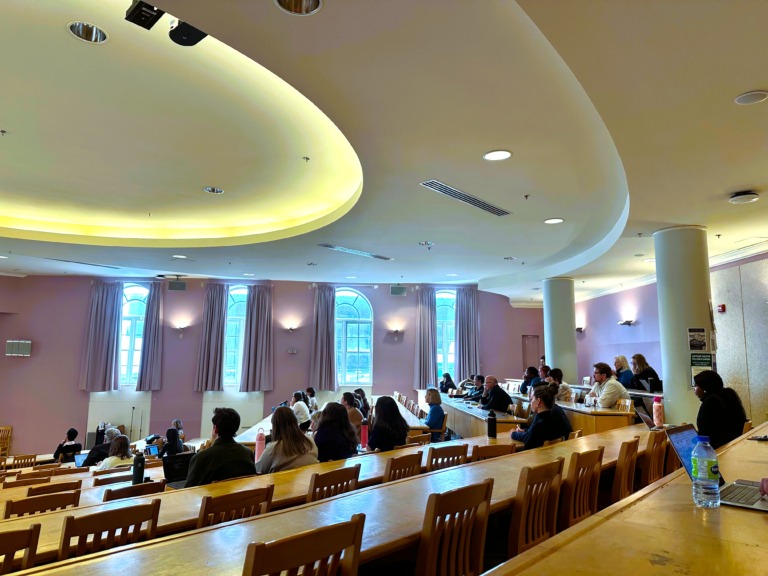
The DSU also hosted an election debate on Feb. 4, after announcing it just the day before. Only about 30 people were in attendance, including candidates.
Tzovolos says the debate should be announced and advertised at least a week before the event to engage more students in the election process.
“I don’t blame students for not being engaged,” says Tzovolos. “Most students don’t have a reason to interact with the DSU.”
How does the DSU try to engage students?
Delaney says the DSU reached out to different faculties, clubs and societies around campus to help promote and spread the word about the election, on top of sending emails to every Dalhousie student over the election period.
“The never-ending question for student unions everywhere is, ‘How do you encourage people to care?’” he says. “The decisions that are made by the student union are incredibly important … people should care.”
The general election has taken place in the first two weeks of March since 2021. The decision to hold the election earlier this year was intended to engage more voters and encourage more students to run, according to Delaney.
“We knew that our voter turnout hadn’t been as high as we wanted it to be in the past,” says Delaney. “We wanted to get [candidates] early.”
The 2026 general election had a total of 17 candidates across its executive, community, faculty and board of governors representative positions. Eleven of the 23 open positions remained unfilled following the election. Seven positions, including vice-president academic and external, were decided in uncontested campaigns.
“The [last] thing you want to see is an uncontested position,” says Delaney.
He says the tangible impact of decisions made by the union should be reason enough for students to campaign and vote in the election.
“People always say the most impactful level of government is the local government because they’re most in touch, and they do the most,” says Delaney. “A student union is just as important.
“It’s so easy. Just vote.”