Students feel unsupported by Dal’s accessibility centre
Note-taking cuts, delays and miscommunication leave some students struggling
By: Marielle Godfrey, features editor, and Claire Kelly, assistant news editor
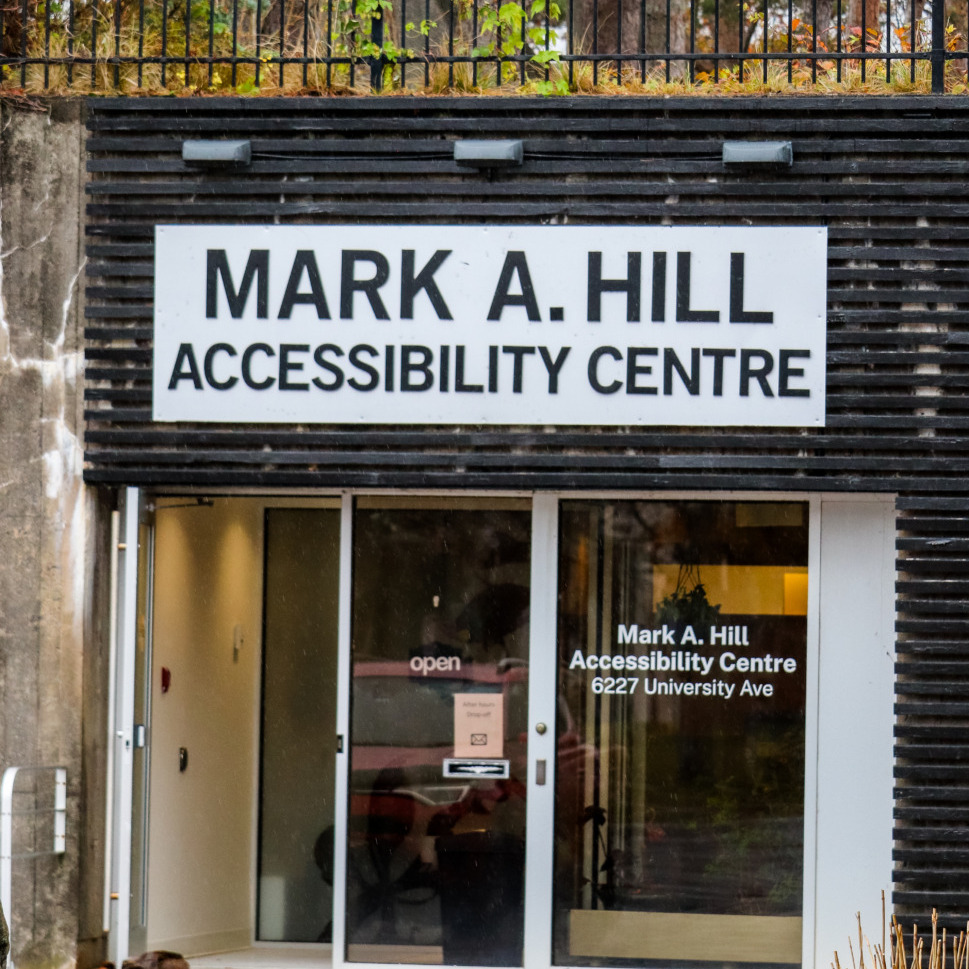
Students at Dalhousie University say they don’t feel supported by the university’s accessibility centre.
Frustrations grew last fall after the university quietly cut its note-taking program, which paid student volunteers $75 per course to share class notes with students who have accessibility accommodations.
Combined with long wait times for accommodation requests, some students say the centre is falling short in meeting the needs of those who rely on its services.
“Overall, it has not been up to par with what I was hoping for,” says Haiden Van Amburg, a second-year law, justice and society student who used the note-taking accommodation.
“There’s miscommunication between students and the accessibility centre, and professors in the centre, and students and professors.”
The university cut the note-taking program without notifying students. Instead, Dalhousie asked professors to record their lectures as an alternative.
Related: Dalhousie quietly cuts note taker program without telling students
However, the Dalhousie Faculty Association’s collective agreement states that recorded material belongs to the faculty member who created it. Professors can decide whether to allow their lectures to be recorded.
One of Van Amburg’s professors doesn’t record his lectures, but has set up his own class note-sharing system to support students who previously used the note-taking accommodation.
“It’s more helpful than recording a lecture,” says Van Amburg. “Just recording a lecture, I’m going to retake the notes that I already took in class.
“The notes that I get from a note-taker are from a whole different perspective and will encompass things that I didn’t think of while taking my own notes.”
In an emailed statement to the Dalhousie Gazette, Quenta Adams, Dalhousie’s assistant vice-provost of student engagement and success, said note-taking was not an accommodation in itself, but a possible option to address a student’s functional limitations.
She said the decision to cut the note-taking program was informed by consultation with students and faculty.
“They identified the many challenges with peer note-taking while offering more suitable alternatives,” Adams said in the statement.
Beyond the note-taking program, students say delays in receiving accommodations through the accessibility centre are a major problem, particularly when booking alternative exam spaces.
“It’s definitely not super convenient,” says Sam Diamond, a second-year science student. “I’ve had them come back to be like, ‘Here’s the room,’ with not enough hours before a midterm.”
Diamond describes their experience with the centre as inconsistent, adding that, at times, the disorganization has led them to avoid using its services altogether.
“They’re too disorganized to help,” says Diamond.
According to the 2022 Canadian Survey on Disability, Nova Scotia has the highest disability rate in Canada at 37.9 per cent — nearly 11 per cent above the national average.
Van Amburg, who previously attended St. Francis Xavier University, found a noticeable difference between the two universities’ accessibility centres.
“Dal has many more options; they have a much wider range of accessibility technology,” says Van Amburg. “Whereas I found at StFX, they didn’t have as much of a range, but when you went into the accessibility office, you weren’t just one student of many.
“They were more willing to sit with you and talk about how they were going to best support you.”
For Van Amburg, uncertainty around exam accommodations has also been particularly stressful.
“I booked my exam [accommodations] before they were due, and I still haven’t heard back if I have a room booked, or if my accommodations are going to be provided,” says Van Amburg. “Now, I’m in a little bit of a panic, because if none of these things are granted, I’m now at a deficit.”
Adams acknowledged that high-demand periods can lead to delays.
“We understand the stress that places on students,” she said.
David Pilon, the director of counselling and psychological services at the Dalhousie Student Health and Wellness Centre, says academic stress often affects students’ mental health and overall well-being.
“When students experience a mental health problem, it makes it much harder to focus on their academic work,” says Pilon. “Similarly, when students experience difficulties with their academic work, that tends to have an adverse impact on their overall well-being and mental health.”
He says students often feel distressed when they fall behind, creating a cycle that is difficult to break, adding that Dal’s accessibility health and wellness centres work “hand in hand” to support students facing these challenges.
Some students, like Cassie Cormier, a first-year student in sociology and anthropology, have had a positive overall experience with the accessibility centre.
“For the actual booking of the appointment, there was quite a bit of delay, but once I had my first appointment, I was able to set things up pretty quickly,” says Cormier. “It’s been mixed, but overall it was pretty efficient.”
Similar to Van Amburg and Diamond’s complaints, Cormier feels the accessibility centre’s communication could be improved — particularly between the centre and professors.
“I have seating accommodations, and the desk was always being moved in class,” says Cormier. “I’d be like, ‘Do I want to get into this with my professor or should I just email my accessibility person and wait for them to figure it out?’ That communication isn’t very strong.”
Adams says the accessibility centre is working to improve its services.
“We take seriously the responsibility for ongoing improvement,” says Adams. “From assessing our existing practices and processes, we aim to operate effectively and efficiently.”
But overall, Van Amburg says they still don’t feel supported by Dal’s accessibility centre.
“It feels like the bare minimum,” says Van Amburg.
Diamond agrees.
“I’m not exactly sure what else I would expect of them, but it’s not at its full potential,” says Diamond.