Why are there two conservative parties in Parliament?
Carney’s right-leaning policies have changed the equilibrium of Canadian politics
The 2025 election contained two of the biggest reversals in Canadian political history. The Conservatives went from more than a 25 percentage point lead in polls last January to losing the election outright in April, a stunning implosion. But there was a more interesting reversal: the Liberal Party, which inverted not only its fortunes, but its policies as well.
Prime Minister Mark Carney’s Liberal government looks almost nothing like the one before it. Carney has reversed or stalled several core Justin Trudeau-era policies. His first ever act was to remove the carbon tax Trudeau implemented, and he’s already publicly given up on hitting climate targets for the next decade. He’s slashed immigration from its record high under Trudeau, added $81.8 billion to defense spending and cut $2.3 billion from Indigenous programs.
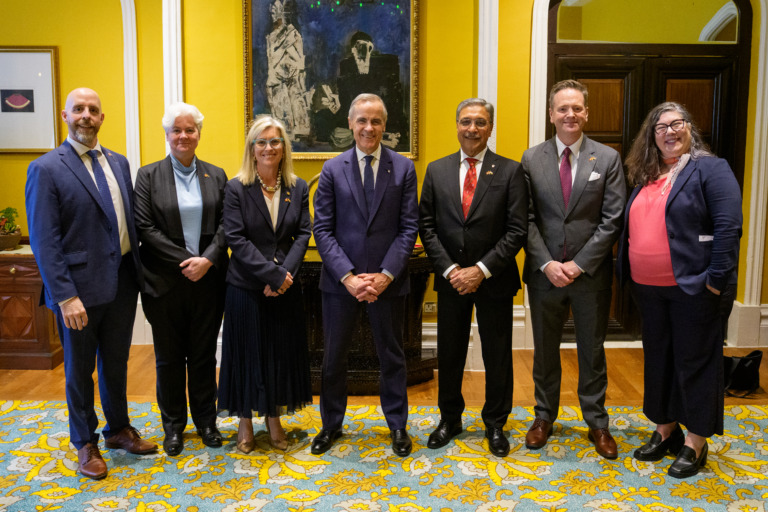
Carney’s government is “liberal” in name only. Pundits and analysts often describe his government as “progressive conservative.” Carney himself is compared more often — and more accurately — to Stephen Harper than Trudeau. Harper had even asked Carney to join his cabinet as finance minister in 2012.
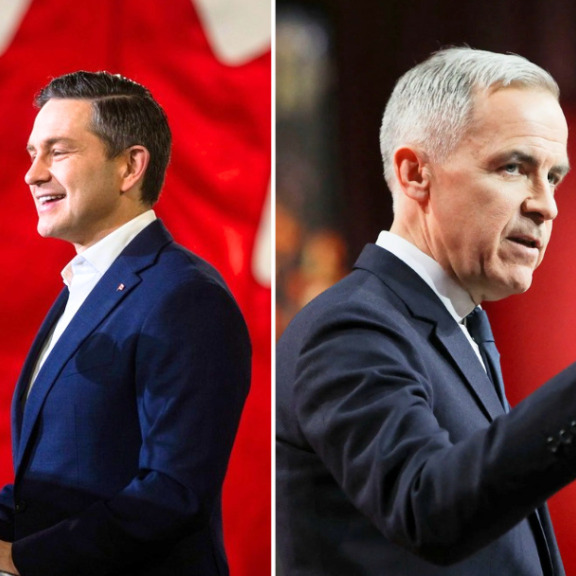
The result: the Liberals have become a second conservative party in Parliament. Suddenly, 91 per cent of MPs belong to a “conservative” party, between the “capital C” Conservatives in opposition, and the progressive conservatives (named the Liberals) in power.
Carney’s overhaul of the Liberals was reasonable — Trudeau’s policies were despised — but it was also decidedly spineless. If what the Liberals stood for could be completely inverted in a matter of months, do they really stand for anything at all?
The caucus that rejected Trudeau’s policies was largely the same group that ushered them in shortly before. Carney himself was a financial advisor to Trudeau and previously a vocal champion of policies like the carbon tax.
The Liberals’ election-time rejection of their past decade of policies marked the start of their turn toward opportunism. The party has always been ideologically flexible, and Carney’s Liberals have adapted to the moment with almost no apprehension.
For lack of a better metaphor, Parliament is a see-saw. Opposing ideologies sit on opposite sides, and the see-saw is mainly balanced as it rises and falls between both sides. But when the Liberals tip to the conservative side (and the NDP aren’t even on the playground), there’s no longer a back-and-forth. This is not to say that the policies of the two parties are identical, there are still big gaps in their beliefs, but the most notable differences — that define Conservative attacks on Trudeau’s Liberals — have largely eroded.
Take the climate, for example. Conservative Party Leader Pierre Poilievre was relentless and unsparing in his attacks on Trudeau’s carbon tax, alleging that the Liberals were hamstringing the economy by not building enough oil and gas infrastructure.
But since then, Carney has removed the carbon tax and recently issued a memorandum of understanding with Alberta’s far-right premier, Danielle Smith, to build an oil pipeline to the Pacific.
The agreement is opposed by multiple First Nations Chiefs in British Columbia and Alberta, goes against a decade of Liberal policy, and goes against Carney’s past life as an international environmentalist. He was the UN Special Envoy on Climate Action until just before entering politics last year, where he described climate change — the kind accelerated by pipelines — as an “existential threat.”
The point is not whether a pipeline is good or necessary. The point is that nothing — neither precedent, outrage, nor suppressed personal morals — will stop the Liberals from adapting to what they believe is politically necessary to win. In the current political landscape, that “necessary” will almost certainly be further right.
While the Liberals may have dropped everything they believed in as soon as it was politically convenient, they are largely doing fine with their new (conservative) policies. The real losers are the real Conservatives, who’ve had their most popular, centre-right policies absorbed by the Liberals. Poilievre describes them as practicing “counterfeit conservatism,” while concurrently losing his most successful topics to attack — the Liberals’ old leftist policies.
Poilievre’s posturing on these topics since has been uncharacteristically weak and toothless. He still rails against the less relevant industrial carbon tax (Carney only got rid of the consumer one). He argues that Liberals won’t build the new infrastructure they’ve promised fast enough — or actually build it at all — but his opposition has felt largely pedantic, whinging about details and specifics that voters aren’t particularly moved by, while Carney upstages him on his own policy. As the Conservatives lose their previous edge on the Liberals, they turn to further right policies that the Liberals won’t touch, and employ Poilievre’s favourite tool: division.
Conservatives are leaning into identity politics, fueling outrage and viciously tearing down their opponents — something Poilievre excels at, particularly in his attacks on Trudeau. But when Trudeau was the target, there was at least a purpose: dismantling his policies along with him.
Now, with Carney adopting many of those same Conservative policies, Poilievre can no longer attack the agenda without undermining his own position. The result is criticism that turns acrimonious, stripped of substance, focused on tearing down for its own sake rather than offering anything to rebuild in its place.
You can argue that Carney is what’s right for the country, or that Poilievre is — but the combination of the two is not.
Parliament isn’t at its best when politics become separated from policy. Debate cannot be constructive, because there are no differing policies to see-saw between, or strike a balance on. Now, both “conservative” parties cause the other to fall into partisan politics, completely divorced from bettering the country.
In the end, the only losers are Canadians, who no longer have a Parliament fighting over important policy issues that could better their lives. With the parties’ politics becoming too aligned to define the discourse between them, discourse goes from productive to mud-slinging, solely focused on being the last conservative party standing.
Carney and Poilievre have more similar values than Liberals and Conservatives have had in a decade, and now that they believe similar things, they no longer argue about what they believe in. Increasingly, fights are focused on the Liberal and Conservative party banners, not what they stand for.
Right-wing politics are in, and unless one of the leaders grows a backbone or voters begin to demand substantive debate rather than bitter quarrelling, Canada’s two conservative parties will continue to spiral into meaningless quarrelling and further away from honest debate that serves Canadians.