Why is everyone getting married?
Is today’s rush to settle down a return to tradition, or a redefinition of it?
On Oct. 29, Vogue published an article asking, “Is having a boyfriend embarrassing now?” The piece, by Chanté Joseph, wasn’t really about boyfriends at all, but about how women have long been defined in relation to men.
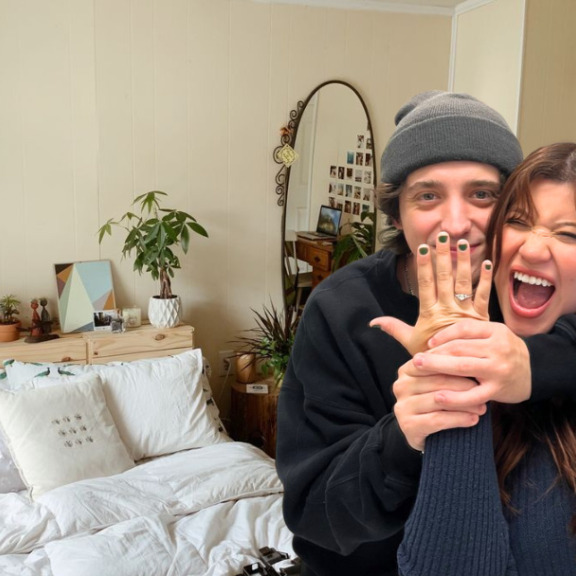
But lately, in the face of this anti-boyfriend agenda, I’ve actually noticed a quiet countercurrent. Scroll through social media, and it feels like every week someone my age or younger is flashing a ring.
I’m 23, and engagements seem to be happening earlier and faster than I ever expected. I want to doomscroll in peace, not find out the girl from my Grade 10 religion class is getting married.
This might not seem remarkable in another era, but against the backdrop of a generation shaped by women’s independence and a departure from traditional domestic roles, it’s a significant shift.
Tinder’s 2023 Future of Dating Report shows why: while marriage isn’t necessarily at the top of their priority list, 75 per cent of young singles believe their generation is challenging expectations for dating and relationships, and 40 per cent are looking for long-term relationships rather than short-term flings.
We know that a woman’s worth isn’t tethered to her relationship status. Yet I can’t help but wonder if, in moving away from that old script, we’ve lost sight of what independence was meant to achieve.
Since the 1980s, women have begun to put their careers first, choosing freedom over domesticity. Is the pendulum really swinging in reverse, or is it proof that two truths can stand together: women can build full lives and still choose love?
Part of the answer may lie in exhaustion.
Independence, once a radical ideal, can be difficult to sustain in a world defined by precarity. Rent is high, wages are low and the promise of stability feels increasingly out of reach. Fifty-nine per cent of young adults aged 20 to 35 report being very concerned about affording housing, according to a 2024 Statistics Canada survey.
Marriage offers something that few other institutions do anymore: the illusion of permanence. That could be why it’s so tempting.
The modern 40-hour workweek was designed for a world where one person carried the financial load while the other handled every domestic task in the background. Although that world no longer exists, the expectations still remain.
In an economic landscape this bleak, it’s hardly unreasonable to think that shouldering both roles alone feels impossible.
Then there’s the emotional landscape. After years of pandemic isolation and online detachment, it’s possible that young people are craving connection in its most tangible form.
But what makes this cultural moment even stranger is the contradiction at the heart of it.
Gen Z has been branded as commitment-avoidant and chronically anxious — the generation that can barely book their own dentist appointment and needs ChatGPT to tell them what to wear. Yet somehow, we’re also racing to the altar.
For the record, I don’t actually feel pressured to marry young. If anything, I feel the opposite. I grew up with a mom who repeated one mantra my whole childhood: don’t wait for a man.
She raised me on a steady diet of second-wave feminism — be independent, build a career, figure out who you are before attaching yourself to someone else. I was taught stability comes from standing on your own two feet, not rushing into domesticity.
So when I see people my age getting engaged, I’m not jealous or defensive; I’m just … confused. It’s a cultural shift I wasn’t prepared for.
Yet this shift is unfolding alongside another, seemingly opposite one: a cultural embrace of singlehood.
As Joseph noted in her article, “There’s no shame in falling in love. But there’s also no shame in trying and failing to find it—or not trying at all.”
Being single is no longer a cautionary tale but a quietly powerful identity: it’s the truest rejection of the centuries-old fairy tale that defined women by their relationships.
Still, there’s tension here. The same culture that celebrates female autonomy is also selling it back to us through engagement rings, Pinterest boards full of white dresses and pastel-toned content about “building a life together.” What looks like empowerment is a repackaging of traditional expectations.
That doesn’t mean early marriage is regressive. For some, it’s a genuine expression of love and partnership. But it’s worth questioning what forces make that choice appealing.
In an age where the future feels increasingly unstable — economically, environmentally and politically — commitment seems like a rational response to collective anxiety.
Maybe the cultural shift isn’t about independence after all. It’s about a generation renegotiating what safety looks like for them. For some, that means career and solitude; for others, an early engagement. The point isn’t to judge the choice, but to recognize what it reflects.
Modern feminism’s next challenge is not to debate whether having a boyfriend is embarrassing or empowering, but to imagine a world where a woman’s stability isn’t dependent on that question at all.
So, whether you’re the engaged girl from Grade 10, or the random person I’ve followed on Instagram since 2015 who became a digital nomad in Thailand, I raise a glass to you.
Engagement rings, plane tickets or office cubicles — whatever your early-20s look like, the choice is yours.