How do Dal’s fall varsity athletes train during the winter?
Tigers look to grow faster and stronger for next season
When the weather turns cold and the fall sports season comes to an end, Dalhousie University’s fall athletes keep their training going.
Some varsity teams finish league play in the fall semester. In preparation for the next season, the Dalhousie Tigers run off-season training programs.
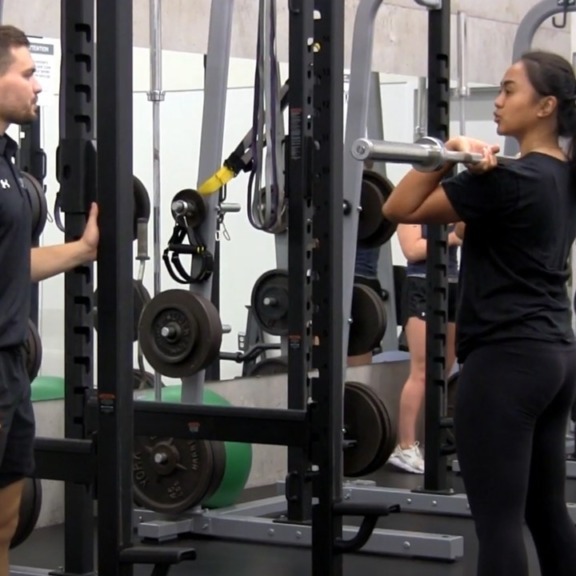
For Dal’s soccer teams, this includes weightlifting throughout the week, plyometrics and other workouts.
“You’re there to compete, and they want you to compete to the best of your abilities,” said Sally Steinberg, a third-year biochemistry student and Dal women’s soccer player.
“We’re having fun, and we’re playing music, but it’s also time to grind and time to get better and improve,” Steinberg said.
She credits Brett Armstrong, the Tigers’ strength and conditioning coach, with developing off-season workout plans that help athletes get stronger, faster and properly conditioned.
The Tigers monitor student athletes through beep tests and other testing drills to track their progress throughout the off-season.
Ben Thompson, a third-year medical sciences student and men’s soccer striker, said players usually take two weeks off after the season to recover before resuming off-season training. Following the rest period, the team trains in the Dalplex high-performance room, a gym reserved for varsity athletes.
“Third week of November, we’ll start going to regular lift sessions and probably get on the field twice a week as a team,” said Thompson, as the team prepares for training camp in August 2026.
“We’ll train all summer long and progressively load more up until the season starts,” Thompson said.
From a trainer’s perspective
Armstrong said the first five to eight weeks after the season ends focus on getting athletes back into the gym. Then, the focus shifts to building strength and growing past their previous abilities.
The Tigers’ training staff uses wearable tracking devices during practices and dry-land workouts to monitor athlete progress. Armstrong said the devices measure high-speed running distance statistics, allowing him to evaluate training loads and adjust each player’s off-season development plan.
“It tells us how much training or play the athlete is completing, from a volume and intensity standpoint,” Armstrong said.
The goal is to gradually build athletes to a higher level of performance. He said off-season training helps each athlete improve physically and mentally before returning to the gym.
“We want our athletes entering the off-season healthy, excited to train, happy and mentally in a great space.”