
What type of ex are you?
Everyone becomes an ex eventually. The only question is what type
March 12, 2026 / Elyanna Ventura
Relationships have been dropping like flies recently.
Maybe it’s the post-Valentine’s Day clarity, or the 2026 Mercury retrograde — or maybe it’s just that once St. Patrick’s Day plans roll around, people start realizing they don’t actually like the person they’ve been splitting Uber Eats with all winter.
Whatever the reason, it’s breakup season.
Here’s the thing no one talks about: during a relationship, you’re not just building a connection with someone else, you’re building a version of yourself in that relationship. So, when it ends, you’re not just losing them, you’re losing the person you were with them.
That’s where the real question begins: What happens after? What type of ex do you want to be?
I’m not new to the breakup scene. I’ve been collecting ex identities since middle school.
After a month of dating my seventh-grade boyfriend, he broke up with me over Snapchat — with the dog filter. That day, I discovered my first ex identity: the Broadcast Ex.
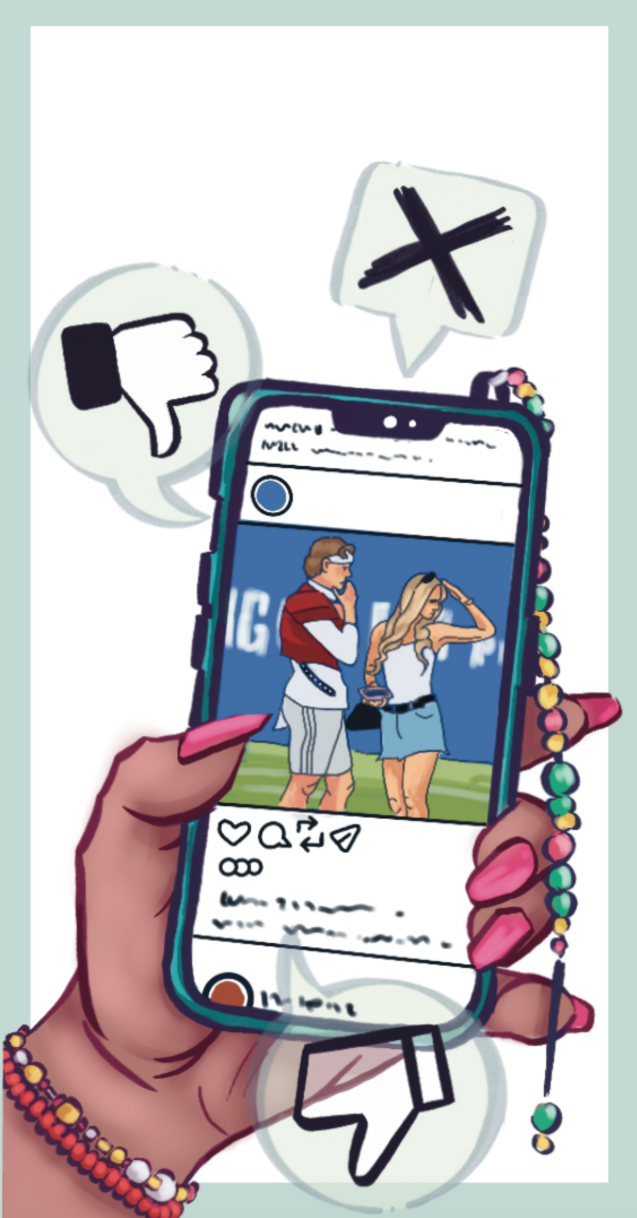
I became hyperactive on social media: endless Snapchat Q-and-A’s, Instagram captions that were obviously about him, constantly checking if he’d viewed my story. I wasn’t posting for the public, I was posting for an audience of one. I wanted him to see what he was missing.
The Broadcast Ex isn’t about confidence; it’s about craving validation from one person who stopped giving it to you. It’s grief disguised as glow-up content.
Then came my next relationship, a five-year high school relationship with a slow-burning ending. After multiple breakups and reconciliations, we finally admitted it was over before leaving for different universities.
This time, I became the Ghost Ex. No drama, no blocking, no stalking his social media. I didn’t try to prove anything, I just disappeared — and that silence felt powerful.
But him? He became the Persistent Ex. He never stopped reaching out. He threatened to visit during reading week, he was always “checking in,” sending reels on Instagram and asking how I was doing.
The Persistent Ex is in denial, trying to keep emotional access without doing the hard work of letting go. It’s not about love — it’s about avoiding the finality of loss.
Next was my first-year university relationship, and the breakup that hit the hardest. After two weeks of constant conversations, sleepless nights and “Let’s try again,” he finally ended it.
I spiralled — just a little. I became the Reinvention Ex.
I rearranged my entire room in one night, furniture scraping across the floor while my roommates nervously watched from the doorway. I cut my hair, bought new clothes and took up running. I started going to church, picked up a guitar and rekindled old friendships.
I thought that maybe if I optimized my life enough, I wouldn’t have to feel anything. But sometimes reinvention is just grief in a prettier outfit.
He, meanwhile, became a Mutual Friends Diplomat Ex.
We shared the same classes and group chats, so cutting each other off wasn’t exactly an option. He wanted to keep it diplomatic, so we learned to coexist. There were awkward silences and the occasional tension when someone referenced an old inside joke, but we handled it.
Not everyone copes so quietly.
I have a friend who got dumped on her birthday. She didn’t stay quiet after that. She became the Revenge Ex.
She made a point of posting subtle jabs, laughing loudly with his friends and shit-talking his performance. Then, after many vodka crans and running into his best friend at the bar, she seized her opportunity.
When he found out, he went ballistic — calling her 34 times in one night just to insult her. Later, when I asked if she felt bad, she shrugged.
“I don’t owe him anything.”
The thing about the Revenge Ex is it’s not about him. It’s about reclaiming power for yourself.
But the power borrowed from someone else’s pain doesn’t last long, and if your healing depends on hurting someone back, you’re still orbiting the very person you claim to be over.
The Villain Arc Ex has a similar lesson to learn. This one goes out every weekend, hooks up, leads people on and breaks hearts because theirs was broken first.
I watched it happen to a friend after his first girlfriend left him. I still remember the day he came to me with his Tinder profile, asking what photos he should add. Gym mirror pic? Candid laugh? In hindsight, I should’ve banned the account and thrown his phone into the ocean.
There’s nothing wrong with casual hookups. The problem was his detachment. He stopped coping and started collecting casualties: girls he charmed, girls he ghosted, girls he left confused after 2 a.m. trauma-dumps and hand-holding in Ubers.
The Villain Arc Ex doesn’t want a connection; they want a distraction. Hurt people don’t always heal — sometimes they redirect the damage. Somewhere between the gym selfies and the late-night “You up?” texts, he stopped being the heartbroken guy. In those girls’ group chats, he was the villain.
That’s what all these archetypes have in common: they’re coping mechanisms. Broadcasting for validation, ghosting for control, staying in contact to avoid closure, reinventing to outrun grief, seeking revenge to reclaim power, numbing out to avoid vulnerability.
But the healthiest fix after the breakup isn’t revenge, reinvention or indifference — it’s self-awareness.
Heartbreak doesn’t define you; how you respond does. Self-awareness gives you the power to turn endings into growth, to outgrow the past and step into the next version of yourself stronger than before.
When your next breakup happens, ask yourself: What type of ex do you want to be?

Other Posts in this category

Make-A-Wish partner society founded at Dalhousie

DSU rehires same security contractor for DalFest after alleged assaults last year, adds new safety measures

Tony turns Provincetown into Hollywood
Meta’s AI glasses are for perverts
MacLeod is out of tune with Nova Scotians