
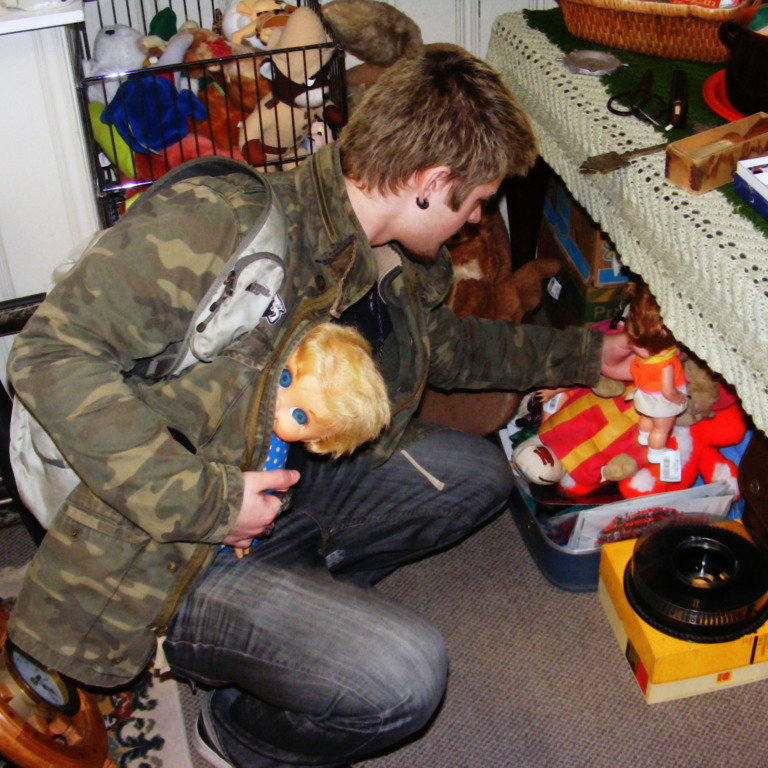
Why are so many Dalhousie students shoplifting?
Two-thirds of Dal students have utilized the five-finger discount
April 9, 2026 / Mariana Luz
Shoplifting is on the rise in Canada, and Dalhousie University is part of the problem.
According to the Dalhousie Gazette’s Dal Purity Test, 66 per cent of the 983 students who took the test have shoplifted.
A second-year economics student says that she regularly shoplifts groceries and cosmetics, usually with other friends.
“Things are too expensive,” she says. “If it’s from a big corporation, I’m like whatever.”
According to Statistics Canada, from 2014 to 2024, cases of shoplifting of $5,000 or under increased by 66 per cent.
Multiple students who spoke to the Gazette said they shoplift out of economic necessity.
A second-year law, justice and society and international development student at Dal says that she doesn’t shoplift currently, but used to make a game out of it during middle school.
“We would go to Dollarama and the game was like ‘How many bags of candy can you fit in your coat and get away with?’” she says. “I wanted to win. I was a pretty competitive kid.”
Hedwig Eisenbarth, a psychology professor at Victoria University of Wellington, says many students shoplift because of the increased cost of living.
Canadian grocery prices were up 5.6 per cent in February from a year ago, according to Statistics Canada.
“There’s the cost of living crisis, the needs that people have to sustain their living could be driving it,” Eisenbarth says. “At a university, you’re expected to have a phone, a laptop and this type of clothing. Some of these things are not cheap, and they’re not necessarily easy to get for everybody.”
Even students who don’t shoplift know people who do. A fourth-year marine biology student says that most of her friends shoplift, either for fun or because they can’t afford groceries.
“A lot of my friends have or do [shoplift],” she said. “It’s hard on that student budget.”
John Mackay, a manager at the Vintage Mansion, an antique shop on South Park Street, says that shoplifting hurts more than just the businesses.
“It shows society has a problem — a morality problem,” he says. “That’s where the real damage is.”
To avoid losing clothing and merchandise, the Vintage Mansion started posting pictures of shoplifters online, even creating a “wall of shame,” with pictures of those banned from the store.
“It lets them know there are consequences to it,” says Mackay. “In this store, if you shoplift, you’re going to be on the internet, and we’re going to prosecute to the fullest extent of the law.”

Read more from the gazette
KSU council to choose new interim president on Sunday

The Student Chef – Corn Chowder

BREAKING: KSU president resigns
BREAKING: Faculty union holds vote of no confidence in Dal president, others

Make-A-Wish partner society founded at Dalhousie